Direct vs. Indirect Grilling
Direct and indirect heat are both terms that refer to grilling or open-fire cooking. Direct heat means to cook the food directly over the heat source (whether charcoal, gas, or wood), while indirect cooking refers to cooking adjacent to the heat source. A combination of direct heat for searing followed by indirect heat for long, slow cooking tends to be one of the most skillful ways to use the grill.
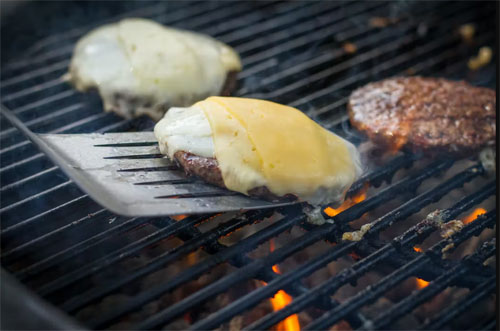
Direct Grilling
When you place foods on the grates directly over a gas burner or burning charcoals, you’re using direct heat. Direct heat grilling is usually performed with the lid off. With direct heat, heat transfers to your food from the hot grates in a process also known as conduction heat. Since the searing hot grates transfer a LOT of heat very quickly, direct heat is the way to go for ingredients that cook quickly.
It’s how you get those beautiful classic grill marks on steaks, juicy burgers, chicken breasts, and crispy grilled vegetables. Just be careful: Too much exposure to such intense heat can pull moisture out of your foods too quickly, leaving you with dry, less flavorful dishes. When using direct heat, check your grill often enugh to be sure things are not getting overdone.
Direct heat is also great for any quick-cooking foods like hot dogs, kebabs, thinner, tender cuts of poultry, pork, or steak, and most seafood — especially shrimp. Direct heat should only be used for cooking thinly sliced meats or meats less than 1-1½ inches thick. Flip once halfway through grilling for the best results. Direct heat is also great for searing meat to give it color and a crisp skin.
Indirect Grilling
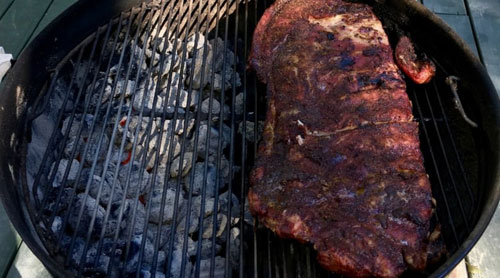
Now… when you place foods on the grates to the side of your fuel source as in the picture to the left, you’re using indirect heat. With indirect heat, heat transfers to your food not from the grates beneath it, but from all the hot air circulating through the firebox. Indirect grilling is done with the lid closed. It’s a process known as convection heat, and it’s pretty dang similar to the way your oven works.
Since indirect heat isn’t normally as intense as direct heat, it’s a good way to go for foods that are a little more delicate and take longer than 20 minutes to cook – like whole chickens or turkeys, racks of ribs, and oily fishes. Or dishes that require more time to cook at low temperatures, like roasts, ribs, and briskets. Gentle, indirect heat is better than intense, direct heat because it allows the inside of the meat to cook through before the outside gets charred to oblivion. Traditional barbecue (slow-smoked meat) is produced via indirect heat as well. Just be careful opening your grill with indirect heat. When you open the lid, all that heat escapes, and it takes a moment for the firebox to come back up to temperature.
Indirect grilling is commonly constructed using a two-zone method, which means the heat source is on one side of the grill and the food is on the other side.
Also see How to Make Charcoal Burn Longer
Indirect Grilling - Two Zone Method
When you hear recipes talk about setting up “heat zones” on the grill, it usually means to set up half your grill for direct heat, and half for indirect heat (see the picture above). These different zones give you more command over your heat transfer. Of course depending on your recipe and your grill, you can actually create more than just two zones, but two is pretty standard.
A Two Zone Fire allows you to cook over hot charcoal and then move the food to the side without the charcoal for a slower cook. This is what you'll use when cooking larger roasts, whole birds, and the like. Place your food over the indirect zone, cover the grill, and you're good to go. Just make sure to rotate your food so that it cooks evenly.
Combo cooking is most often seen with large pieces of meat, which are seared over direct heat and then slowly cooked over indirect heat. Grilled chicken is also frequently cooked with a combination — a quick grill over direct heat for grill marks and caramelization and then moved over to indirect heat and cooked with the grill lid down until the chicken comes to temperature. Combo heat cooking is also great for grilled fruit and denser vegetables like cabbage.
Some like reverse searing. Start the food over indirect heat until it's almost fully cooked, then shift the food to the direct grilling side to char the outside and add the grill marks. For instance, a thick steak can be cooked by first indirect grilling the meat until the internal temp reaches 100°F, then direct grilling to sear the crust and finish cooking the inside to 130°F. This method assumes your coals last this long, or you could add more charcoal at this point.
Three Zone Fire
The three-zone method has heat on either edge of the grill and an open space in the middle where you place the food so it receives heat from both sides. This is the fire to use for smaller roasts, like a pork loin, a small chicken, or Cornish hens. With this setup, you can also add an aluminum pan to the center of the grate to catch drippings.
Ring of Fire
Some grilling experts swear by the "ring of fire" method, an option if you're cooking with charcoal, which involves lining the perimeter of the grill with the heat source. This circular indirect grilling style yields the most even cooking.
