Jamaican Jerk
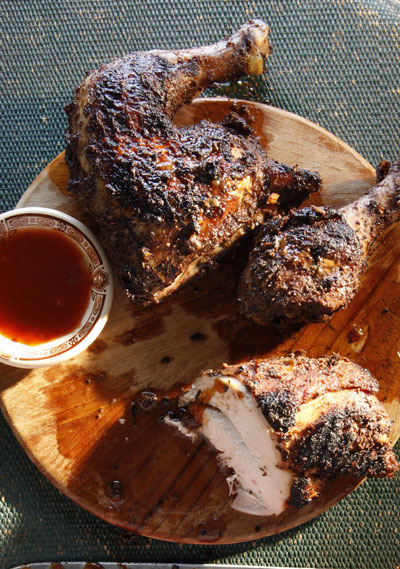
Jerking is a centuries-old method of preserving meat, especially wild boar, once plentiful in the hills of this Caribbean isle, Jamaica. Historians believe that the history of jerk can be traced back to the Carib and Arawak Indians who inhabited the Caribbean islands before the arrival of Spanish explorers in the fifteenth century. The Amerindians slow-cooked their meat with citrus and spices in order to preserve it. Most Jamaicans now believe that the technique was perfected by the Maroons, former slaves brought to Jamaica from West Africa, where they had used a process of cooking and preserving meat by heavily seasoning it with peppers and slow cooking over smoke.
The escaped or freed slaves settled in the islands hills, where the terrain made it easy for them to elude capture. In the hills, the Maroons hunted wild boar. The boar was stuffed with a mixture of peppers and herbs, wrapped in banana leaves and placed it in a pit prepared with hot stones and slow burning wood from pimento, the Jamaican name for allspice, trees. The hole was then covered with leaves and palm fronds. This process took hours, but the result was succulent and juicy.
Jerk was first created by the Arawak Indians, the original natives of Jamaica. The liberal amounts of indigenous spices and peppers preserved meats in the island heat, and also made them taste delicious when cooked over an open fire.
Pork and chicken are the two most traditional meats to jerk, but the seasoning is wonderful on beef, lamb and fish as well. If you want to do an all-day, slow-cooked barbeque, choose pork butt or whole chickens; for quick grilling, opt for boneless chicken, fish or pork loin. Whichever meat you choose, start by making shallow scores in the surface of it using a sharp knife, and then rub the seasoning paste thoroughly over the surface of the meat. If you're using skin-on chicken, be sure to rub the seasoning under the skin. It's a good idea to wear plastic or latex gloves while handling the seasoning. Wrap the meat tightly in plastic and refrigerate overnight to allow the spices to permeate it.
True Jamaican jerk must be barbequed. The traditional way is to slow-roast the meat at a low temperature for several hours over a fire fueled by allspice branches, which give a sweet and spicy smoke flavor to the meat. You may be hard-put to find allspice branches in your area, but you can use any kind of hardwood chips to add to the flavor of your jerk barbeque. Prepare your grill for indirect heat, and place a drip pan underneath the spot where you'll grill the meat. Soak food-friendly wood chips in a bowl of water for 30 minutes or so, and then sprinkle them liberally over the hot coals just before putting the meat on the grill.
This recipe comes from a woman who was born and raised in Jamaica. (a friend of Peggy Trowbridge Filippone, http://homecooking.about.com/)
For the rub:
1/2 cup ground allspice
1/2+ cup packed brown sugar
6-8 garlic cloves
4-6 Scotch Bonnet or Habanero peppers
1 tablespoon ground thyme or 2 tablespoons fresh thyme leaves
2 bunches escallions (green onions) (1 bunch = 6-8 scallions = 1/4 pound = 1/2 cup sliced)
1 teaspoon cinnamon
1/2 teaspoon nutmeg
salt and pepper to taste
water to moisten (a tablespoon or two)
Makes about 1 cup - enough for 1 oven roaster chicken
For the mop:
Leftover rub (about 2 tablespoons)
1/4 cup lime juice (can use part orange juice)
1/8 cup vinegar
1/4 cup oil
To make the rub, put the rub ingredients in a food processor and blend until it is a smooth paste - add a little water if necessary if the mixture is too dry. You may use allspice berries, if available, but use enough to give the equivalent of 1/2 cup ground. (Allspice berries, scallions, thyme and scotch bonnets are key ingredients.) Keep this sauce refrigerated and it will keep forever. Feel free to increase the hot peppers and garlic, and add more black pepper if you like.
Rub the meat (chicken, pork or beef) with the seasoning, saving a couple of tablespoons to make the mop. If using a pork shoulder, score the fat and rub in. With chicken, be sure to rub under skin and in cavities. Can also be used with fish, but use a firm-fleshed fish like grouper. Marinate overnight.
To make the mop, add the lime juice, white vinegar and oil to the leftover rub. Set aside 2 tablespoons of the mop if you plan to make the Jamaican Barbecue Sauce that we usually make.
Grill over a low indirect fire until done, using the mopping sauce to keep the meat moist. Charcoal is best, but not essential. Meat will be smoked "pinkish" when done, and the skin will be nice and dark.
To serve: Chop meat into pieces, and serve traditionally with hard-dough bread and Jamaican Red Stripe Beer. A dipping sauce (see below) is often made to serve with the chicken. We like to serve jerk with Emeril's Jamaican Barbecue Sauce.
Dishes to serve on the side: Fried Ripe Plantains or roasted sweet potatoes, Caribbean Black Beans and Rice or Jamaican Coconut Rice & Peas, and Festival, slightly sweet cornmeal fritters frequently served with jerk. Pina Coladas, Bahama Mamas, Mojitas, or Mai Tais would be the cocktails of choice.
Dipping Sauces:
A simple dipping sauce can be made from equal parts distilled vinegar, brown sugar and any leftover rub. Add a little water to thin it. Bring to a boil and let cook over medium-high heat for about 5 minutes, just until the raw taste of onions and garlic has mellowed. The sauce should be of thin drizzling consistency, particularly if you've made it incendiary, so add more water if necessary.
Here are a couple of other recipes for a Jerk Dipping Sauce. One is from a chef at a resort restaurant in Jamaica made with pineapple juice, ketchup, Red Stripe beer, and leftover rub.
