Kansas City Barbecue
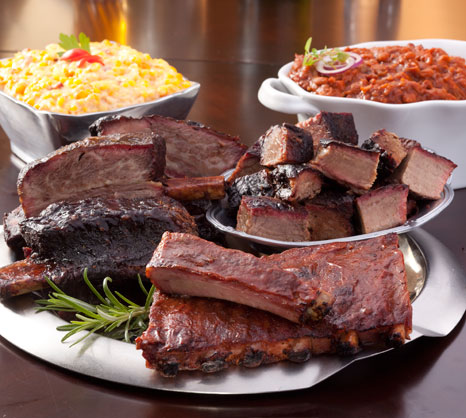
"Jack's Best," a barbecue platter available through mail order from
Fiorella's Jack Stack Barbecue in Kansas City. Includes: Half-Slab
Sauced Pork Spare Ribs, Crown Prime Beef Short Ribs,
Beef Burnt Ends, Hickory Pit Beans, & Cheesy Corn Bake
Kansas City barbecue refers to the specific inner city style of slow smoked meat that evolved from the pit of Henry Perry in the early 1900s in Kansas City, Missouri. Kansas City barbecue is slow smoked over a variety of woods and then covered with a thick tomato and molasses based sauce.
Kansas City barbecue is characterized by its use of different types of meat (including pulled pork, pork ribs, burnt ends, smoked sausage, beef brisket, beef ribs, smoked/grilled chicken, smoked turkey, and sometimes fish). This variety of meat can be attributed to Kansas City's location along the Atchison, Topeka and Santa Fe Railway (Santa Fe, BNSF) and the Union Pacific. Due to Kansas City's proximity to the railroads, there were 7 packing houses located in Kansas City which made it a central location in the US for the meat. Hickory was readily available in the region and continues to be the primary wood associated with smoking meat in Kansas City.
Kansas City Barbeques, similar to those found in St. Louis, use BBQ sauce liberally. The sauces found in the region are tomato based with sweet, spicy and tangy flavor profiles. A majority of restaurants offer several sauce varieties but the staple sauce tends to be both spicy and sweet. Ribs are mostly pork, but also come in beef varieties and can come in a number of different cuts. Burnt ends, the flavorful pieces of meat cut from the ends of a smoked beef or pork brisket, are a popular dish in many Kansas City area barbecue restaurants. Kansas City barbecue is also known for its many side dishes, including a unique style of baked beans, French fries, cole slaw, and other soul food staples.
Note - FMM: I had Fiorella's Jack Stack Barbecue's Hickory Pit Beans (see pic to top right) when I ate there and they were the best bbq beans I've ever had. The waiter told me they were baked under the ribs that are smoked on racks, and that some of the bbq sauce and rib pieces drop in while they are baking.
Kansas City Ribs
By Derrick Riches, About.com Guide, http://bbq.about.com
In Kansas City they know BBQ Ribs and this is the barbecue rub recipe for traditional Kansas City-style ribs. Finish them off with a good barbecue sauce and you'll have a fantastic meal. This recipe is mostly brown sugar, so it makes a deliciously, sweet rub. This rub is not recommended for hot and fast cooking because the sugar will burn. So avoid high temperatures when using it. Finish these ribs off with a good barbecue sauce and you'll have a fantastic meal.
FMM: A Kansas City Style Rub for ribs, such as this, has more sugar in it than other rubs. Kansas City Style Barbecue Sauce is also quite sweet compared to many other sauces.
The Ribs
For Full instructions, see How to Smoke Ribs using the Indirect Method.
Prepare ribs by washing racks and pealing membrane from the bone side. It’s totally edible and safe to eat, however, it makes them a little tougher once they’re cooked and it can make it harder for your spice rub to absorb into the meat. To remove the membrane, slip a sharp knife under the membrane at one end of the rack and pealing back enough to get a good grip. Try using a paper towel to hold the membrane, then pull. You might need a little practice, but you'll get the hang of it. Once the ribs are prepared, evenly coat with the rub and let sit. They are best if left to refrigerate overnight.
For the Rub:
Also see Best Ribs in the Universe rub recipe which is very similar.
1/4 recipe in ( ). Enough for 1 rack of ribs.
1/2 cup brown sugar (1/8 cup)
1/4 cup paprika (1 tablespoon)
1 tablespoon black pepper (a little less than 1 teaspoon)
1 tablespoon salt (a little less than 1 teaspoon)
1 tablespoon chili powder (a little less than 1 teaspoon)
1 tablespoon garlic powder (a little less than 1 teaspoon)
1 tablespoon onion powder (a little less than 1 teaspoon)
1 teaspoon cayenne (1/4 teaspoon)
Combine all ingredients together and transfer to an air tight container. May be stored up to six months. Save 2 Tbsp. rub for the mop.
Makes a little more than 1 cup - enough for 3 or 4 racks of ribs
While ribs are cooking, prepare barbecue sauce (recipe follows).
Get the smoker ready.
Basting is an option to making ribs. On one hand it will add more flavor to your ribs and can help keep them moist. On the other you can wash off the rub you've already applied. By using a baste (sometimes called a mop) that contains the seasonings of the rub you already used you will enhance the flavor without washing away the flavor you've already added.
(We made a mop of 1 cup apple juice, 2 Tbsp. apple cider vinegar, 2 Tbsp. dry rub. You may want to cut the recipe in half.)
When using a slower method like the grill, smoker, or oven, you’ll need about 3-5 hours to cook ribs. Keep in mind that the longer you cook your pork back ribs the more tender and succulent they’ll be.
Only add sauces at the very end of the cooking process or after you have removed the ribs from the smoker. Sauces can cause burning or excessive caramelization to foods. Some cooks remove the ribs, cut them up and then add the sauce. You might also want to put the sauce on the side for people to add as they see fit. Sugar burns at 265 degrees F. (129 degrees C.), generally above smoking temperatures, but it is best to leave sauces to the end either way.
Other Kansas City-Style Barbecue Sauces (see below for the sauce we use)
- Kansas City-Style Barbecue Sauce from http://amazingribs.com/ (the one we like, see below)
- The About.com Guide, which we use the Rub recipe from, also has a recipe for the KC sauce, but we did not like as well as the one below from http://amazingribs.com/
- See Steven Raichlen's Barbecue Sauce from the Barbecue Bible on the Rubs, Mops & Barbecue Sauces page. We have not tried this recipe.
- K.C. Masterpiece Original Barbecue Sauce clone recipe from http://www.topsecretrecipes.com. We have not tried this recipe - it uses corn syrup as a sweetener.
- We tried the one from Joshua Bousel at Serious Eats, but found it a bit spicy. It did not make me think of a KC sauce. Maybe too much spicy pepper. KC Sauce should have a bit of sweetness to it.
*Kansas City-Style Barbecue Sauce (this is the recipe we use)
from http://amazingribs.com/
This is the BBQ sauce for Kansas City-style Ribs we use. We like it better than the one from the About.com Guide.
"It's not KC Masterpiece, but it is a KC Classic. Try it and you'll never use the bottled stuff again."
Takes. 45 minutes even if you take a phone call.
Keeps. Because it has a high acid and sugar content, it can keep for months in the refrigerator.FMM: Cut recipe in half (which makes 3 cups) (see measurements in parentheses for cutting the recipe in half). We find this recipe quite good and will make it again. The Worcestershire and steak sauces make quite a difference, as does the molasses.
Note: 1/2 recipe was too much for just me.From http://amazingribs.com/: Here's a rule of thumb: A full slab of spareribs with the tips still on will need 1 cup (8 ounces) of sauce for both sides, a slab of St. Louis cut ribs will need 3/4 cup (6 ounces), and a slab of baby back ribs will need 1/2 cup (4 ounces). But don’t forget that you will want to have another 1/2 cup (4 ounces) or so in a bowl on the table for folks who want more.
1/2 recipe in ( ) - makes 3 cups. 1/3 recipe in [ ] - makes 2 cups.
3 tablespoons vegetable oil (1 1/2 Tbsp.)
1 medium onion, finely chopped (1/2)
4 medium cloves of garlic, crushed or minced (2)2 tablespoons American chili powder (1 Tbsp.) [2/3 Tbsp.]
1 teaspoon ground black pepper (1/2 tsp.) [1/3 tsp.]
2 teaspoons kosher salt (1 tsp.) [2/3 tsp.]2 cups ketchup (1 cup) [2/3 cup]
1/2 cup yellow ballpark-style mustard (1/4 cup)
1/2 cup cider vinegar (1/4 cup) [2 1/2 Tbsp.]
1/3 cup Worcestershire sauce (tad more than 2 1/2 Tbsp.) [1/6 cup]
1/4 cup lemon juice (2 Tbsp.) [1 1/3 Tbsp.]
1/4 cup steak sauce (2 Tbsp.) [1 1/3 Tbsp.]
1/4 cup dark molasses (2 Tbsp.) [1 1/3 Tbsp.]
1/4 to 3/4 cup honey (see note below) (1/4 cup) [1 1/3 Tbsp.]
1 teaspoon hot sauce (1/2 tsp. Tabasco) [1/3 tsp.]
1 cup dark brown sugar (you can use light brown sugar if that's all you have) (1/2 cup) [1/3 cup]
Note about the ingredients:
Optional. If you are cooking indoors, or if your meat does not have a lot of smoke flavor, or if you just want more smoke flavor, you can add 1 teaspoon of liquid smoke.
About the vinegar. I like my sauce tart. Trust me, although it may taste tart from the bottle, it is perfect on meat. If you are not big on vinegar, cut it in half.
About the honey. The recipe above is to my taste but I have found that most people like it better if I add another 1/2 cup of honey for a total of 3/4 cups.
About the steak sauce. There are many different brands and they all have different flavor profiles, but what we want here is the meaty depth of savoriness that they call umami, so use whatever you have on hand.
About the hot sauce. A simple sauce like Tabasco is all you need. I like the chipotle flavored version.
About the oil. You may use butter or bacon fat for a bit more flavor, but keep in mind, they can get rancid with time, and they will likely shorten shelf life to about 1 week. Use a bottled vegetable oil and it can keep months.
Secret optional ingredient. Add 2 tablespoons of tamarind paste. This exotic ingredient isn't really that exotic. It shows up on the ingredient lists of a lot of great BBQ sauces. It has a sweet citrusy flavor and really amps up a sauce. If you can't find it in an Indian or Asian grocery, it is available online.
Instructions for Barbecue Sauce:
FMM: Instead of dirtying two bowls as in Step 1, I start with Step 2 and just add everything to the saucepan. It gets mixed in the pan anyway. You could measure out some of the ingredients, such as the ketchup, mustard and vinegar, so they are ready to get added when the onions are done.
I've also reordered the ingredient list to reflex this.
2) [Do Step 2 1st.] Over medium heat, warm the oil in a large saucepan. Add the onions and sauté until limp and translucent, about 5 minutes. Crush the garlic, add it, and cook for another minute. Add the dry spices and stir for about 2 minutes to extract their oil-soluble flavors. Add the wet ingredients. Simmer over medium heat for 15 minutes with the lid off to thicken it a bit.
1) [Add to onions and garlic in saucepan.] In a small bowl, mix the American chili powder, black pepper, and salt. In a large bowl, mix the ketchup, mustard, vinegar, Worcestershire, lemon juice, steak sauce, molasses, honey, hot sauce, and brown sugar. Mix them, but you don't have to mix thoroughly.
3) Taste and adjust. Add more of anything that you want a little bit at a time. It may taste a bit vinegary at first, but that will be less obvious when you use it on meat. I recommend you run with my recipe the first time and then you can make it your own. Strain it if you don't want the chunks of onion and garlic. I like leaving them in, they give the sauce a home-made texture. You can use it immediately, but I think it's better when aged overnight. You can store it into clean bottles in the refrigerator for a month or two.
Makes. 6 cups
