Memphis Style Ribs
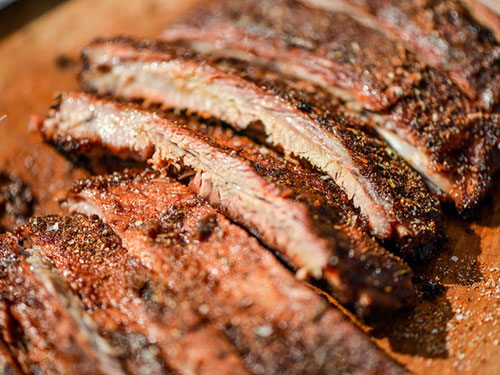
Memphis Style Dry Ribs
One of the many reasons for the popularity of Memphis style barbecue is its unique blend of the greatest barbecue traditions. Here you will find seasonings that are neither too sweet, nor too hot. Sauces, when used, can contain tomato, vinegar or mustard. Traditionally, Memphis Style ribs are smoked "dry", meaning that only a dry rub is applied. If a sauce is present, it is served on the side and added (or not) by the lucky person with a full plate of ribs in front of them.
Founder Charlie Vergos first brought ribs to his restaurant, Rendezvous, in Memphis, in the early 1950s, in an attempt to find a use for the cheap cut—generally considered scraps back then, and priced accordingly. Influenced by his Greek heritage, Charlie used an acidic vinegar baste that he brushed on the ribs while cooking. Once done, they were coated with a spice mixture that brought together traditional Greek elements like oregano and garlic, with Cajun spices like paprika and chili powders. And so, dry ribs were born
The Ribs:
Memphis ribs are typically spareribs cut St. Louis style. This means that you take the full sparerib rack and trim it to nice, neat ribs. Start by laying the ribs out, bone side down and cutting along the line of fat at the base of the ribs. This will give you a good piece of cartilaginous rib tips. Now flip over the rack and cut off the flap of meat in the middle of the rack. Grill these two portions up for a tasty appetizer. Lastly, remove the membrane from the back of the ribs to let in the flavor and allow excess fat to melt away. Memphis tradition also suggests that you remove the long muscle from the front of the ribs. If you look at the rack, bone side down, you can see it. This practice is somewhat obsolete today.
The Rub:
Since these ribs are traditionally served without sauce, or the sauce on the side, the rub is your main source of flavor aside from the meat. Typically it's a sweet & salty blend accented with Paprika to give the ribs color. The Paprika really brings out the mahogany color in the finished product.
The best pork rubs contain sugar to melt and help form the bark, paprika for color, black pepper for zing, onion and garlic for savory, and more. Because most rubs contain salt, some pros leave their rub on overnight, sort of a dry marinade, that can work like a dry brine. Some put it right on the meat and then massage it in. Others lay down a mustard base first to act like glue.
Memphis Dust Recipe
from Craig "Meathead" Goldwyn, http://www.amazingribs.com/
Meathead typically uses about 2 tablespoons per side of a large slab of St. Louis cut ribs, and a bit less for baby backs. Store the extra in a zipper bag or a glass jar with a tight lid.
Makes. About 3 cups. Store the extra in a zipper bag or a glass jar with a tight lid. Use enough to cover the meat surface but still let some meat show through.
Preparation time: 10 minutes to find everything and 5 minutes to dump them together.
3/4 cup firmly packed dark brown sugar
3/4 cup white sugar
1/2 cup paprika
1/4 cup kosher salt
1/4 cup garlic powder
2 tablespoons ground black pepper
2 tablespoons ground ginger powder
2 tablespoons onion powder
2 teaspoons rosemary powder
Yield: Makes about 3 cups.
Some pros leave their rub on overnight, sort of a dry marinade, that can work like a brine or a curing process. There is a reaction between the rub and the surface that helps form a nice crust, called bark, if the rub is on for at least two hours in the fridge. Better still, rub them up, wrap them in plastic wrap, and refrigerate them overnight before cooking.
Some put it right on the meat and then massage it in. Others lay down a mustard base first to act like glue, others make a wet rub by mixing it with oil or booze because the spices dissolve in lipids or alcohol, not water. Craig likes to put a thin layer of vegetable oil on the meat and then sprinkle the rub on top.
Because of the sugar, make sure to cook at low temps.
About the sugar. I encourage readers to experiment with recipes, and "no rules in the bedroom or dining room" is my motto, but I have gotten some emails that require a response. I appreciate that many of you feel the need to reduce sugar in your diets but sugar is in the recipe for more than flavor enhancement, it helps form the crust (called bark by the pros), an important part of the texture of the surface of ribs and smoke roasted pork. It mixes with the moisture and caramelizes making special unique flavors.
There are only about 2 tablespoons of rub on a large slab. Of that about 1 tablespoon is sugar. Some of it falls and drips off during cooking. If you eat half a slab, you're eating about 1 teaspoon of sugar. The glycemic load (GL) is about 3. Compare that with a slice of white bread with a GL of 10.
And for those of you who object to white sugar for non-dietary reasons, and use brown sugar instead, you need to know brown sugar is just white sugar with molasses added. It is not unrefined sugar as many people believe. I use brown sugar for the flavor and white sugar because it improves the bark.
If you want to cut back on carbs, leave off the sweet barbecue sauce. It has a lot more sugar than the rub. Switch to a Lexington sauce which is mostly vinegar, or just eat the pork with rub and no sauce. It's mighty good that way.
Bottom line: This recipe is a very successful rub from a taste and chemistry standpoint. I urge you to make it as specified the first time.
About the rosemary. Several readers tell me they hate rosemary and leave it out. Trust me, it hides in the background and you will never know it is there. But it is. It is subtle and important in this blend. Substitute thyme or oregano if you must, but I think rosemary is the best choice. If you can find ground rosemary, well, it is hard to find. So just grind the rosemary leaves in a mortar and pestle or in a coffee grinder or a blender. It will take 2 to 3 tablespoons of leaves to make 2 teaspoons of powder. Again, please don't leave it out.
About the ginger. Like the rosemary, I think ginger is a very important ingredient. If you don't have any, get some.
About the paprika. If you read my discussion of paprika by clicking this link you'll learn about the different kinds of paprika. In short, garden variety grocery store paprika has little flavor and is used mostly for color. But fresh Hungarian or Spanish paprika have mild but distinctive flavors. In many European countries, paprika is hot. Not in the US. If you wish, you can use smoked paprika, especially good if you are cooking indoors, or even mix in some stronger stuff like ancho (slightly spicy), chipotle powder, cayenne, or chili powder (not very hot). Chipotle can be quite hot, so be thoughtful of who will be eating your food. I usually go easy on the heat in deference to the kids and wimps (like me) and add it to the sauce or put chipotle powder on the table for the chile heads.
How to use it
1) Mix the ingredients thoroughly in a bowl. If the sugar is lumpy, crumble the lumps by hand or on the side of the bowl with a fork. If you store the rub in a tight jar, you can keep it for months. If it clumps just chop it up, or if you wish, spread it on a baking sheet and put it in a 225°F oven for 15 minutes to drive off moisture. No hotter or the sugar can burn.
2) If you have time, sprinkle on 1/2 teaspoon of kosher salt per pound of meat up to 12 hours in advance. For most meats, wet the surface of the meat with water and sprinkle just enough Meathead's Memphis Dust on to color it. Memphis style ribs without a sauce, apply the rub thick enough to make a crunchy crust, perhaps 1 to 2 tablespoons per slab of St. Louis Cut (Center Cut) and a bit less for baby backs. To prevent contaminating your rub with uncooked meat juices, spoon out the proper amount before you start and seal the bottle for future use. Keep your powder dry as the old expression goes. To prevent cross-contamination, one hand sprinkles on the rub and the other hand does the rubbing. Don't put the hand that is rubbing into the powder or use it to hold the bottle.
Mopping: One trick to adding moisture to Memphis style ribs is to apply a mop. A mop is a thin sauce that is "mopped" on meats as they cook. A great way to make up the perfect mop for Memphis ribs is to take your dry rub and add water and maybe a little ketchup (if you so choose). Make the mop thin and runny and apply it to the ribs every 30 minutes to an hour while they smoke.
Note the recipes below did not come from http://www.amazingribs.com/.
A Mop:
1/2 cup distilled white vinegar
1/2 cup water
1/4 cup dry rub
Whisk together vinegar, water, and dry rub in a small bowl.
Another Mop:
8oz apple juice
4oz red wine winegar
4oz vegetable oil
2 tablespoons of dry rub
Smoking: Smoke these wonderful ribs as normal but be careful not to knock too much of the rub from the ribs. Memphis style pork ribs give you and your guests the best of both worlds. Properly smoked these "dry" ribs won't be dry and those who like sauce can add it at the table. Those who prefer the meaty flavor of these ribs can just dig in. Some dust the ribs with a little rub once they come off the grill.
Sauce: (optional)
Sauces are usually tangy and served on the side, although like all barbecue, opinions on sauce vary. "Memphis style" used to mean vinegar and pepper, and then tomato and brown sugar found their way into the mix. Memphis-style sauce has a more tangy flavor than the Kansas City version. A good Memphis Barbecue Sauce is thinner than most tomato based sauces.
Barbecue Sauce
1 cup cider vinegar
1/2 cup water
1/2 cup ketchup
3 tablespoons brown sugar (or molasses)
1 teaspoon salt (add more to taste)
1/2 teaspoon ground pepper
1 teaspoon hot sauce (add more to taste)
Memphis-Style Barbecue Sauce
from http://www.seriouseats.com/
This thinner sauce bakes into tasty layers and caramelizes beautifully. It creates a flavor-packed sheen when finished on ribs and is an excellent consistency for dipping. It takes the aspects of sweet tomato-based sauces, but by dialing back the sugar and amping up the vinegar, creates a sauce where seasonings and spice are more defined and achieves a pleasing balance between the main defining aspects of a barbecue sauce.
2 tablespoons unsalted butter
1 small onion, finely chopped
2 cloves garlic, minced
2 cups tomato sauce
1/2 cup cider vinegar
1/3 cup rice vinegar
1/3 cup molasses
3 tablespoons Worcestershire sauce
2 tablespoons packed dark brown sugar
2 teaspoons yellow mustard
1 teaspoon Louisiana hot sauce
1 teaspoon Kosher salt
1 teaspoon freshly ground black pepper
1/4 teaspoon cayenne pepper
Melt butter in medium saucepan over medium heat. Add onion and cook until softened, about 5 minutes. Add garlic and cook until fragrant, about 30 seconds.
Add tomato sauce, cider vinegar, rice vinegar, molasses, Worcestershire sauce, brown sugar, mustard, hot sauce, salt, black pepper, and cayenne and stir to combine. Bring to a boil, then reduce heat to low and simmer until slightly thickened, about 15-20 minutes, stirring occasionally.
Transfer sauce to the jar of a blender and blend until smooth. Let cool to room temperature, transfer to a jar and store in refrigerator for up to a month.
