Muffin Techniques
from http://www.baking911.com
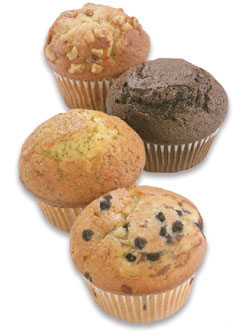 Muffins are smaller versions of quick-breads and are often the moister, richer and sweeter cousins of scones or biscuits. Muffins are so easy to make, that if you are a beginner, after cookies, they should be the next baked good to make.
Muffins are traditionally baked in muffin tins from a batter prepared from a mixture of all-purpose flour, sugar, baking powder/soda, eggs, fat, and milk (buttermilk, yogurt, sour cream), though recipes can vary. Dried or fresh fruit, nuts, chocolate, extracts, herbs and spices, cornmeal, bran, oats are some of the flavorings that can be added. A streusel topping, a sprinkle of coarse sugar or a drizzle of a glaze can be added for flavor and texture. Today's most popular muffin flavors include bran, banana nut, blueberry, corn, and poppyseed. All muffins are good served warm or reheated.
Generally speaking, muffin batter has a flour to liquid ratio of 2:1. Always measure flour precisely, using a scale if you have one. Muffin recipes are sensitive to the ratio of flour to liquid. Too much flour and the muffin will not rise properly and will be dry. Too little flour and the muffin will flow over the edges of the muffin cup rather than dome nicely. If you need to fine tune your favorite recipe, change the flour by a tablespoon or two.
Muffins Types:
There are Two Types of Muffins: bread-like and cake-like, each mixed using a different method and containing different proportions of fat and sugar to flour.
Less sugar and fat makes a bread-like muffin with a more coarse interior crumb than a cake-like muffin. The fat used is usually in liquid form, either an oil or melted butter. Stirring must be kept to a minimum so the gluten is not overdeveloped. The interior crumb has small, and more irregular air holes.
A higher sugar and butter content makes a cake-like muffin. The butter (room-temperature) and sugar are creamed together and need more stirring to develop the desired structure. The interior crumb should have smaller air holes and tender, more like a cake.
A 3rd Mixing Method - the method used in Baking Powder Biscuits and Pie Crust, where butter is cut into the flour until crumbly.
Muffin Mixing Methods:
The optimum proportion of ingredients, mixing, and baking results in a the ideal muffin which has a good volume, a slightly rounded, golden brown and pebbly top, when mixed with the Muffin Mix Method, or a smooth top, when mixed with the Cake Method.
The Muffin Method is used to mix most muffin batters. The purpose of this method is to limit the amount of gluten production during the mixing process, keeping quick breads light and tender. Only two bowls are needed to make the batter. One bowl is used to mix all the dry ingredients together. The second bowl contains all the wet ingredients. The fat used with the bread-like muffins is usually in liquid form, either an oil or melted butter. For best results, the wet ingredients are usually poured into the dry ones and mixed with a large spoon until just combined.
The important step here is not to overmix the batter. It is done this way so the gluten protein in flour is not developed until the last minute when wheat flour and moisture are mixed, resulting in a tender and flavorful recipe. Liquid fat is less effective than solid fat from preventing gluten and this mixing method helps to prevent excess from forming. Overmixing your ingredients also means beating too much air out of your batter. Only 10 to 15 strokes are needed to moisten the ingredients and the batter should be still lumpy and you may still see a few traces of flour. Don't worry about these lumps as the batter continues to blend as it bakes and any lumps will disappear. This is the opposite of yeast breads that require kneading to develop the gluten.
- Combine dry ingredients in one bowl, mixing well. If you didn’t mix them before combining with the liquid ingredients, when baked, the muffins will likely get elongated holes (tunnels) inside;
- Combine wet ingredients in another bowl, mixing well.
- Finally combine the dry and wet, by hand with a wooden spoon, just enough to blend - DO NOT OVERMIX. Only 10 to 15 strokes are needed to moisten the ingredients and the batter should be still lumpy - don't try and smooth it. The lumps will disappear when the batter bakes. When lifted with a spoon, the batter should break and separate easily.
- Form and bake immediately in a well-preheated oven. DO NOT OVERBAKE.
Traditional Muffins Recipe:
2 1/2 cups flour
3/4 cups sugar
1 T. baking powder
pinch salt
3/4 cups milk
1/2 cup butter, melted
2 eggsMix the dry ingredients. Mix the rest of the ingredients and stir in just until combined. Bake at 350 degrees for 25 - 30 minutes until a toothpick inserted into the center comes out clean.
Makes 1 dozen.
Variations:
Blueberry - add 1 cup blueberries that have been dusted with flour to the batter, and sprinkle the batter in the baking tins with cinnamon and sugar. These were very good - light, although I should have baked them longer.
Carrot Nut - add 1/2 - 1 cup grated carrots and nuts
Zucchini Nut - add 1/2 - 1 cup grated zucchini and nuts
The Cake Method is prepared using the same method as mixing a butter cake batter where the butter and sugar are creamed together. The butter (room-temperature) and sugar are creamed together. The eggs are mixed in and then the wet and dry ingredients are added alternately. The higher sugar and fat content in this type of muffin act as tenderizers by minimizing gluten, thereby producing a richer cake-like muffin with a softer crumb. The increased fat content also minimizes the development of gluten which again helps to produce a muffin with a softer crumb.
To make cake-like muffins, use a lower protein flour—cake or pastry flour. Higher protein all purpose or bread flours will make a muffin that is chewier and more bread-like.
- The butter (room-temperature) and sugar are creamed together.
- The eggs are mixed in.
- The wet and dry ingredients are added alternately.
- Batter will look smooth. DO NOT OVERMIX.
- Form and bake immediately in a well-preheated oven. DO NOT OVERBAKE.
If any muffin batter is over-mixed, it will not easily rise in the early part of the baking. This results in a lighter slick crust with a duller appearance, a top which is not rounded but has peaks, and tunnels or holes through the center of the muffin.
Cakelike Muffins:
Uses 1 cup less flour than traditional muffins, a little bit less milk, and adds vanilla and baking soda (for some reason even though they contain no acid ingredients). Thus there is a higher proportion of butter and sugar to flour.
1/2 cup butter
3/4 cups sugar
2 eggs, added one at a time
1 tsp. vanilla
2/3 cup milk
1 1/2 cup flour (or use cake flour)
1 T. baking powder
1/2 tsp. baking soda
pinch saltCream butter and sugar. Add the eggs, one at a time. Stir in the vanilla and milk. Mix the dry ingredients and fold in. Bake at 350 degrees for 25 - 30 minutes.
Makes 1 dozen
Variations:
Blueberry - add 1 cup fresh or frozen blueberries
Cranberry - add 1 cup fresh or frozen cranberries
Apple Cinnamon - add 1 cup chopped apple and 1 tsp. cinnamon
Pineapple - add 1 cup well-drained pineapple
3rd Alternative Method (Cut butter into dry ingredients):
Combine dry ingredients. With a pastry blender or two knives, cut in
butter or margarine until particles are the size of small peas; make
a well in the center. In a small bowl, combine egg and milk; add all
at once to the well in flour mixture, stirring just until moistened.
Fold in fruit or nuts. Stella Parks from Serious Eats like to use this method. See her Raisin Bran Muffins and Classic Blueberry
Muffins.
Muffin Batter
The traditional ratio for muffins and quick bread is 2 parts flour, 2 parts liquid, 1 part egg, and 1 part butter. A Basic muffin batter shouldn’t be too sweet. A good rule of thumb is to use as much sugar as butter.
Basic Muffin Ingredients:
2 cups (260 g) all-purpose flour
1/2 cup (100 g) granulated sugar
2 teaspoons baking powder
1/2 teaspoon salt
3/4 cup (180 ml) milk, room temperature
1/2 cup (114 g) unsalted butter, melted and cooled
2 large eggs, room temperature
2 tablespoons coarse sugar, optional (for sprinkling on top)
Muffin batter is meant to be thicker than pancake batter to hold its shape and rise properly during baking. It generally contains less liquid than pancake batter. Several recipes make a very thick batter saying it gives a better rise. Pancake batter is typically thinner to allow it to spread easily on a hot griddle and create a light, fluffy texture.
Toppings
Streusel Topping:
1/4 cup sugar
1/2 tsp. cinnamon
1/3 cup flour
4 T. cold butter
Crumble the butter into the rest of the ingredients and sprinkle over the batter in the muffin cups.
The 'perfect' American Muffin is symmetrical with a domed top. The surface of the muffin should be bumpy and the volume of the batter should have almost doubled during baking. The muffin should feel light for its size and when cut in half its interior should be moist and tender with no tunnels. American muffins can be either sweet or savory and are traditionally served warm for breakfast. They are best eaten the day they are made or frozen.
Spices, chopped nuts, and oats can be added.
Cinnamon & Sugar Topping:
After adding the batter to the tins, sprinkle muffins with sugar and cinnamon (or nutmeg).
Muffin Pans:
Muffin Pans: For better baking, use shiny muffin pans for golden and tender muffin crusts. For easy baking and easy cleanup, use greased paper baking cups preferably when the batter is cake-like (thinner batters).
If you don't use all of the muffin cups when filling the muffin tin, fill the empty ones 1/2 full with water. This way they won't smoke in the oven.
Non-stick surfaces for muffin pans are available which enables easy removal of the muffins. Each pan can have 6-, 12- or 24- cup-shaped depressions and range from mini- to jumbo in size. Mini muffin pans usually have 12 or 24 cup-shaped depressions.
Batter can be spooned or poured into the pan and be careful not to stir while putting it in. However, take the guesswork out of filling muffin cups by using a spring-handled ice-cream scoop! Scoops marked with a No. 20 or 24 get most muffin cups about 3/4 full -- the amount you need for the rounded tops you want.
Note about Paper Liners:
Paper or foil muffin cup liners are sometimes used to line the muffin pans. The advantage of paper liners is not only does it make clean-up easier but they also help to keep the muffins moist and help prevent them from drying out. However, if you like your muffins to have a crust, do not use paper liners. Instead, spray the muffin pan with a non stick vegetable spray.
Make sure that the muffin tins are evenly filled so that they bake evenly. Most recipes direct that the muffin tins be filled 2/3's full to allow room for expansion. If you want high-domed muffins where the domes are higher than the body of the muffins, fill them fuller than that.
Resting the dough overnight
According to The Kitchn, "My first job in food was at a bakery in my college town. It’s also where I learned that the secret ingredient for beautifully domed bakery-style muffins is something you can’t buy: time. At the bakery, we’d mix up muffin batter and refrigerate it overnight for the early shift to bake the next morning. That resting period is what makes muffins from your favorite coffee shop look and taste better than anything that’s come out of your oven. But why is that?
As muffin batter rests, the starches in the flour have more time to absorb the moisture from the eggs and liquid in the batter. As a result, the starches swell, giving the batter a thicker, more robust consistency. You know how gluten develops slowly overnight in no-knead bread recipes? The same goes for muffin batter. The gluten that develops overnight is enough to support the tall, domed structure of the muffins without making the breakfast treats tough."
If you decide to try this:
Check your leavening! Resting muffin batter only works if the leavening agent includes double-acting baking powder. The baking powder reacts first when the wet and dry ingredients combine and again when the batter goes into a hot oven. If your leavening comes from an acid, like buttermilk, and baking soda alone, the bubbles may burst before the batter bakes. Baking soda reacts immediately. If you don't bake fast, you lose that lightening power and end up with pucks.
Cooling the batter allows the starches in the flour to expand, leading to a thicker consistency and better texture. Scoop the chilled batter into a prepared muffin tin and bake straight from the fridge. You may need to add 2-3 minutes to the baking time.
For more information, see Why Rest Muffin Batter Overnight.
 Baking and Cooling:
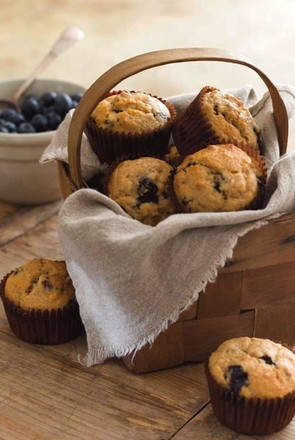
 Bake muffins in a well-preheated oven until they are a light golden brown. The muffin top should spring back when gently pressed with the finger. The best test to determine a muffin’s doneness is to insert a wooden pick into the center of one of the center muffins (they bake slower than the outer ones) before removing the pan from the oven. If the toothpick comes out with a few moist crumbs (not clean) clinging to it, the muffins are done; if underbaked, they can fall flat when cooling. If the toothpick comes out with raw dough in it, they are not done.
Watch closely as they are baking. Over-baked muffins will be dry and tough. Under baked muffins may be moist and heavy with a doughy center.
Remove muffin tin from the oven and let it sit on a wire cake rack to cool for about 5 - 10 minutes. Then remove to finish cooling on the rack; do not let the muffins cool in their tins. Serve muffins while they're good and hot!
NOTE: Do not cool muffins in their pans or they will get soggy bottoms. Instead, the muffin tin should sit on a wire cake rack for 10 minutes before removing muffins to cool back on the wire cake rack. Turn the pan over and tap lightly and the muffins should fall right out. They are less apt to fall apart when removing if you give them that 10 minute resting period.
If the muffins continue to stick, carefully run a narrow flexible metal spatula or thin-bladed knife around the sides of each muffin to loosen.
When baking muffin (or any recipe), hang an oven thermometer on the middle shelf in your oven. Baking muffins at too high temperatures can cause a hard crust to form. Too low a temperature can cause flat muffins.
If you find that some of your muffins were peaked while others were not and the oven temperature is correct, the oven may be heating unevenly, with “hot spots.” So, rotate (turn) the muffin pans from front to back halfway through the baking time for even baking.
WHAT DOES THE PERFECT QUICK-BREAD (MUFFINS INCLUDED) SUPPOSED TO LOOK LIKE ON THE INSIDE?: The surface of the muffin should be bumpy (or smooth if more cake-like) and the volume of the batter should have doubled during baking. When cut in half, muffins should have a moist crumb, laced with irregularly sized and spaced air holes (smaller with more consistently sized air holes if cake-like).
DO NOT OVER MIX AND/OR OVER BAKE MUFFINS AND OTHER QUICK BREAD RECIPES. When a muffin turns out dense, dry and flavorless, you have either over mixed the batter and/or over baked it.
If you break open your muffins and see tunnels, you've over mixed the batter! The excess of air bubbles beaten into the batter, stretch the gluten while baking. To prevent, STOP mixing when you have generally just combined the dry and wet ingredients.
To prevent over baking, the muffin tin should come out of the oven just when the muffins have a tiny bit of baking to go.
Storage and Freezing:
Storage: After cooling completely, place muffins in an airtight container and store at room temperature. (If they contain perishable items, refrigerate where the muffins will last for about 5 days to a week).
Muffins and other quick breads freeze wonderfully for up to 1-2 months. After cooling, wrap tightly in plastic wrap and then put them in an airtight freezer bag. They should keep for several months. They can be thawed in their wrappings on a kitchen counter. Or, unwrap, place in loosely in foil and then place in a preheated 225 degree F oven.
Freshen day-old muffins by heating them in a microwave oven for 1 to several minutes at 50% power until they are warm. Or wrap in foil and place in a preheated 325 degree F oven. Muffins will harden if overheated, so watch them carefully.
SOME MORE QUESTIONS & ANSWERS:
HIGHER DOMED MUFFINS:
QUESTION: No matter what recipe I use, I always end up with flat muffins. How do I get jumbo domed ones like you see in the bakeries? Should I add more baking powder or baking soda?
ANSWER: Resist the temptation to add more baking powder to your muffin recipe, thinking it will give you higher muffins. If you over leaven your batter it will cause the muffins to over inflate when baked, which weakens the structure and will cause the muffin to collapse. This will result in a heavy, compact textured muffin. General rule of thumb is 1 to 2 teaspoons of baking powder or 1/4 teaspoon of baking soda plus 1/2 cup (120 ml) of an acidic ingredient, leavens 1 cup (140 grams) of all purpose flour. The exact amount will vary according to the ingredients used and how the batter is mixed. If you want taller muffins, see How to get Bakery-style High Domed Muffins.
Here are some tips:
- Jumbo muffins are made in large, jumbo muffin pans, but you can use your regular muffin tins to make large, domed muffins.
- The recipe that you are using MUST have a thick batter. Thin batters usually bake flatter muffins no matter what you do because they don't provide a strong foundation from which a muffin can puff in the oven.
- Fill the muffin tins almost or to the top of the rim, instead of 1/2 or 2/3rds full, suggested by most recipes. You'll get fewer muffins from the batch, ie: 9 muffins out of a dozen mixture, so fill the empty muffin tins half full with water so they won't smoke during baking. Do this after you place the filled muffin tins on the oven shelf.
- To cause a batter to dome, you have to preheat the oven to 425 degrees F, even though the recipe may say to use 350 or 375 degrees F. As soon as you put the muffin batter in the oven, reduce the heat to what the recipe says. The initial high heat of 425 degrees F causes the batter to have greater oven spring or the rapid rise during the first few minutes of baking. This results in a high domed muffin.
QUESTION: Explain the result of the absence of various ingredients on the quality of muffins.
ANSWER:
No baking powder: The muffins have poor volume and texture and are tough. The absence of CO2 gas for leavening has produced a structure that was not raised.
No egg: The muffins are tough and have a large crumb. The egg yolk is necessary to emulsify the fat so that it is evenly dispersed throughout the batter to give a tender product. The egg protein acts as a structural component, necessary to to get a thin wall around the air cells. The egg yolk also adds flavor and color to the crumb.
No fat or sugar: The muffin is less tender, less moist and has poor surface color. Fat tenderizes by coating the flour particles and forming masses that physically separate the developing strands of gluten and prevent them from coming together. With no fat, the gluten can become overdeveloped and result in a tough muffin. Sugar tenderizes by competing for moisture, thus retarding protein hydration and gluten development, and then by elevating the coagulation temperature of the structural proteins so that there is more time for the cell walls to stretch and the volume increase before coagulation occurs to define the final volume of the product.
Extra fat and sugar: The muffin is very tender and cakelike due to the interference with gluten development by the fat and sugar. Crust browning in the oven is enhanced due to the Maillard reaction and in part to caramelization.
QUESTION: Why do I always get tunnels in my muffins made with cornmeal or whole wheat flour? Explain.
ANSWER: Cornmeal does not contain gluten forming proteins so products made with only corn meal will not develop tunnels. Gluten will be developed as a result of the addition of wheat flour to a corn meal product, but the incidence of tunnels will be low due to the nature of the corn meal and its capacity for interference with gluten development. Whole wheat flour does contain gluten, but the presence of bran, an interfering agent, greatly reduces the incidence of tunnels.
QUESTION: How does the technique of making baking powder biscuits differ from the technique of making muffins?
ANSWER: The formulation for muffins differs from biscuits in the ratio of flour to liquid. Muffin batter has a flour to liquid ratio of 2:1 whereas biscuits have a ratio of 3:1. The method of mixing the ingredients is also different.
a) With muffins, the dry ingredients are mixed together in one bowl and the liquid ingredients, including the fat, are mixed in another. The liquid ingredients are then added to the dry. With biscuits, the plastic fat (stick butter, stick margarine or shortening) is cut into the dry ingredients first, and then the liquid ingredients are added.
b) Muffins require very little manipulation of the batter. The liquid ingredients are stirred into the dry only enough to moisten the dry ingredients. Biscuits require thorough mixing of the dry and wet ingredients and much more manipulation of the dough to adequately moisten the dry ingredients.
QUESTION: Is it really necessary to line muffin tins with ruffled paper cups?
ANSWER: Cook's Illustrated found the answer: they baked blueberry muffins with and without paper liners. While the muffins baked in liners did have a more rounded, filled out look, they did not rise as high as those baked right in the cup. They also found that the papers hindered the browning of the sides of the muffins, and that a good portion of each muffin was lost when peeling off the paper. All in all, we prefer to grease muffin tins and bake your muffins right in the cup, though cleanup is admittedly easier with muffin papers. Thoroughly grease or spray the muffin tin cavities. -- It makes sense because muffins need a hot oven and pan in which to puff up in the oven! -- Sarah
