Angel Biscuits (& Rolls)
“Angel biscuits” and “magic biscuits” are two old-fashioned, slightly hyperbolic names for buttermilk biscuits that contain both baker’s yeast and chemical leaveners (i.e., baking powder and baking soda). Typically, baked goods contain either yeast or chemical leaveners but not both. The unconventional combination of leavening agents results in biscuits that possess the best qualities of both buttermilk biscuits and yeast rolls: They’re either the fluffiest, most fragrant biscuits you’ve ever tasted or the most tender, buttery rolls you’ve ever had.
The short blurb about these biscuits in Southern Biscuits says that they're also called Bride's Biscuits because they're foolproof.
I also found a recipe at Red Star Yeast's web site called Angel Rolls. They are more of a yeast roll than a biscuit, but use the same combination of yeast and chemical leaveners.
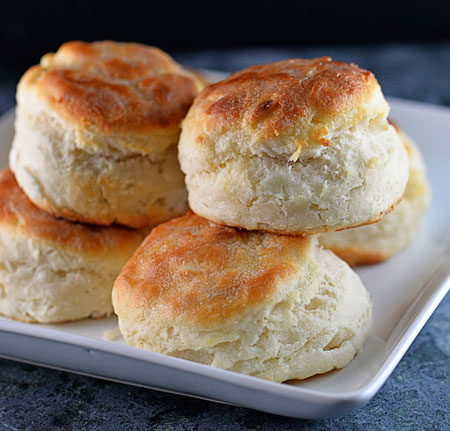
Angel Biscuits
Angel Biscuits
from http://www.slate.com/
These biscuits are made like traditional Baking Powder Biscuits - the butter is cut into the dry ingredients and the liquid is then added. The dough is rolled out and cut with a biscuit cutter.
4½ teaspoons instant yeast or two ¼-ounce packets active dry yeast
5 cups all-purpose flour
¼ cup sugar
4 teaspoons baking powder
1½ teaspoons salt
1 teaspoon baking soda
1 cup plus 2 tablespoons (2¼ sticks) cold unsalted butter
2 cups buttermilk
1. Heat the oven to 425°F. Combine the yeast with ¼ cup warm water—about the same temperature as the inside of your wrist—in a small bowl. Let sit for 5 minutes.
2. Meanwhile, combine the flour, sugar, baking powder, salt, and baking soda in a large bowl. Add 1 cup (2 sticks) of the butter and blend with a pastry cutter or your fingers until the mixture resembles coarse crumbs. Add the buttermilk and the yeast mixture and stir just until combined, then transfer the dough to a floured surface and knead 5 or 6 times. [Other recipes have you refrigerate the dough and let it rise before rolling: "for an even lighter biscuit, move to an oiled plastic bag and let rise until doubled, then punch down and proceed to shape." This recipe also said the dough can be refrigerated up to one week and use as desired.]
3. With a rolling pin, roll out the dough until it’s ¾ inch thick. Cut into rounds with a biscuit cutter or glass [do not twist while cutting, biscuits cut straight down rise higher] and transfer to an ungreased baking sheet with the edges of the rounds touching. Gather up the dough scraps, roll them out, and repeat. Cover the pan with a clean kitchen towel or plastic wrap and let the dough rest for at least 10 minutes [other recipes say 30 minutes].
4. Melt the remaining 2 tablespoons butter in a small saucepan over medium-low heat (or in a microwave-safe bowl in the microwave). Brush the biscuits with the melted butter. Bake until the biscuits are golden brown, 10 to 15 minutes. Serve hot or warm.
Yield: 25 to 30 biscuits
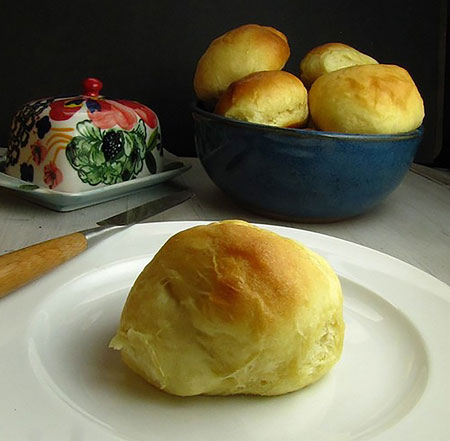
Angel Rolls from Red Star Yeast
Angel Rolls
from http://redstaryeast.com/
This recipe from Red Star Yeast, called Angel Rolls instead of Angel Biscuits, adds eggs to the dough. None of the Angel Biscuits recipes I looked at do. The pictures of the biscuits look like biscuits - a bit shaggy. The picture of these rolls look more like rolls than they do biscuits. Also this recipe uses regular milk instead of buttermilk, as we find in the biscuit recipes, and are made like traditional yeast rolls.
1 package (2¼ tsp, ¼oz, 7g) RED STAR Active Dry Yeast
5 cups bread flour, divided
⅓ cup sugar
1 tsp salt
1⅓ cups milk
¼ cup butter
2 eggs
¾ tsp baking powder
½ tsp baking soda
In a mixing bowl, blend together yeast, 1 cup flour, sugar, and salt. Heat milk and butter to 120-130ºF; butter does not need to melt. Add to dry mixture; blend on low speed. Beat 2 to 3 minutes on medium speed. Add eggs; beat 1 minute. By hand, stir in baking powder, baking soda, and enough remaining flour to make a smooth, very soft, sticky dough. Place dough in lightly oiled bowl. Cover; let rise until dough tests ripe.
Yeast dough is considered “ripe” when it has risen enough – usually doubling in size. The ripe test determines if the dough is ready to be punched down and shaped. Gently stick two fingers in the risen dough up to the second knuckle and then take them out. If the indentations remain the dough is “ripe” and ready for punch down. If not, cover and let the dough rise longer. Repeat test.
Turn dough onto lightly floured surface; punch down to remove air bubbles. Divide dough into 4 parts. Divide each part into 2 pieces. Divide each piece into 3 sections. Shape each piece into a smooth ball. Place on greased cookie sheets. Cover; let rise until indentation remains after touching. Bake in preheated 375ºF oven 12 to 15 minutes or until golden brown. Brush with melted butter if desired. Remove from pan; cool.
Yield: 24 rolls
