How To Make Crusty Italian Bread
from http://cooklikeyourgrandmother.com/
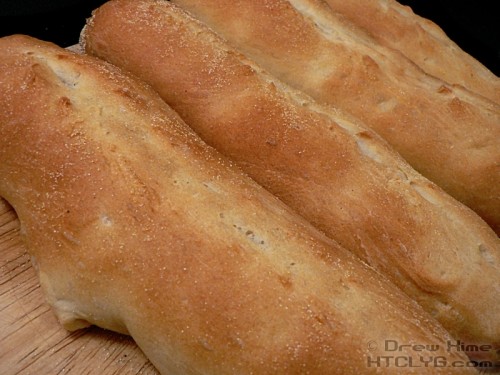
The author of this recipe is trying to reproduce the rolls used in Philadelphia for hoagies and cheesesteaks, namely those made by the bakery, Amoroso's. The loaves are long in shape and cut in half to make hoagies.
One poster wrote, "I have made so many loaves of Italian bread, trying to capture that wonderful taste of a Philly roll, and this is the closest I have ever come. Thanks so much for the great recipe and directions!"
Also see https://www.kingarthurbaking.com/recipes/italian-sub-rolls-recipe (uses an overnight starter, reviewers thought the rolls needed more salt and that they were too small)
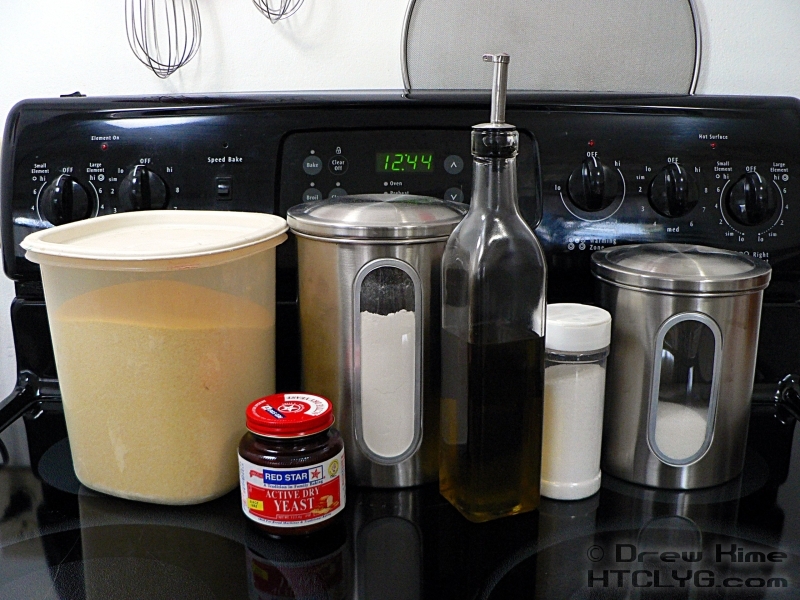
1 package (1/4 ounce, 2-1/2 teaspoons) active dry yeast
1-1/4 cups warm water (105°-115°)
3 cups bread flour
2 teaspoons sugar
1 teaspoon salt
1 tablespoon olive oil
cornmeal for dusting
Dissolve the yeast in a quarter-cup of warm water. You should actually check the temperature of the water. Too cold and it won't activate, too hot and you can kill the yeast.
Give the yeast a few minutes, until it starts bubbling, then mix it in with the rest of the warm water.
Add the flour, sugar and salt and stir.
Don't add the oil until after you've worked the water and flour together. Otherwise the oil will coat the proteins and prevent gluten formation. Gluten lets the dough stretch when it rises, making it light and chewy instead of crumbling like cake.
After mixing the oil in, turn the dough out onto a clean, floured surface to knead. Stretch the dough away from you, fold it back, turn a quarter turn and repeat. Once the dough is well incorporated, slap it on the surface a few times. This will encourage more gluten production leading to a lighter, airier bread.
When the dough is smooth and silky, continue kneading for another several minutes. You can work it with both hands and keep turning the dough, or just hit it from opposite angles with each hand.
If you’re kneading the dough by hand, and the dough is too sticky, once the dough is more or less homogeneous, that is, all of the flour is incorporated, you can invert a bowl over the dough and walk away for fifteen minutes or so. You don’t want moisture to escape at this point. I’ve had very good luck with just walking away from stubborn doughs. If necessary, you can give the dough a quick fold and let it sit for another 15 minutes.
Once the dough is thoroughly kneaded, place it in an oiled bowl. Toss the dough around so it is coated with oil all the way around. Cover the dough with plastic wrap, pressed right up against the dough. This will prevent a skin from forming on the dough, allowing it to rise more.
Put the bowl someplace warm until the dough has doubled in size, about 1-1/2 to 2 hours.
Pre-heat the oven to 425° [500° ?]. If you have a pizza stone, put it on the bottom rack. Otherwise, place a baking sheet upside-down on the bottom rack. Place a pan of water on the bottom of the oven.
Turn the dough out onto a floured surface and punch down to knock out most of the air out. Don't go crazy and try to turn it into a pancake. You want to handle the dough the least amount as possible.
Roll the dough out into a loaf shape and cut it in half. You can form the halves into loaves or, like I did here, divide each half into three smaller pieces.
Split into each hoagie-sized portions. Place each ball into a lightly oiled container. Place the dough in the fridge to ferment for at least one day, and up to four days is optimal. According to the recipe, a different one, the author kept the dough in the fridge for a week, and the resulting hoagie rolls were still great, even if the dough was a little stickier to handle.
Roll out the pieces of dough until they are about 6-9 inches long.
If you have a peel (the large wooden spatula you see in pizza shops) use that. If not, a wooden cutting board will work. Dust it with cornmeal so the dough doesn't stick. [One commenter suggested using parchment paper and baking the bread on it.
Cover the loaves with plastic and allow to rise for another 40 minutes. They should roughly double in width.
Cut each loaf down the middle with the sharpest blade you have. If you don't have anything that is absolutely razor sharp, use a razor blade. You want to cut about a quarter-inch deep in a single quick stroke without sawing back-and-forth. This will prevent the bread from bursting open when it rises in the oven.
Transfer the loaves onto the baking stone. Leave room between loaves for them to rise some more.
If they don’t all fit on your stone, put the rest on an upside-down baking sheet.
Bake at 425° for 10 minutes, then turn the oven down to 400° and bake another 25-30 minutes. To check if they’re done, pick one loaf up and thump on the bottom with your thumb. If it has a hollow sound, it’s done.
If you want really crusty bread, great for dipping in olive oil or marinara sauce, place a pan of water in the bottom of the oven. The steam will keep a skin from forming too fast, giving the bread more time to rise. It will also make the crust crisper.
Don’t put the loaves near the top. The radiant heat from the top of the stove will brown the crust too much, too fast.
Serve immediately with butter, or with olive oil and balsamic vinegar for dipping.
Yield 6 rolls