New York Deli Rye
from https://www.breadexperience.com/, recipe from Bread Baker's Apprentice by Peter Reinhart
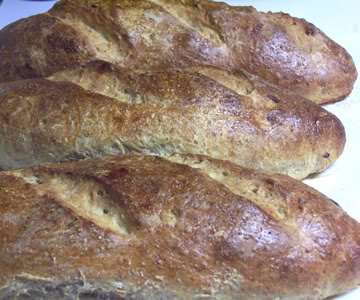
This bread was made for the BBA Challenge. "I really liked this bread! Forget about the other breads. I just want to keep making this one. Just kidding…"
Rye Sponge Starter
1 cup (7 ounces) sourdough starter
1 cup (4.5 ounces) whole rye flour
1/2 cup (4 ounces) water, lukewarm
2 medium (12 ounces) onions, diced
2 tablespoons (1 ounce) vegetable oil
Final Dough
3 1/2 cups (16 ounces) unbleached high-gluten, bread, or clear flour
1 cup (4.5 ounces) white rye flour
2 tablespoons (1 ounce) brown sugar
2 1/4 teaspoons (.56 ounce) salt
2 teaspoons (.22 ounce) instant yeast
2 teaspoons (.22 ounce) caraway seeds (optional)
2 tablespoons (1 ounce) vegetable oil
1 cup (8 ounces) buttermilk or milk, lukewarm
1/4 to 1/2 cup (2 to 4 ounces) water, or as needed, at room temperature
Semolina flour or cornmeal for dusting
1 egg white, whisked until frothy, for egg wash (optional)
Making the Starter:
Begin this process the day before you plan to make the bread.
Make the starter by mixing together the barm [sourdough starter], rye flour, and water in a small bowl, cover with plastic wrap, and set it aside.
Sauté the onions and let them cool in a bowl until they are warm, not hot. Stir the onions into the starter.
Then re-cover with plastic wrap, and ferment at room temperature until it bubbles and foams, about 3 to 4 hours. Refrigerate overnight. I actually refrigerated it for two nights because of my schedule.
Remove the starter from the refrigerator 1 hour before making the dough to take off the chill.
Making the Dough:
Stir together the flours, brown sugar, salt, yeast, and caraway seeds (if using) in a bowl (or use your mixer if you prefer). Add the starter, shortening, and buttermilk.
Stir with a large metal spoon (or with your mixer) until the mixture forms a ball. Add only as much water as is necessary to bring everything together into a soft, not sticky mass. Let this sit for 5 minutes so the gluten can begin to develop.
Transfer the dough to a counter sprinkled with flour and knead the dough for no more than 6 minutes if possible. This is to prevent the dough from getting gummy. Only add enough flour to make a firm, slightly tacky dough.
Fermenting the Dough
Lightly oil a large bowl and transfer the dough to the bowl, rolling it around to coat it with oil. Cover the bowl with plastic wrap. Ferment at room temperature for 1 1/2 to 2 hours or until the dough doubles in size.
Remove the dough from the bowl and divide it into 2 or 3 equal pieces.
Shaping the Loaves
I decided to shape them into batards because I think that shape is so cool.
To make the batards, gently pat the dough into a rough rectangle.
Without degassing the piece of dough, fold the bottom third of dough, letter style, up to the center and press to seal, creating surface tension on the outer edge.
Fold the remaining dough over the top and use the edge of your hand to seal the seam closed and to increase the surface tension all over. Set them aside for proofing.
Proofing the Loaves
Line a baking sheet with parchment paper and dusted it with cornmeal. Then transfer the loaves to the baking sheet and mist the tops of the loaves with baking spray [oil]. Proof the loaves at room temperature for approximately 90 minutes, or until they have grown 1 1/2 times in size.
Baking the Loaves
Preheat the oven to 400 for the free-standing loaves. Brush the loaves with egg wash.
Scoring them is optional but I decided to do it and I’m glad I did.
Bake the loaves for 20 minutes, then rotate the pans 180 degrees for even baking, and continue to bake for 15 to 40 minutes, depending on the size and shape of the loaves. The loaves should be golden brown all over and make a hollow sound when thumped on the bottom.
Remove the loaves from the oven, then transfer them to a wire rack to cool for at least 1 hour before slicing or serving.
Makes: 2 or 3 Loaves
