Tangzhong Technique
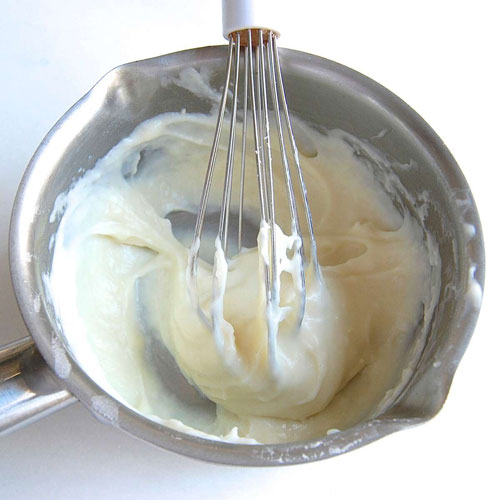
Tangzhong or water roux is a cooked mix of flour and water used in breadmaking. It makes the bread softer and increase its shelf life.
Many bread recipes from Asia utilize something called “tang zhong”, or “water roux” to achieve this special bread texture. TangZhong is a Japanese technique that involves cooking a mixture of flour and water to create a slurry that will be later added to the bread dough. A slurry is typically a mixture of equal parts of flour and water used in thickening soups or stews. By precooking some of the flour, the gluten in the flour is allowed to stretch and develop, giving it longer and more elastic strands. In soups, this development and cooking of gluten helps to thicken the broth by trapping more moisture within the gluten strands, preventing the liquid from freely moving around. Similarly in bread, the addition of our tangzhong slurry increases the amount of water the final bread dough is able to absorb, giving the bread the final softer texture since it is harder to dry out the dough during the baking process.
To make Tangzhong, you simply cook a small percentage of the raw flour in a recipe with a liquid. You heat the mixture over the stove in a saucepan to approximately 150°F (65°C), at which point the starches in the flour will gelatinize. During starch gelatinization, the liquid is absorbed into the starch which swells as the mixture becomes more viscous and gel-like. When you do this, the process irreversibly turns the mixture into a sticky starch-paste that’s then added to the dough during mixing. This dough is easy to work with as the cooking has created a structure to retain the moisture. The moisture is contained within the dough and as a result creates wonderful oven spring as the dough bakes. This upfront cooking is a small step at the beginning that results in a bread that’s more tender and fluffy without the need for, or a reduced quantity of, other enrichments such as butter, oil, or eggs.
It's important to choose an appropriate recipe: a yeast bread that’s inherently soft, tender, and light. Be it a white sandwich loaf or buttery dinner rolls, tangzhong will enhance bread’s texture, and keep it fresher longer. You would not want to use tangzhong (soft, tender bread) when making crusty baguettes or chewy bagels.
How To Make Tangzhong - General Instructions
Making Tangzhong is an easy process. Here is how to do it. See below for determining the amount of flour to use.
- Take 1 part flour and 5 parts of water or liquid to be used (The 1:5 ratio of flour to water is by weight.)
- Example: 1/4 C Flour (30 g) 3/4 C Water (150 g)
- Mix well with a whisk until no lumps remain
- Heat the mixture to 150°F or 65°C while stirring often
- Cover and let it cool before adding to the bread dough
Most of the tangzhong breads found in the market are made using the bread flour or all purpose flour. Though you can make it with whole wheat flour, [this writer’s] results have not been very spectacular. So if you plan on using this method to make whole wheat bread, make the tangzhong using all purpose flour. It will not alter the nutritional value by much, but will increase the shelf life and create softer crumb.
How Long to Cook the Tangzhong:
You want to heat the mixture to 150°F. The spoon that you have been using to stir the mix will start leaving a visible trail all the way to the bottom of the pan. The consistency of the mix has changed into a thick paste and all the water is absorbed into the flour. This is your cue to turn off the heat and transfer the contents to another dish, cover and let cool. The mix will not release water as it cools. Keep the tangzhong covered as we do not want to dry it out. If not using the same day refrigerate it for 2 to 3 days.
Converting regular bread recipe to use tangzhong
Tangzhong bread recipes use about 5% to 10% of the flour weight in the recipe to make the roux. When converting a recipe, you will need to take some of the flour and liquid from the recipe ingredients to make the roux. In other words, you don't want add extra flour and a liquid to the bread formula by adding the roux as another ingredient over and above what it in the recipe. If you did this, you would change the ratio of ingredients (baker's percentages) in the formula.
First calculate 5% (to 10%) of the flour weight in the recipe to determine the amount of flour to use in the roux. Add the type of liquid used in the recipe to the flour using the 1:5 ratio (1 part flour to 5 parts liquid).
To convert the bread recipe, reduce both the flour and liquids in the recipe by 5% (or up to 10%). Say 5% of the flour is used to make the roux and should be subtracted from the recipe. The original measurement of the liquid/s used in the recipe is for the entire amount of the flour used, but we want to reduce it by the same percentage as the flour. So reduce the liquid by the 5% (or up to 10%) of flour that was used for roux.
Here is an example: Original recipe calls for 100g flour and 50g water. 10g flour is used for roux which is 10% or 1/10th of the original recipe’s flour weight. So make the roux with 10g of flour using the recipe instructions above by adding 50g of water (1:5 ratio).
When making the bread dough for the recipe, reduce the flour in the recipe by 10%. This is the 10% used to make the roux. Reduce the water by the same amount. 1/10th or 10% of 50 is 5. This calculation results in the altered recipe using 45 gms of water instead of the 50g. So the new recipe will read tangzhong made with 10g flour and 50g water. Reducing the amount of flour by 10% leaves 90g remaining flour to add per the original recipe. By reducing the water by the same amount (10% = 5g) leaves 45g water remaining to be added to the dough. There will be extra water in the dough that is extra not in the original recipe.
The result is – roux made with 10g flour (10g flour + 50g water) added to the modified recipe of 90g flour and 45g water. So the tangzhong recipe has 45g more water. In this case we have almost doubled the water in the recipe.
Another example: The typical sandwich bread or dinner roll recipe (like Golden Pull-Apart Butter Buns) has a hydration level of around 60% to 65%. But when you’re using the tangzhong method, you want your recipe’s hydration to be about 75%. Why? Because when using tangzhong, some of the liquid in the dough is “trapped” by the pre-cooked slurry (the tangzhong), and thus plays no part in the dough’s texture; as far as hydration is concerned, it’s as if that liquid isn’t even there. The method above attempts to make this calculate easier.
Tips
- Adding more roux does not make the bread softer, instead the crumb becomes dense.
- For 100% whole wheat bread make the roux with AP/bread flour and reduce the flour used from the original recipe.
- Do not cook the dough more than 149°F / (65°C) a few degrees either way will not hurt. Cooking it more will dry out the roux and will not help it retain moisture. The mix loses it elasticity and does not retain moisture when overcooked
- You can make the bread dough with the hot tangzhong (keep it below 10%), but do not add yeast directly on the hot tangzhong. Mix it in until the dough temperature is just warm and then add the yeast.
