Classic French Omelette
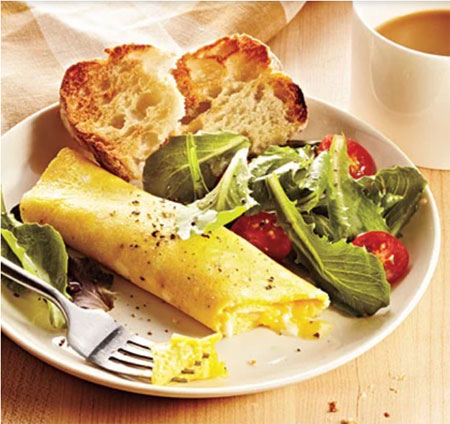
The French omelette is smoothly and briskly cooked in a very, very hot pan specially made for the purpose. The technique relies on clarified butter (to ensure a high smoke point) in relatively great ratio to the eggs (prevents sticking and cooks the eggs more quickly). Good with just salt and pepper, this omelette is often flavored with tomato and finely chopped herbs (often fines herbes or tarragon, chervil, parsley and chives) or chopped onions. French omelettes are also removed from the pan in a manner different from an American omelette. They can be rolled out in a trifold design or just simply slide out of the pan directly into a plate and when made correctly have little to no colour to them.
A good French omelette is a smooth, gently swelling, golden oval that is tender and creamy inside and is not cooked as long as its American counterpart. And as it takes less than half a minute to make, it is ideal for a quick meal. This omelette is simple in design but can be difficult in execution; yet learning to make a good omelette is entirely a matter of practice. In France, omelettes are served as a starter course or even the focal point of a light supper.
To make 1 omelette (serves 1 person)
2-3 eggs (3 is traditional)
1 Tbsp. butter
Fillings, if using (see suggestions below)
1. Begin by making sure everything is ready. This is a very quick process. You need everything in its place: the eggs, the fillings if any, the butter, the (preferably warm) plates on which you're going to serve the omelettes, and any garnishes or accompaniments you may wish to use.
2. Next, heat an 8" skillet, empty, for about a minute. Don't use a pan any larger for a one person omelette. To make sure the skillet is the right temperature, hold your palm a few inches above it; when your hand feels warm, the pan is ready. Add the butter and swirl it around so it covers the entire surface of the pan. The butter will melt, then foam up.
3. While the pan is heating, whisk the eggs; then immediately pour them into the hot skillet, otherwise they will deflate. The egg should only be about 1/4 inch thick. Incorporating lots of air into the eggs will ensure a light and fluffy omelet.
4. After adding the eggs to the skillet, shake the skillet back and forth over the heat for about 1 minute; keep the eggs moving. With a rubber spatula, draw some of the cooked egg from the side into the center of the skillet, tilting the skillet so some of the uncooked egg flows into the spot you pulled the egg from.
5. When most of the egg is cooked, yet still moist on top, add the filling, if using, down the middle. Then, with the rubber spatula, gently fold one-third of the omelet over the filling. Press down lightly to seal the omelet.
7. To serve, tilt the skillet to let the curved edge of the remaining third of the omelet slide onto the plate. Roll the skillet over to fold the portion of the omelet that is left in the skillet over the third that is on the plate.
Serve immediately.
Also see Omelette aux Fines Herbes: fresh chives, parsley, chervil and tarragon (great spring recipe)
Filling Suggestions:
- Shredded Gruyere cheese and minced fresh chives
