Homemade Mustards
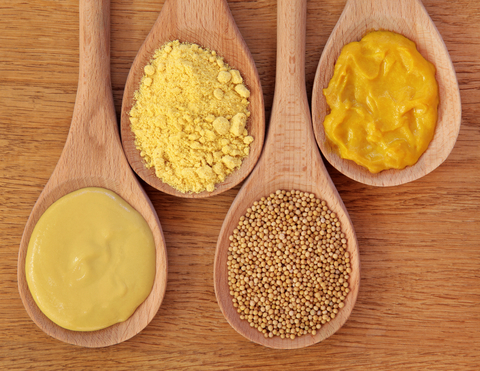
This is a collection of mustard recipes that I have gathered from different sources. The basic idea behind making mustard is this: Grind seeds and add cool liquid. At its most basic, this is all mustard is. Both Chinese and English mustard (think Colman's) are nothing more than water and mustard powder. But there are some things you need to know to make great mustard.
Types of Mustard Seeds
* If your recipe calls for dark mustard seeds, you will be disappointed by substituting white ones. The flavor is truly that different, like night and day, and substitution is not recommended.
* You have three choices when it comes to which variety of mustard seed you use: white, brown, or black. White mustard undergoes a different, milder reaction than do brown or black mustards, which are far zingier. American yellow mustard is made with white mustard seed and turmeric, brown mustards are in most of your better mustards, and black mustard is used in hot mustards or in Indian cuisine. Black mustard can be expensive, as the seeds must be harvested by hand, hence the limited availability.
* The best mustards combine brown or black mustard seeds with white mustard powder: The two sets of chemical reactions complement each other and make a more complex mustard. You make smooth mustards from a powder, grainy mustards from mustard seeds.
Adding Liquid
* Before grinding the seeds, they should be softened by soaking in some kind of liquid. Use enough to submerge the seeds. Depending on the age of the seeds, they may absorb more or less liquid over a day or two, expanding as they soften.
* When adding the liquid, consider temperature. Mustard's punch will dissipate with heat; adding a warm or hot liquid, or cooking the mustard (some recipes are thickened with egg), can dull, even mute, the flavor. To maximize the pungency, use a cold liquid. Since heat causes the pungent flavor of mustard to dissipate, mustard is generally added near the end of the dish and gently heated. DO NOT let the mustard mixture boil. Boiling makes mustard very bitter.
* You need cold liquid. What gives mustard its bite is a chemical inside the seeds reacting with cool or cold liquid. You also need to break the seeds to get at the fiery chemical—it's like cutting an onion. Heat damages this reaction, however, so to make a hot mustard use cold water, and warm water for a more mellow mustard.
***Mustard sauces lose punch when long-cooked, and should always have a little extra fresh mustard tossed in at the end of cooking.
Adding an Acid and Salt
* This reaction is volatile, too. Left alone, your mustard will lose its bite in a few days, or in some cases even hours. But adding an acid, most often vinegar, stops and sets the reaction in place—this is precisely what happens with horseradish as well. Always add water or a non-acidic liquid first, let the mixture sit for 10 minutes or so, then add the acid (vinegar, verjus, lemon juice, etc).
* Add salt to taste, but it's typically about one to two teaspoons per cup of prepared mustard. Adding salt not only improves the flavor, but also helps preserve the mustard, too. If you skip the vinegar and salt, you will still have mustard, but it will not keep for long. Not that it will go bad, but it will lose it’s flavor.
* Once made with salt and vinegar, mustard is nearly invulnerable to deterioration. Mustard is one of the more powerful anti-microbial plants we know of, and, considering it is mixed with vinegar and salt, it becomes a heady mix no wee beastie can survive in. It is said that mustard will never go bad, although it can dry out.
Let the Flavors Meld
* Finally, let your mustard set in the fridge or in a cool place for at least a day before you serve it. Bitterness is a byproduct of the mustard reaction, but that bitterness fades after a day or so. Pure mustards can be kept at room temperature, but mustards with other ingredients that could spoil should be kept in the fridge. The one caveat to making mustard at home is to wait. You cannot eat it the day you make it. Mustard needs to marinate to dissipate its bitterness. Try it: Eat a little dab right after you make it, then a day or two later. The difference is dramatic.
Yellow Mustard
from https://www.seriouseats.com/
Ground mustard forms the base of the sauce, with vinegar pumping up the kick, and turmeric providing that bright yellow color that sets American mustard apart. While the flavor is well in line with store brands, the texture has a slightly gritty, homemade feel as opposed to the familiar, super processed version. Spread over a hot dog, though, the color, tang, and bite is all there.
1/4 cup water
4 tablespoons dry ground mustard
3 tablespoons white distilled vinegar
1/2 teaspoon quick-mixing flour (such as Wondra®)*
1/4 teaspoon plus
1/8 teaspoon kosher salt
1/8 teaspoon turmeric
Pinch garlic powder
Pinch paprika
Place water, mustard, vinegar, flour, salt, turmeric, garlic powder, and paprika in a small saucepan over medium heat and whisk until smooth.
Bring mixture to a boil, then reduce heat to a simmer until thickened, about 5 minutes, stirring often.
Allow mustard to cool, transfer to an airtight container and store in the refrigerator for up to a month.
*Like pastry flour, Wondra is lower in protein than all-purpose flour and comes very finely ground. Because it's so fine, it dissolves instantly in liquids — why it's also called instant flour or quick-mixing flour — and won't clump.
Makes 1/2 cup
Ballpark Beer Mustard
This bright-yellow mustard, like the familiar French's, gets its color from turmeric. Unlike French's, it's quite hot, with a pleasantly beery afterglow and a lemony tang. Good with hot dogs and burgers. Not surprisingly, it's a great bridge to a nice cold beer.
1/4 cup Colman's dry mustard
1/2 cup light-bodied beer (such as Coors, Corona, or Full Sail Session Lager)
2 tbsp. water
1 teaspoon turmeric
1 egg
1 1/4 teaspoons salt
1 teaspoon cornstarch
1/2 teaspoon lemon juice
1/2 teaspoon sugar
1. Whisk together dry mustard, beer, water, and turmeric in a medium metal bowl until smooth. Chill, covered, overnight.
2. Bring a medium saucepan filled with 1 inch water to a simmer. To bowl of mustard mixture, add egg, salt, cornstarch, lemon juice, and sugar and whisk to blend.
3. Set bowl over saucepan and cook, whisking constantly, until the mustard just thickens, 4 to 6 minutes.
Make ahead: 2 weeks, covered and chilled.
Makes 1 cup
Dijon mustard
from Gourmet Mustards: The How-Tos of Making & Cooking with Mustards, by Helene Sawyer and Cheryl Long
2 c. dry white wine
1 large onion, chopped
3 cloves garlic, pressed
1 c. (4 oz) dry brown mustard
3 T. honey
1 T. oil
2 t. salt
Combine wine, onion and garlic in a non-aluminum saucepan. Heat to boiling and simmer 5 minutes. Cool and discard solids. Add liquid to dry mustard, stirring constantly til smooth. Blend in honey, oil and salt. Heat slowly til thickened (watch fumes!) stirring constantly. Cool in covered jar. Age 2-8 weeks in cool place, then refrigerate.
Other recipes suggest adding a few drops of Tabasco to boast the heat.
Whole Grain Mustard
1 T. whole coriander seeds
6 T. whole mustard seeds (black and yellow for more complex flavor)
1 T. green peppercorns
1/2 t. dried thyme
3/4 c. water
2 t. honey
1/4 c. red wine vinegar
Toast coriander seeds in dry skillet. Crush mustard seeds, peppercorns and coriander seeds in a mortar. Mix seeds, thyme and water in upper pan of double boiler. Let stand at least 3 hours. Heat water to boiling. Stir in honey and vinegar and cook 10 minutes or until desired consistency.
Basic Country Mustard
from https://honest-food.net/, Author: Hank Shaw
6 tablespoons mustard seeds, about 50 grams
1/2 cup mustard powder, about 50 grams
1/2 cup water or beer
3 tablespoons vinegar (cider white wine or sherry)
2 teaspoons salt, about 5 grams
1 teaspoon ground turmeric (optional)
2 tablespoons honey (optional)
1/4 cup minced fresh herbs (optional)
Grind the whole mustard seeds for a few seconds in a spice or coffee grinder, or by hand with a mortar and pestle. You want them mostly whole because you are using mustard powder, too.
Pour the semi-ground seeds into a bowl and add the salt and mustard powder. If using, add one of the optional ingredients, too.
Pour in the water or beer, then stir well. When everything is incorporated, let this sit for up to 10 minutes. The longer you let it sit, the mellower the mustard will be. When you’re ready, pour in the vinegar.
Pour into a glass jar and store in the fridge. It will be runny at first. Don’t worry, it will thicken up overnight. Wait at least 12 hours before using. Mustard made this way will last a year in the fridge.
VARIATIONS
Change the liquid and you change the mustard.
Grind the mustard seeds a lot or a little and you change the texture — or skip the whole seeds altogether and use just mustard powder. Or skip the powder and just use seeds.
Want herbs in there? Go for it.
Like honey mustard? Pour some honey in.
Want your mustard even spicier? Add chiles or freshly grated horseradish.
The most important thing to making mustard at home is to wait. You cannot eat it the day you make it. Mustard needs to marinate to dissipate its bitterness. Try it: Eat a little dab right after you make it, then a day or two later. The difference is dramatic.
Servings: 1 cup
English Pub Mustard
from https://www.washingtonpost.com/
An easy to prepare mustard that is good with sausage, cold cuts, or as an accompaniment to an English plowman's lunch of cheese, bread, pickled onions, and radishes.
1 cup dry yellow mustard powder (preferably Coleman’s)
1/2 cup light brown sugar
1 tbsp salt
1/2 tsp turmeric powder
6 oz. amber ale, flat (to flatten beer, whisk it quite vigorously for about a minute)
Add mustard, brown sugar, salt and turmeric to a small, non-reactive bowl and whisk them together. The mustard will form a thick paste at first. Whisk this paste until it is completely smooth (this will break up any clumps in the mixture and allow you to thin the mustard to a proper consistency). Then, add the beer slowly, whisking mixture continuously.
Transfer to a clean jar with a tight-fitting lid. Let mustard mature for a week at room temperature (the amount of sugar in this preparation prevents any spoilage), then taste.
For a hotter mustard, allow blend to sit at room temperature for a shorter time. To mellow a very hot mustard, let it sit at room temperature for more time.
Refrigerate when it reaches a level you like. I prefer one week of mellowing time, but I like a fairly hot mustard. Use within three months of refrigeration.
Makes 1 1/2 Cups
Bavarian Brown Mustard
1/2 c. whole brown mustard seed
3/4 c. dry sherry
1 c. dry mustard
1/4 c. brown sugar
1/4 t. salt
Combine seed and sherry and let stand 2-3 hours. Blend until almost smooth. Add remainder of ingredients. Let age 2-8 weeks (in cool, dark place), then refrigerate. The longer you let it sit out before refrigerating, the milder it will be.
Sweet German Mustard
1/4 c whole mustard seeds
1/2 c hot tap water
1/4 c cold tap water
2 t dark brown sugar
2 small peeled and halved garlic cloves
2 pinches ground cloves
5 t dry mustard
1 c cider vinegar
2 slices of onion
1 1/2 tsp. salt
1/4 tsp. ground cinnamon
1/4 tsp. ground allspice
1/4 tsp. crumbled dried tarragon
3 t light corn syrup
1/4 tsp. dill seeds
Soak together the mustard seeds, dry mustard, hot water, & 1/2 cup of the vinegar for at least 3 hours. Combine in a saucepan the rest of the vinegar, cold water, onion, brown sugar, salt, garlic, cinnamon, allspice, dill seeds, tarragon & cloves. Bring to a boil, boil for one minute & cover. Let stand one hour.
Scrape soaked mustard mixture into a blender. Strain into it the spice infusion, pressing solids into a strainer to extract all flavor. Process the mustard (covered) till like a coarse puree with a definite graininess. Pour mixture into the top of a double boiler set over simmering water & cook 10 minutes, stirring often till the mixture is noticeably thicker. Remove from heat, add the Karo and pour into a storage jar. Let it cool uncovered, then cap and store. Can be refrigerated or not. Makes about 1-1/2 cups.
-- Better than Store-Bought by Schneider and Colchie
Swedish Sweet Mustard
Recipe courtesy Tyler Florence
A mustard most Swedes has grown up with, a must on the hot dog or Christmas ham
1/2 cup dry mustard
1/2 cup sugar
1 teaspoon salt
Pinch ground white pepper
2 tablespoons white vinegar
1/4 cup boiling water
1/4 cup vegetable oil
1/2 cup heavy cream
Place all the ingredients in the container of a blender, blend for 1 minute. Scrape down the sides of the blender with a rubber spatula and process for 30 seconds longer. The mustard should be a little thicker than heavy cream. Store in glass jar, well-sealed, in the refrigerator and let the flavors marry for at least a day before using. The longer it sits, the better it tastes; it also will get thicker and more yellow.
Herb mustard
1/4 c. black mustard seeds
1/4 c. yellow mustard seeds
1/4 c. dry powdered mustard
3/4 c. cold water
1/4 c. dry white wine
1/4 c. white wine vinegar
1 t. dried herb
1/8 t. ground allspice
Mix seeds and mustard with water in upper pan of double boiler. Let stand at least 3 hours. In another pan, mix wine, vinegar, herb and allspice and bring to a boil. Strain the liquid into the mustard and blend well. Cook in double boiler until desired consistency.
Horseradish Mustard
1 c. dry mustard
1/2 c . powdered sugar
1/2 t. salt
1/2 c. white wine vinegar
1/4 c. oil
1 T. fresh lemon juice
1/4 t. grated lemon peel
5 T. horseradish
Blend all ingredients. Let age in cool place for 2-8 weeks, then refrigerate.
