Difference Types of Brownies: Fudgy, Chewy, and Cakey
from https://www.thekitchn.com/
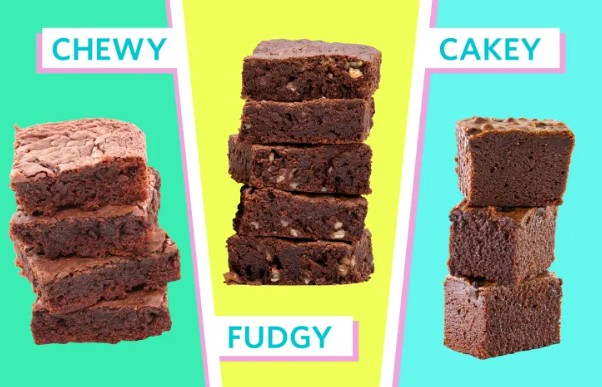
Baking Brownies Just Right: Cakey, Chewy, or Fudgy Change the proportions of ingredients to bake the style you like best.
Anytime you bake up a pan of brownies, whether it’s from scratch or you start with a box mix, there’s no question that you’re in for a real treat. These sweet chocolate squares are a timeless hit, but it’s important to remember that not all brownies are created equal.
There are three distinct types of brownies — fudgy, chewy, and cakey — and they each bring something a little different to the table. This is what sets them apart, and what you can expect from each type of brownie.
When it comes to choosing between fudgy, chewy, and cakey brownies, one isn’t better than another. Each variety has its own merits, and it all comes down to personal preference and which one is right for your tastebuds.
What sets these brownie varieties apart is the texture and flavor. The texture can range from dense, gooey, and intensely chocolatey to tall, airy, and balanced.There are definitely guidelines to follow so that you can make the style of brownie that suits your taste, whether it's cakey, fudgy, or chewy. All have similar ingredients. But because of the varying amounts of chocolate, butter, sugar, and flour, the texture of each brownie is quite different. These differences ultimately stem from the ratio of fat to flour in the recipe.
https://handletheheat.com/ tested brownie recipes and said: "I decided to experiment with the more unique technique of beating the eggs and sugar for 3 to 5 minutes with an electric mixer until they were pale, thick, and fluffy. After insuring the sugar was well dissolved into the eggs, I added the cooled melted butter and chocolate mixture and vanilla then proceeded with folding in the salt and flour. The results were interesting. These brownies were rich, fudgy, and chewy, but had a lightness about them that none of the other brownies had. Plus they had a beautiful crinkly tissue-thin crust on the top that I loved. I must admit that while I enjoyed certain characteristics of all the other brownies in this kitchen experiment, these whipped egg and sugar brownies were my favorite."
According to a YouTube video, called "Fudgy or Cakey Brownies? Make Them Both at Home!" by Erin Jeanne McDowell, this technique is key to getting a shiny, crackly crust on top. She beats the eggs vigoriously for one minute, using a hand mixer. She then adds the sugar and vanilla and makes sure the eggs are well mixed and the sugar is dissolved.
Fudgy Brownies
Serious chocolate-lovers, these are the brownies you need at the top of your list. With a high amount of fat (in the form of butter and chocolate) and less flour than other varieties, these sweet squares do not hold back. A fudgy brownie is dense, with a moist, intensely chocolatey interior. It is somewhere between a rich truffle torte and a piece of fudge.
This type of brownie consists of just a few ingredients: butter, sugar, chocolate, eggs, and flour. Fudgy Brownies (which purists often claim are the only real brownies) have a minimum of flour–about half a cup–and no leavening such as baking powder at all. Melting the butter rather than creaming it with sugar yields a denser, fudgier outcome. Unsweetened chocolate is the standard, with a full cup of sugar required to balance its bitterness. Either granulated or brown sugar may be used; substitute one for the other in equal proportions. The deeper the color of the sugar, though, the more pronounced the molasses flavor. It's all a matter of personal taste.
Chewy Brownies
Chewy brownies are the classics you know and love, and fall somewhere between their fudgy and cakey counterparts. True to their name, these squares have a deep chocolate flavor and are well-structured and chewy around the edge with a tender, moist, and slightly gooey center (although not quite as dense as a fudge brownie). If you prefer rich brownies that are more chewy than gooey, you'll want to choose a recipe that is made with brown, not granulated, sugar.
The chewiness seems to come from a couple of different factors: more all-purpose flour, whose proteins provide "bite"; and whole eggs, whose whites give structure and "set." Chewy Brownies usually get their texture from two factors: an extra egg (or even two) and a combination of different types of chocolate. Of all the chocolate types, unsweetened chocolate has the highest proportion of starches, which create a stiffer-textured brownie. Semisweet chocolate produces a creamier texture. Put the two together, often with a few tablespoons of cocoa powder to round out the flavor and thicken the texture, and you get a rich, satisfyingly chewy result.
Cakey Brownies
As their name implies, cakey brownies have a moist crumb and a slightly fluffy interior. Instead of a dense, rich center, cakey brownies are the thickest of the three and, while still moist, have a lighter, airier texture due to a lower amount of fat, more flour, and the addition of baking powder for leavening. This extra ingredient helps the brownies rise like a cake would, which is what helps make them tall and pillowy.
Additionally, the butter and sugar are usually creamed together, rather than melted with the chocolate. Creaming incorporates air into the mixture, which causes the brownies to rise higher. Granulated sugar also gives brownies a lighter texture than brown sugar. Many cakelike recipes also call for a bit of milk to add tenderness.
Blondies
Blondies are really butterscotch bars, made with brown sugar, butter, and eggs (and usually nuts as well), but no chocolate. Typically, blondies have a cakelike texture. Food historians tell us "Brownie" recipes first surfaced in the late 19th century. They are correct. But? This item was a far cry from what we know today. For starters, they had no chocolate. The first Brownie recipe, circa 1896, produced what we now call a Blondie. Go figure.
Preparing the Pan
First, use the pan size specified in the recipe-usually but not always 8 inches square. Baking in a too-large pan will yield thin, dry bars that may taste fine but won't resemble true brownies. Baking in a too-small pan may result in brownies with undercooked centers.
Be sure to select a light-colored, shiny pan, which will conduct heat evenly. Glass or dark-colored pans can cause the edges to overbake or even burn.
Always grease the pan thoroughly with shortening, softened butter, or cooking spray. (Do this even if the recipe doesn't specify.) After greasing the pan, many bakers like to line it with pieces of parchment paper or aluminum foil that have been cut larger than the size of the pan so that the edges hang over the sides like a sling. Thoroughly grease the lining. After the brownies have baked and cooled, the lining may be lifted out of the pan and inverted on a platter. Gently peel away the foil or paper, then cut the brownies into squares.
Brownies can also be baked very successfully in a well-greased mini-muffin tin, which eliminates the problem of cutting into squares.
Test for doneness before the recipe tells you to
In addition to ingredient proportions, baking time greatly affects the consistency of a brownie, so it's important to be attentive. Fudgy brownies baked three minutes too short can be unpleasantly gooey; chewy brownies baked three minutes too long become tough and dry.
Regardless of the pan you're using, start testing for doneness after 20 minutes of baking. First, press your fingers gently into the center of the pan. If the brownie feels like it's just setting, insert a toothpick near the center. Experience is the best guide, but here are some general rules. For fudge-style brownies, remove the pan when the sides have shrunk slightly away from the edges of the pan. The center will still be slightly gooey, but will firm up during cooling. Cake-style brownies are done when a toothpick inserted into the center has a few moist crumbs attached to it.
One last word: although it's awfully tempting to cut into a pan of just-baked brownies, hold off. The flavor and texture of each type of brownie will be at its best—and definitely worth waiting for—when completely cool.
