Gingersnap Cookies
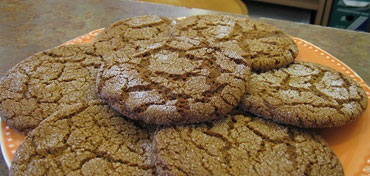
Gingersnaps are simply a variation of the traditional Gingerbread cookie. Both share the aromatic warmth of ginger and other spices, but gingersnaps are known for their crisper quality; their “snap” if you will when broken. Gingerbread is often rolled and cut into shapes like gingerbread men or houses; gingersnaps are typically small, round cookies. Introduced in colonial times, the main differences between Gingerbread and Gingersnaps is gingersnaps are baked longer than gingerbread to create that distinctive crisp texture. Also gingergesnaps always use molasses, whereas gingerbread can use a variety of sweeteners like sugar or honey. Molasses was used as substitute for sugar during colonial times as it was the more affordable alternative to sweetening. Molasses was the cheap byproduct of both the rum and sugar refinement process, making it the sweetener of choice for Colonial bakers.
Gingersnaps gained popularity during the Civil War era in the US due to their durability and ease of transport and storage, making them a practical food for soldiers. Today, gingersnaps are enjoyed worldwide, with variations in size and shape, such as the wafer-like version favored in Scandinavia and the more traditional cookie shape common in America.
Tips:
- Most recipes call for 2 cups of flour. Add more flour will keep the cookies from spreading as much. This recipes calls for 2 1/4 cups.
- Many recipes use white sugar instead of brown. If you use all brown sugar instead of white, the cookies will be chewier. While not necessarily cakey, chewy cookies have a noticeable softness and a slight "give" when bitten into. FMM: I think gingersnaps should be crisp, not chewy.
- Bake for 14 minutes in the preheated oven. If you bake them less (12 to 13 minutes) they will be chewy; if you bake them more (15 to 15 ½ minutes) they will be crisp. Keep an eye on them – depending on your oven, they may go from crisp to burnt in a very short space of time.
- The molasses in these cookies is hydroscopic, which means the cookies will draw moisture right out of the air over time, so store them airtight if you want them to stay crisp.
- Some recipes may include baking powder as well, which provides lift and can result in a fluffier cookie. If you're aiming for a classic crispy snap, prioritize baking soda.
- Chilling the dough before baking helps prevent spreading and ensures the cookies hold their shape, resulting in a thicker, chewier cookie. This allows the butter to firm up and the flour to hydrate properly. You can portion the dough and then chill it, making it easier to bake later. FMM: I do not want a chewier cookie, so do not refrigerate.
3/4 cup unsalted butter, vegetable shortening, or margarine, room temperature
1 cup firmly-packed brown sugar [use white, granulated sugar, not brown]
1 egg
1/4 cup molasses (regular or unsulphured)*
2 1/4 cups all-purpose flour [cut back to 2 cups]
2 teaspoons baking soda
1 teaspoon ground cinnamon
1 teaspoon ground ginger [most recipes use more, one even uses 1 tablespoon]
1/2 teaspoon ground cloves
1/4 teaspoon salt
Granulated sugar (for rolling in)
* Lightly grease or spray (non-stick cooking spray) your measuring cup before adding the molasses. This prevents the molasses from sticking to the cup.
In a large bowl, cream butter, brown sugar, egg, and molasses until light and fluffy. Add flour, baking soda, cinnamon, ginger, cloves, and salt; stir or beat until well blended. Cover the dough and refrigerate at least 1 hour or overnight.
Preheat oven to 375 degrees F. Lightly grease cookie sheets.
[Note: for cracks to appear, the outside of the cookie must dry out while the interior is still spreading and setting. Do not use a convection oven setting; you want the temperature at 375 degrees.]
Shape dough into 1-inch balls. Then roll the balls of dough into the granulated sugar, coating them thoroughly. Place balls, 3 inches apart, onto prepared cookie sheets.
Bake 10 to 12 minutes or until light brown (cookies will puff slightly and then collapse slightly, and tops will be covered with little cracks). Remove from oven and cool on wire racks.
Yields 3 dozen cookies.
