Roman apricot starter
from https://coquinaria.nl/
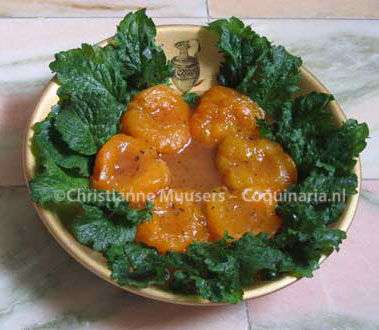
The classical Roman kitchen consisted of much more than spectacular and pretentious dishes with exotic ingredients. On the contrary, a true Roman appreciated simple food with vegetables and fruit, like the recipe of this page, Roman apricots. This dish was not a dessert, but was served during the first course of the meal, the gustatio.
Apricots are not indigenous to Italy. The fruit originated in China, where it was already cultivated two thousand years before its introduction, in the first century B.C., in Persia (Iran). Shortly thereafter the apricot reached Greece and Rome. The Romans called the fruit praecocium, because of its early maturation. In the English apricot you can still recognize the Latin name.
The apricot dish can be found in the fourth book (of ten) of De re coquinaria, titled in Greek Pandecter (The Greek language had the same prestige in classical Rome as French had in nineteenth-century Europe). Pandecter means ‘composed dishes’, and offers recipes for salads, stuffed omelets, stews with fish and meat, souplike dishes, and appetizers. The patina with quails and asperges is also a recipe from the book Pandecter.
gustum de praecoquiis: duracina primotica pusilla precoquiis purgas, enucleas, in frigidam mittis; in patina conponis; teres piper mentam siccam; suffundis liquamen; adicies mel passum uinum et acetum; refundis in patina super precoquia, olei modicum mittis et lento igni ferueat, cum ferbuerit, amulo obligas, piper aspargis et inferes.
Appetizer of apricots. Wash firm, early or small apricots, take out the stone, and put them in the cold [water]. Arrange them in a pan. Pound pepper and dried mint, moisten with liquamen, and add honey, passum, wine and vinegar. Pour over the apricots in the dish, add a little oil, and boil over a slow fire. Thicken [the sauce] with starch while it is simmering. Sprinkle with pepper and serve.
Ingredients
Amulum
A kind of starch. Today most starch is made from maize or potatoes, but in Roman days it was made from wheat, by repeatedly moistening and drying in the sun of wheat flour. The final result was starch, amulum.
Liquamen
A clear liquid made of small fermented fish with much salt and sometimes alsoe several kinds of dried herbs. The Romans used liquamen or garum in the same way we use salt. There is however a difference: salt dehydrates food, liquamen adds liquid to a dish. It was produced in factories and sold in amforas. There were many qualities of garum, from cheap to very expensive. Apicius would no doubt only have used the very best quality. Nowadays in the Far East a kind of fish sauce is still in use in much the same way as the Romans used garum. You can use these sauces as a substitute for garum: Vietnamese nuoc-nam, or Thai nam-pla. You can also try to make your own garum, as the Romans made it at home when they were out of stock.
Passum
Sweet white wine used in recipes from Roman antiquity. The wine is sweet because of the partly dried grapes that were used for it. They have a higher sugarcontent then fresh grapes. In Italy passum-type wines are still being produced, for example the Vino Santo.
Starter or dessert for 4 persons; preparation in advance 35 minutes; preparation 15 minutes.
6 small apricots
a lot of freshly groundblack pepper
½ tsp dried mint
1 Tbsp garum of Aziatische vissaus
100 gr honey
1 dl Vino Santo (that is the passum wine) - dl = deciliter measures fluid volume equal to 1/10 of a liter
1 dl red or white wine
3 Tbsp wine vinegar (red or white)
1 Tbsp olive oil
To thicken the sauce
1 Tbsp cold water
1½ tsp cornflour (that is the amulum)
Preparation in advance
Cut the washed apricots in half, remove the stone. The skin can be eaten, so just leave it on.
Temper pepper, mint and liquids.
Preparation
Pour the sauce over the apricots in a small pan, mix well, and simmer for about ten minutes until the apricots are soft. Remove the apricots from the pan.
Temper cornflour with cold water. Stir well, no lumps should remain. Then add this mixture to the sauce in the pan and stir until the sauce has thickened.
To serve
Arrange the apricots on a serving dish, or three halves on individual dishes. Pour the sauce over the fruit, sprinkle with some more pepper if you dare, and garnish with fresh mint leaves.
Romans ate with their hands. So be assured that this dish was not served piping hot, but warm or luke-warm.
