Epityrum (Olive Relish)
By Cato the Elder (de agricultura)
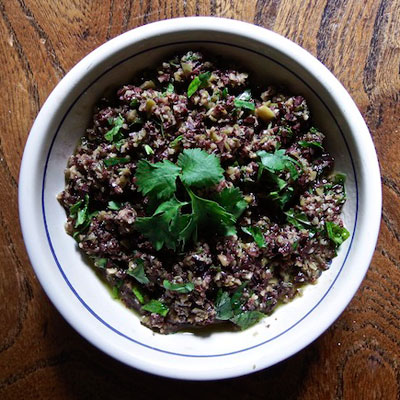
In the Odyssey when the suitors arrive to woo Penelope in the long absence of her husband Odysseus, they are treated with the customary xenia and served with a meals which included bread accompanied by an assortment of relishes:
A maid poured water from a beautiful gold jug over the visitors' hands into a silver bowl and drew up a carved table. An aged housekeeper had put out bread, adding many relishes, and encouraged them to taste all that was in the house.
Homer, Odyssey 1.136-43
Although the text does not state what the relishes were made of, it is probable that some would have been made from olives. The olive tree (Olea europaea) was native to the Mediterranean and had been cultivated in Greece for at least a thousand years before the Iliad and the Odyssey were composed. Olives were also a staple part of the ancient Greek diet and served at banquets, so it is likely that one of the relishes served would have been similar to the one described centuries later by Cato:
Green, black or mixed olive relish to be made thus. Remove stones from green, black or mixed olives, then prepare as follows: chop them and add oil, vinegar, coriander, cumin, fennel, rue and mint. Pot them: the oil should cover them. It is ready to use.
Cato, On Agriculture 119CXIX – How to make white, black and marbled epityrum
Recipe for making epityrum, either white, black, or marbled. Season white, black and marbled olives in the following way, having removed the pits. Cut them, put them in a seasoning of oil, vinegar, coriander, cumin, fennel, rue and mint. Let them marinate in an earthen vessel, let them bathe in the oil, and serve them this way.
Olive Relish
Recipe courtesy Sally Grainger
120g/4oz black olives
120g/4oz green olives
60ml/4 tablespoons red wine vinegar
60ml/4 tablespoons olive oil
1 heaped teaspoon chopped fennel leaf or finely diced fennel root
2 teaspoons chopped fresh coriander
2 teaspoons dried or chopped fresh rue
2 heaped teaspoons dried or 3 teaspoons chopped fresh mint
Chop the olives roughly and pour on the vinegar and olive oil. Prepare the herbs, chopping them finely if fresh, and add to the mixture. Place the olive relish in a sealable container and pour a little olive oil over the top.
At this stage it can be eaten, as Cato firmly says, but I think it improves with a few days' marinating. It is so delicious that I have rarely kept it for longer. Try it with pitta bread, accompanied by a sharp sheep's cheese such as feta.
Serves 4
Modern Redactions
60 g black olives
60 g green olives
(or 120 g of one type)
30 ml white wine vinegar
30 ml olive oil
1/2 tsp fennel
1 tsp coriander
1 tsp mint
Chop the olives, fennel, coriander and mint finely and mix together in a bowl
Add the vinegar and olive oil and combine the ingredients
Eat fresh or keep in a sealed container for a few days to allow the flavours to develop
Serve with bread
(or)
100g whole black olives (if you like green olives, go ahead)
1 teaspoon cumin
1 teaspoon fennel seeds
1 teaspoon coriander seeds
3 mint leaves
2 tbsp olive oil
3 tbsp white wine vinegar
Remove the stones from the olives and chop them.
Grind the cumin and fennel seeds in a pestle and mortar. Finely chop the coriander and mint.
Put everything in a blender and process it at the minimum speed. Then, little by little, add oil and vinegar and process for another minute. Serve with bread slice.
