Mustacei (Must Rolls)
Mustacei recipe in Latin from Cato, 121:
Original text
Mustaceos sic facito. Farinae siligineae modium unum musto conspargito. Anesum, cuminum, adipis P. II, casei libram, et de virga lauri deradito, eodem addito, et ubi definxeris, lauri folia subtus addito, cum coques.
Translation
Prepare the mustacei this way. Pour must* on a modium of white wheat flour. Add anise, cumin, two pounds lard, one pound cheese. Pick bay laurel leaves and shape the bread the size of the leaves. Bake the bread on the bay laurel leaves.
*Note: Must is the squeezed grape juice awaiting to be turned into wine and which may still have seeds and skins; although both seeds and skins tend to be removed straight away to avoid bitterness taste. This fresh grape juice is the first stage of the wine making process after squeezing the grapes and prior to fermentation.
FMM: As I was reading about this bread, I kept thinking about how they used to use the yeast in barme in the Middle Ages to raise breads and had to wonder if the must in this recipe was being used in the same way.
‘The lees of small beer; porter, and wine; or porter alone, will ferment when mixed with flour, and good bread may be made with it.’ (The Naval Chronicle, 1799)
Ancient Roman Grape-Must Bread – Mustacei
from https://historicalitaliancooking.home.blog/
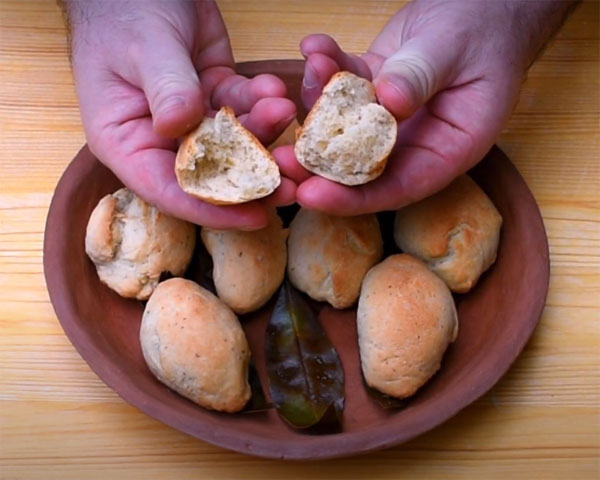
Usually, ancient Romans leavened bread in three ways, Pliny writes in his monumental work Naturalis Historia: preparing a sourdough, kneading fresh must with millet or bran (or, according to Palladius, a few centuries after, wheat flour) and letting it dry, or keeping aside a bit of previous-day dough to use it as a starter for the new bread. This last method was the most common at Pliny’s time. There was also unleavened bread, the author says. A few months ago we prepared a flatbread, taking the recipe from a beautiful poem attributed to Virgil, Moretum.
This time, we made the mustacei, bit-sized bread leavened with fresh grape must, from the agronomy book of Marcus Porcio Cato, De Agri Cultura, written around the 2nd century BCE. We chose this bread recipe, a little long but easy to prepare, not only because the outcome is delicious, fragrant with bay laurel leaves and slightly sweet, but also because it represents a fascinating example of seasonal recipe ancient Roman farmers prepared during the days of the grape harvest.
500 gr white wheat flour
50 gr lard
25 gr cheese [such as goat cheese]
a dozen bay laurel leaves
2- or 3-day-old grape must
cumin
anise
Prepare the must destemming and pounding the grapes, paying attention not to crush too many seeds to prevent the must from turning bitter. Remove the grapes’ skins and let the must rest for two or three days. [I would strain the must after the rest through a colander to remove the seeds and skins. In the video, they said to let the must rest at room temperature so that the must ferments and wild yeasts multiply.]
Pound in the mortar anise and cumin, then the cheese. Knead the dough with the white wheat flour, spices, cheese, and lard, adding the grape must a little at a time. If the cheese is not salty enough, add a pinch of salt. Let the dough rest overnight. [In the video, they said that the rolls would rise a little from the yeast.]
Now, shape the bread the same size of the bay laurel leaves and let it rest for at least half an hour.
Put the bread in the oven [they used a wood fired oven] for 20-30 minutes depending on the size.
Serve it still hot with beef or pork stew, guinea fowl, or a plate of fava beans.
This bread keeps well for a couple of days. We suggest storing it well covered without removing the bay laurel leaves to maintain its fragrance.
Ancient Grape Must Bread With Grape Yeast Water
from https://www.sewhistorically.com/
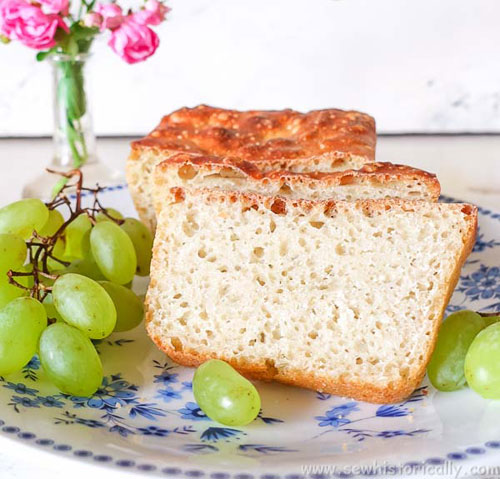
FMM: This recipe goes into more detail about making the grape must and takes their recipe from Pliny.
Grape must bread is an ancient wild yeast bread recipe: Pliny published it in Naturalis Historia in 77 AD! Because the Romans didn’t have commercial yeast back then they usually made used must or fresh wine to make their own yeast from scratch. [See Pliny on Making Yeast and Bread]
All you need to make this ancient Roman grape must bread, are grapes, water and flour. So it’s basically a 3-ingredient bread! Grape must bread tastes sweet and mild like other fruit yeast water breads.
Pliny’s grape must bread recipe says to knead together fine wheat bran and white grape must, form it into small cakes and dry them in the sun. To bake bread, the dried grape must starter is ‘soaked in water, and then boiled with the finest spelt flour, after which the whole is mixed up with the meal; and it is generally thought that this is the best method of making bread.’ (The Natural History of Pliny, 1856)
Grape Yeast Water
grapes – enough to make about 1 cup (200ml) grape juice
Mash Grapes.
I used organic white grapes but you can also make grape yeast starter with red grapes. Mash the grapes with your hands or a fork. You soon have a beautiful green grape juice. Pour it into a glass jar (don’t use metal). And cover the jar with cheesecloth.
Let Ferment For 3 Days.
Let the grape yeast water ferment for 3 days at room temperature. Stir the grape yeast water twice a day to prevent the growth of mold. After about 3 days, the grape must starter becomes brown and bubbly. In winter, it can take longer – about 5 days – until the grape yeast water is fermented.
The fermented grape yeast water smells and tastes of wine. It’s absolutely safe to taste it because it’s nothing else than young wine! Now strain the grape yeast water through a sieve to remove the peels and seeds.
Grape Yeast Starter.
1 cup (200ml) grape yeast water
1 cup (120g) flour – all-purpose flour or bread flour
Let Ferment Overnight Combine grape yeast water and flour in a large glass or porcelain bowl. The grape yeast starter should have a consistency like thick pancake batter. Cover the bowl with a kitchen towel and let it ferment overnight at room temperature.
Grape Must Bread Recipe
about 1 1/2 cups (300g) grape yeast starter
1 cup lukewarm water
4 cups (480g) flour – all-purpose flour or bread flour
Combine Ingredients Combine all 3 ingredients for the grape must bread in a large bowl. You can add 1/2 tsp salt if you want but it isn’t necessary because grape yeast water bread tastes just as well without it! Knead everything together with your hands or simply stir it together with a spoon.
Let Rise Overnight
Put the bread dough into a greased pan, cover it with a kitchen towel and let it rise overnight at room temperature until doubled in size.
Bake Bread
Preheat the oven to 400°F (200°C). Bake the ancient grape must bread for about 30 minutes.
