British Scones
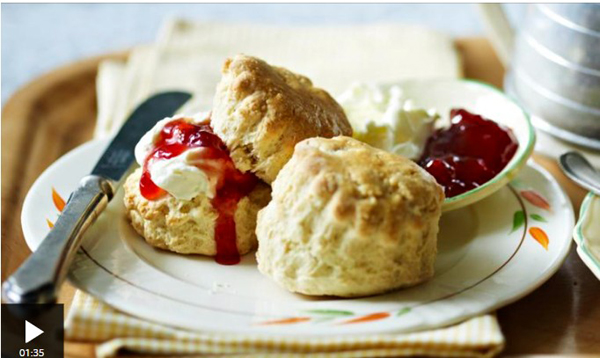
Mary Berry's Scones
British scones are different from American scones! British ones have less butter and sugar in them because you slather clotted cream (which is kind of a butter) and sweet jam on them when you eat them.
English scones contain more leavening agent than you would normally use for this amount of flour but you want them to rise high in a short time. And you don’t really add add-ins into the dough like in the US version. British scones are preferred plain, sometimes a few raisins are added.
Clotted Cream is really hard to find outside the UK. You can find it on Amazon or make your own (here is a great tutorial from Cupcake Project). But be prepared that it’s expensive to buy real clotted cream outside the UK, but you should definitely try it. If you can’t find clotted cream you can use butter, whipped cream, or mascarpone which is a great alternative I often use and available at most big grocery stores in the deli section.
The History of English Scones
Scones are thought to originate in Scotland, showing up in the early 1500s. These early scones were made from oats, and they were shaped the way American scones usually are—formed into a round, then cut into wedges. Traditionally, they were cooked on a griddle over an open fire. It is thought that these early scones were flat (even though yeast existed back then). Baking powder was added for leavening some time after it was invented in the 19th century.
During the Middle Ages, scones were piled up with biscuits to form weddings cakes. The earliest written recording of the usage of the word scone comes from 1480, when a petty customs account stated a baker, Frank Mathewe, had a small wooden chest with "400 spice cakes and 500 scone Jesus". The figure of Jesus was stamped onto baked goods at this time to show the product was made of the highest grade flour.
The earliest record written recipe for a scone can be found in a folio of written recipes at the Wellcome Collection and dates from 1669. The recipe, titled "Mrs Fellard's scone cake", includes the ingredients flour, currants, eggs, sugar, a pint of ale yeast and cream. The recipe also offers alternative versions, with one being savoury with bacon and served with gravy, much like American biscuits are today. In the book A History of Scotland from the Earliest Times, it is reported that in the 17th century the poorer classes would bake "oat cakes, or the scone of bere or barley" on a griddle, while the book, History of Scotland from Robert the Bruce to the Union of the Crowns stated under James VI that the poorer people "ate brose* and scarcely anything else, and the scone, the bannock, kirnmilk** and the kebbuck*** or cheese".
*Scottish dish made with a boiling liquid and meal
**buttermilk
***wheel or ball of cheese
Scones are now popular all throughout the United Kingdom and Ireland (and other places too), though they can be quite different depending on where you are. Scottish scones are still made with oats, but England began to use flour in their version instead. Nowadays, scones are baked in an oven, and they are usually leavened with baking powder, though there are versions that use yeast instead. English scones are also shaped into rounds rather than wedges.
English scones became an essential part of afternoon tea in England around 1840. They are usually very simple as they are meant to be topped with jam and cream.
Mary Berry's Scones
from https://www.bbc.co.uk/
Mary Berry's scone recipe makes the perfect easy tea-time treat, whether jam-and-cream-topped (in whichever order you like), plain or packed with sultanas. Read the recipe tips for some pointers to make sure your scones are the best ever. For this recipe you will need a fluted 5cm/2in cutter. If you use a larger cutter, you will get fewer scones and they'll take a little longer to cook.
450g/1 lb self-raising flour
2 level tsp baking powder
50g/1 3/4oz caster sugar
100g/3 1/2 oz butter, slightly softened, cut into pieces
2 free-range eggs
a little milk
handful sultanas (optional)
To serve
strawberry jam
clotted cream
Preheat the oven to 220C/200C Fan/Gas 7. Lightly grease two baking trays.
Put the flour, baking powder and sugar in a large bowl. Add the butter and rub in with your fingertips until the mixture resembles fine breadcrumbs.
Crack the eggs into a measuring jug, then add enough milk to make the total liquid 300ml/10fl oz. Using a fork or round-tipped knife, stir the egg and milk into the flour – you may not need it all – and mix to a soft, sticky dough.
Turn out onto a lightly floured work surface, knead lightly and work in the sultanas, if using. Roll out to a rectangle about 2cm/3/4in thick.
The dough should be soft and slightly sticky. Too much flour will make your scones heavy, so don’t add a lot of flour when rolling out the dough (you need just enough to stop the dough sticking to your worksurface).
If you roll it out too thin your scones will be flat; too thick and they are likely to lean to one side when baking.
Cut into as many rounds as possible with a fluted 5cm/2in cutter and place them on the prepared baking trays. Brush the tops of the scones with a little extra milk, or any egg and milk left in the jug.
Bake for 12–15 minutes, or until the scones are well risen and a pale, golden-brown colour. Lift onto a wire rack to cool. Eat as fresh as possible.
To serve, split the scones and serve with strawberry jam on the plain scones along with a good dollop of clotted cream.
Once the scones are cool, they can be frozen. To eat, defrost at room temperature and then reheat in a hot oven for 10 minutes.
To refresh stale scones, warm them through in a low oven for a few minutes. They'll be much more enjoyable.
Plain Scones (w/ blueberry variation)
from https://bakingwithgranny.co.uk/
Soft, light and wonderfully simple, these Plain Scones are a true British baking classic. Made with just a handful of ingredients, they’re perfect served warm with butter, jam, or clotted cream. If you’re looking for an easy, traditional scone recipe, this one is as reliable as it gets.
Plain Scones fall into the category of “rich scones”, meaning they contain a little sugar and fat for flavour and texture. Caster sugar dissolves easily into the dough, giving a gentle sweetness without making the scones overly sugary.
Yoghurt isn’t always used in traditional scone recipes, but it works wonderfully here. The acidity in the yoghurt reacts with the raising agents to help produce a lighter, softer scone. Plain yoghurt works best, but soya or coconut yoghurt is also a great option. Buttermilk or sour cream can be used in a similar way, too.
Blueberry or Fruit Scones: This author also has a blueberry scone recipe which is the same as below, but she adds 1 cup fresh or frozen blueberries in it. She suggests putting blueberry jam on them as they, like all British scones, do not have as much sugar in them as American scones do.
450 g/ 3 1/2 cups Self-raising Flour
Pinch of Salt
2 tsp Baking Powder
50 g/ 1/4 cup Block Margarine or Butter
50 g/ 1/4 cup Caster Sugar (Superfine Sugar)
200 ml/ 3/4 cups + 1 tbsp Milk
100 ml/ 1/3 cups + 1 tbsp Plain Yoghurt (dairy, soya, coconut…)
[1 cup fresh or frozen blueberries (do not thaw), or 2/3 cup raisins, chopped dates, currants, cranberries mixed in with flour. She brushes the tops of the later with an egg wash]
Pre-heat your oven to 220°c (200°c for fan assisted oven, Gas Mark 7 or 425°F). Grease two baking sheets with a little butter and set aside.
Sift the flour, salt and baking powder into a large bowl, holding the sift up to allow some air into them. Gently stir in the sugar.
Using the tips of your fingers, rub in the margarine/butter to the dry ingredients, again lifting as you do to allow air in. Continue until you have a sandy consistency.
Create a well in the middle. Whisk the milk and yoghurt together before pouring into the well. Using your hands, gently bring the ingredients together to form a soft, slightly sticky dough.
Turn out onto a floured work surface and gently knead together, before stretching the dough to about 2-3cm (about 3/4 - 1 inch) thickness.
Using a cookie cutter of your choice, cut your scones out and place them onto your pre-greased baking sheets. The smaller your cutter the more scones you will get. Reform and stretch the dough as required to use all of the dough.
Leave your scones to rest on the tray for about 10 minutes before brushing the tops with some extra milk.
Bake in your pre-heated oven for 10 minutes. If you are making smaller scones, keep a close eye on them as you may need to reduce the baking time to suit.
Once cool enough to touch, transfer to a wire rack to cool completely or enjoy whilst still warm.
Servings: 10
