Crawfish Etouffée
recipe from Chuck Taggart, The Gumbo Pages
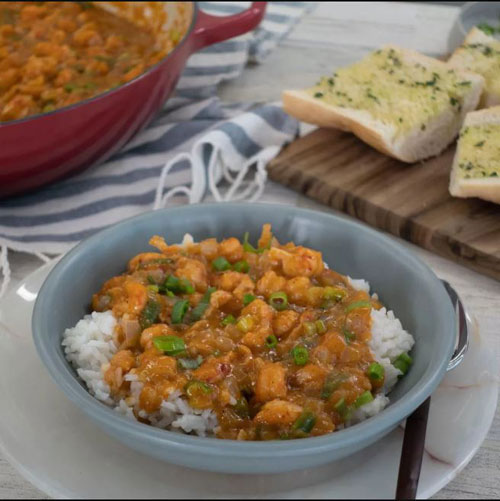
"Ok, now we're really cooking Louisiana-style. Spell it any way you want, my spell check doesn't have a clue how to spell it. The important thing is to pronounce it properly, 'ay-too-fay.' We are going for a true etouffée so it will not require a roux [the recipe adds flour for thickening once the onion, bell pepper and celery are added instead] and it will not include tomatoes, that's Creole style and a true etouffée is Cajun. Remember if you can't find crawfish, use shrimp or even chicken."
Note: Like gumbo, etouffée is also usually made with a roux and has its roots in Cajun and Creole cuisine. However, while gumbo usually uses a dark brown roux created through slow cooking, etouffée typically starts with a lighter-colored roux made with butter.
Faith's note: Etouffée literally means "smothered." In Louisiana cooking it signifies 'covering with a liquid or sauce.' Thus, etouffée is a dish of shellfish, simmered in a sauce made from a light or blond roux, served over rice. A true etouffée is made with crawfish, but I have made an excellent etouffée replacing the crawfish with 1 pound of boneless chicken, cut into bite-size pieces, and 1/3 pound of kielbasa, sliced into rounds. Brown, each separately, in the same skillet that you are going to cook the vegetables so their flavors get added to the pot. Remove, place in a bowl and set aside. Add them back to the pot when the recipe tells you to add the crawfish.
Small shrimp would also be a good substitute for the crawfish.
1 stick butter (½ cup)
1 chopped onion
1 chopped bell pepper
2 ribs chopped celery
1 clove minced garlic
1 pound cooked crawfish tails (can substitute small shrimp)
1 teaspoon salt
1 teaspoon Creole
Seasoning
3 tablespoon flour
2 cups water [use shrimp stock made from shrimp shells, chicken stock, etc. depending on the type of etouffée you are making]
2 tablespoons chopped parsley
1/4 cup chopped green onion
Cooked long-grain white rice, for serving
[Although Chuck Taggart's recipe does not require a roux, it may make this recipe better. He says above, "We are going for a true etouffée so it will not require a roux and it will not include tomatoes, that's Creole style and a true etouffée is Cajun." To make this with a roux, melt the butter, add flour and stir to form a smooth paste. Cook, stirring and scraping the bottom very frequently [all the time], until roux turns the color of your choice: blond, peanut butter–colored, or chocolaty brown. Note that a darker roux is easier to make with oil rather than butter. The color of the roux will change the flavor of the étouffée, from mild and light with a sweet shrimp flavor for a blond roux, to dark, slightly bitter, and complex for a darker brown one. Some recipes say it should be the color of peanut butter. Then move to the step where you add the onion, bell pepper and celery. Do not add more flour after the crawfish step.]
In a large skillet saute the onion, bell pepper and celery in the butter.
Add the garlic and saute for a couple more minutes.
Add the crawfish [shrimp, chicken], salt and Creole Seasoning and cook for a few minutes more.
Add the flour and stir until well mixed. [You could cook the flour 5 or 10 minutes to make it more of a roux. Take the seafood out so it does not overcook. You just need enough butter left in the pan to mix the flour with.]
Add the water [or stock]. Stir until the mixture thickens a little. Simmer on medium-low for 10 minutes.
Add the parsley and green onions and cook for a few minutes more.
Place a mound of cooked rice in the center of a soup bowl and surround it with the crawfish.
Note: Some people like to serve etouffée on top of corn bread instead of rice.
