Stir-Fried Shrimp with Snow Peas and Red Bell Pepper in Hot and Sour Sauce
From America's Test Kitchen, Season 11: "Shrimp in a Skillet"
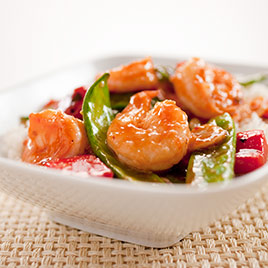
"WHY THIS RECIPE WORKS: Stir-fries are typically cooked over high heat to sear the food and develop flavor. This works well with chicken, beef, and pork, but delicate shrimp turns to rubber when cooked this way. We wanted a stir-fry with plump, juicy, well-seasoned shrimp in a balanced, flavorful sauce.
To start, we wondered if browning was really necessary. Abandoning the high-heat method, we turned down the burner to medium-low and gently parcooked a batch of shrimp (marinated in oil, salt, and garlic for better flavor and texture), removed them from the skillet, then turned up the heat to sear the vegetables, sauté the aromatics, and finish cooking the shrimp with the sauce. This worked beautifully. Reversing the approach—cooking the veggies followed by the aromatics over high heat, then turning the heat down before adding the shrimp—made the process more efficient.
As for an assertive sauce, the heavily soy-based brews we turn to for meat stir-fries were runny and salty. Better suited to the shrimp (and more traditional in Chinese cuisine) were sweeter or spicier sauces flavored with garlic and chiles and reduced to a consistency that tightly adhered to the shellfish."
Serve this stir-fry with steamed white rice.
2 medium garlic cloves, 1 minced or pressed through garlic press, 1 thinly sliced
1 pound extra-large (21-25) shrimp, peeled, deveined, and tails removed
1 tablespoon minced fresh ginger
3 tablespoons vegetable oil
1/2 teaspoon table salt
1 teaspoon soy sauce
3 tablespoons sugar
3 tablespoons white vinegar
1 tablespoon Asian chili-garlic sauce
1 tablespoon dry sherry or Shaoxing wine
2 teaspoons toasted sesame oil
1 tablespoon ketchup
2 teaspoons cornstarch
1 large shallot, sliced thin (about 1/3 cup)
1/2 pound snow peas or sugar snap peas, stems snapped off and strings removed
1 medium red bell pepper, seeded and cut into 3/4-inch dice
1. Combine minced garlic with shrimp, ginger, 1 tablespoon vegetable oil, and salt in medium bowl. Let shrimp marinate at room temperature 30 minutes.
2. Meanwhile, whisk soy sauce, sugar, vinegar, chili-garlic sauce, sherry, sesame oil, ketchup, and cornstarch in small bowl. Combine sliced garlic with shallot in second small bowl.
3. Heat 1 tablespoon oil in 12-inch nonstick skillet over high heat until just smoking. Add snow peas and bell pepper and cook, stirring frequently, until vegetables begin to brown, 1½ to 2 minutes. Transfer vegetables to medium bowl.
4. Add remaining tablespoon oil to now-empty skillet and heat until just smoking. Add garlic-shallot mixture and cook, stirring frequently, until just beginning to brown, about 30 seconds. Add shrimp, reduce heat to medium-low, and cook, stirring frequently, until shrimp are light pink on both sides, 1 to 1½ minutes. Whisk soy sauce mixture to recombine and add to skillet; return to high heat and cook, stirring constantly, until sauce is thickened and shrimp are cooked through, 1 to 2 minutes. Return vegetables to skillet, toss to combine, and serve.
TECHNIQUE:
MAKING A MARINADE THAT WORKS
A 30-minute soak in a mixture of salt, oil, and aromatics is the secret to perfectly tender, deeply flavored shrimp. The salt works its magic in two ways. First, it enters the flesh of the shrimp, helping them to retain valuable juices during cooking. Second, it forces the flavors from aromatics such as garlic and ginger into the oil. The oil in the mix distributes those flavor compounds evenly over the flesh (not just in areas in direct contact with the garlic) for shrimp that taste better than ever.
Serves 4
