Soy Sauce
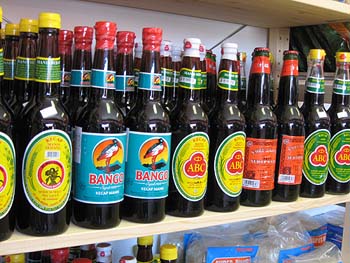 When it comes to Chinese food, few ingredients are more essential - yet at the same time more misunderstood - than soy sauce. We pour it on rice, use it for stir-frying and as a dipping sauce; still, the difference between light and dark, slowly aged or chemically manufactured soy sauce is not well-known.
One of the oldest condiments in the world (it's got a three-millennia history!), soy sauce is a by-product of fermented soybeans and wheat that have been mixed with brine. First, Aspergillus molds are added to cooked soybeans and roasted wheat resulting in a mixture called koji (the term koji can also be used to refer to just the bacterial culture as well). After the molds grow over three days, the culture is combined with salt water and transferred to large vats where lactobacillus—a bacteria that breaks down sugars into lactic acid—is added.
The resulting mixture, the moromi is allowed to ferment for a time period ranging from six months for standard supermarket brands to several years for high-end bottles. The soy sauce is finally strained, pasteurized, bottled, and sold.
History
Like tofu, soy sauce is made from soybeans. While the Europeans only discovered the soybean plant in the early eighteenth century, the Chinese were relying on it as a food source at least 5,000 years ago. The reigning emperor called it "Ta Teou," which means big bean, and declared it to be one of the five sacred grains, along with rice, wheat, barley, and millet. Nutritionally, soybeans provide the Chinese people with a healthy and inexpensive source of protein - two pounds of soy flour contains approximately the same amount of protein as five pounds of meat.
Soy sauce dates back about 2,000 years, during the Zhou dynasty. Originally a salty paste, eventually this developed into two separate products: the liquid shoyu (the Japanese word for soy sauce) and miso. While both are used in Japanese cooking, in China soy sauce is more important. Today, properly prepared soy sauce is made from soybeans that are mixed with roasted grain (usually wheat, rice, or barley) and fermented for several months. Once the aging process is completed the mixture is strained and bottled. By contrast, synthetically manufactured soys are produced in a matter of days through a hydrolytic reaction and seasoned with corn syrup, caramel coloring, salt and water. They lack the savory flavor of naturally brewed soy and often have a metallic taste.
Chemical soy sauces, such La Choy: These industrially-produced soy sauces are made over the course of about two days by hydrolyzing soy protein and combining it with other flavorings. Their flavor is far removed from traditional soy sauces made with fermented soybeans. Harold McGee explains the process in On Food and Cooking by saying:
Nowadays, defatted soy meal, the residue of soybean oil production, is broken down—hydrolyzed—into amino acids and sugars with concentrated hydrochloric acid. This caustic mixture is then neutralized with alkaline sodium carbonate, and flavored and colored with corn syrup, caramel, water, and salt.
We strongly recommend avoiding these types of sauces. Check the list of ingredients on a bottle before you inadvertently buy an artificial sauce. Avoid anything with the word "hydrolyzed" or caramel coloring in the ingredient list; it's not real (brewed) soy sauce. The only acceptable ingredients in soy sauce are soy beans, wheat, salt, and water. For instance, La Choy really ISN'T soy sauce. Look at the ingredients. It doesn't even have soy. It has soy protein and caramalized color or something. It's literally flavored water, not soy sauce!
Chinese Soy Sauces
The two basic types of soy sauce used in Chinese cooking are light and dark. Dark soy is aged much longer than light soy, giving it a brownish-black color and much thicker texture. As its name suggests, light soy has a lighter color, plus a saltier flavor. It is used more in cooking, as the rather pungent odor and darker color of dark soy sauce can ruin the taste or appearance of a dish. (Dark soy is used in red-cooked dishes, and is good for marinating meat). Ideally, you should keep both on hand.
Light: Made from the first pressing of fermented soy beans, these are generally more expensive than dark soys. Also known as "fresh" soy sauce, you'll sometimes find it labeled "pure bean" or "thin." These soy sauces are meant to enhance flavors when cooking. It's by far the most common cooking sauce in Chinese cuisine and is what most North Americans would think of as "regular" soy sauce. While light soy sauce is thinner and has a lighter color than dark soy sauce, it is also saltier. If a Chinese recipe calls for "soy sauce" without any further detail, you can assume it means light soy sauce. Double-fermented light sauces, which have a mellower, more complex flavor are also available and used primarily for dipping.
Dark and Double Dark: Like Japanese dark soys, Chinese "dark" soys are darker in color and thicker in texture, but tend to be lighter in saltiness. They are generally fermented for a longer period of time than their thin counterparts and often have added sugar or molasses, giving them a sweet-salty flavor and viscous texture. They are used solely for cooking, often added at the last stages to season and add color to sauces, for example, in red cooked dishes.
Mushroom-Flavored Soy Sauce: This is a dark soy sauce that is often infused with dried straw mushrooms. Less frequently you can also find this style made with dried Chinese black mushrooms. Mushroom soy sauce is used in place of dark soy sauce to add an earthy flavor to dishes. Feel free to use it as a substitute in your favorite recipes that call for dark soy sauce. It's particularly useful in those famous red cooking dishes. It also makes a nice table condiment.
Thick Soy Sauce: Thick soy sauce, used by restaurants to give fried rice its dark color, is made from molasses and soy bean extract. Thick soy sauces (also called soy paste or soy jam) are sweeter and have a thicker consistency than dark soy sauce. That is due to the addition of sugar, more wheat in the fermentation process, and, sometimes, a starch thickener used to make it. It takes only a small amount to add flavor to fried rice dishes.
Shrimp-Flavored Soy Sauce: Popular in Eastern China, this style of soy sauce is infused with the brine from dried shrimp (dried prawns). It's not very common, though you may be able to spot a bottle at your local Asian foods market. You may not find it in many recipes, either. However, it can be used in a to replace light soy sauce. It seems obvious, but it works particularly well in a seafood Chinese stir-fry. Like the mushroom soy sauce, it's a good condiment as well.
The best soy sauces are the ones imported from China (Pearl River Bridge is especially good) or Hong Kong. Japanese brands such as Kikkoman can be substituted for light soy sauce in cooking, although some experts claim tamari - a type of soy sauce made without wheat and using a different fermentation process - is too sweet, working better as dip than as a substitute for Chinese soy sauce in stir-frying. Be sure to avoid any soy sauces that are chemically manufactured, for the reasons noted above.
Japanese Soy Sauces, or Shoyu
Stand in the international foods aisle of a mainstream grocery store and you're most likely to see Japanese-style soy sauces, known as shoyu. Traditional Chinese soy sauces were made with 100% soy (some modern Chinese soy sauces contain wheat too). When the brewing method made its way to Japan, the recipe was modified to use an even ratio of soybeans and wheat, resulting in a sweeter, less harsh flavor. Japanese-style soy sauces tend to be clearer and thinner than Chinese sauces.
Koikuchi (dark): Japanese soy sauces are split into dark (koikuchi) and light (usukuchi) with the former being more commonly used. Most major supermarket brands available in the U.S., like Kikkoman's All-Purpose Naturally Brewed Soy Sauce don't indicate a type on the label, but are considered a "dark" soy sauce, according to Shizuo Tsuji, author of Japanese Cooking: A Simple Art.
Kikkoman's All-Purpose is produced in the company's factory in Walworth, Wisconsin. "Less Sodium" soy sauce is made the same way as regular soy sauce, but about 40 percent of the salt is taken out post-brewing. Dark Japanese soy sauces have a deeper color, but actually taste less light. A good all-purpose choice, they are best used in marinades and basting sauces, but are perfectly acceptable for dipping or stir-fries as well.
Usukuchi (light): These are lighter and thinner than their darker, richer counterparts, but have a more assertive, salty flavor and a slight sweetness from the addition of mirin, a sweet rice wine. Primarily used in the Southern Kansai region of Japan, light soy sauces are used to season ingredients without turning the ingredients into a darker color. They can be used in place of dark soy sauce, but they should be used more sparingly because of their intense flavor.
Tamari: Similar to traditional Chinese soy sauce, this is made with soybeans and little to no wheat. Tamari started in the fifteenth century as a by-product miso (fermented soybean paste) production, and was completely devoid of wheat. Tamari is thicker than other Japanese soy sauces and has a rich color and flavor. With a higher soybean content, tamari has a stronger flavor and is ideally used as a dipping sauce.
Authentic tamari contains very little or no wheat, making it suitable for gluten-free diets. These days, many tamari-style soy sauces actually contain a trace of wheat, though most major brands like San-J, Wan Ja Shan, Eden Organic and Ohsawa offer gluten-free versions. If you have a wheat allergy, tamari can be a good alternative to shoyu, though you should always be sure to check the ingredients list for the presence of wheat.
Other Japanese Soy Sauces: While tamari is made with more soybeans, shiro, or white soy sauce, is brewed with more wheat. It has a lighter color and flavor. It's typically used as a dipping sauce for sashimi made with mild, white-fleshed fish where a darker sauce would overpower and discolor the delicate slices. Saishikomi, or "twice-brewed" soy sauce, has a stronger flavor than tamari.
To produce it, the saltwater brine in the fermentation stage of standard shoyu is replaced with a previous batch of already-brewed soy sauce. Shiro and saishikomi are not as commonly found in stores compared to other soy sauces. Check out Japanese specialty markets to find them.
Other Popular Soy Sauces
Indonesian Kecap Manis: While many Asian countries have their own soy sauce styles and variants, another relatively commonly found style in the U.S. is Indonesian Kecap manis. It's a thick, sweet soy sauce native to Indonesia made with fermented soy beans and flavored with palm sugar, star anise, galangal and other aromatics. It can be used as a dip, or condiment, and some people like to substitute it for dark soy sauce in recipes. It's widely used in many Indonesian dishes and is the primary flavoring in bami goreng, a popular stir-fried noodle dish similar to the Chinese dish Lo Mein. The famous Indonesian fried rice dish nasi goreng is another dish made with Kecap manis. Kecap manis derives its name from the same Malay fish sauce (kicap) that our tomato-based ketchup is distantly related to.
You'll find Kecap manis used often in Dutch cuisine as well because Indonesia was once a Dutch colony. If you pick up a bottle of kecap manis, be sure to try the pork dish babi ketjap and a classic Dutch satay sauce.
Which Soy Sauce to Buy
from https://www.malafood.com/
In short, for Cantonese style Chinese cooking, buy Chinese light and dark soy sauces of brands "Koon Chun", "Pearl River Bridge" and "Lee Kum Kee". Otherwise, pick a Japanese Kikkoman, or Taiwanese "Kimland" or "Wan Ja Shan".
Koon Chun Soy Sauces
Koon Chun Soy Sauces are our number one pick of Chinese soy sauces. Koon Chun is made in Hong Kong with the basic ingredients of Canadian soybeans, sea salt, wheat flour and water without additives. Koon Chun soy sauces are widely recommended in Chinese cooking communities.
Pearl River Bridge Soy Sauces
Pearl River Bridge Soy Sauces are the best soy sauces made in China with the basic ingredients of soybeans, salt, wheat flour and water without additives. They are widely recommended on the Internet. If the packaging label is different, however, please pay attention on the ingredients on label.
Lee Kum Kee Soy Sauces
We only recommend the four soy sauces listed here because other LKK soy sauces may have some non-traditional additives. The Supereme Soy Sauce (金酱油) is the only one all-purpose Chinese soy sauce that is comparible with Kikkoman all-purpose ones.
Flavor-Enhanced Soy Sauces
As the name says, these soy sauces contain flavor enhancers, such as MSG. They are soy sauce-based Maggi knockoffs and can be used as all-purpose soy sauces. They may also called Seasoned Soy Sauce. If you can offer, Maggi Seasionings are the the best.
Kikkoman Soy Sauces
Kikkoman Soy Sauce is traditionally brewed and aged for full flavor from water, wheat, soybeans and salt. Kikkoman Soy Sauce has a complex, mellow flavor that complements and enhances all kinds of foods. The golden tin pack is our best recommendation for all-purpose soy sauce.
San-J Soy Sauces
San-J creates a variety of all natural, Non-GMO verified, gluten free tamari soy sauce with alcohol as the preservative, which is similar to many Chinese artisanal soy sauces.
Wan Ja Shan Soy Sauces
Since its creation in 1945, Wan Ja Shan has become one of the leading manufacturers of naturally brewed soy sauce in Taiwan and the United States. Wan Ja Shan soy sauce is 100% naturally brewed from basic ingredients with sugar and alcohol a ingredients with sugar as the preservative. They are sweeter than Chinese and Japanese counterparts.
From posts on sites such as Chowhound:
- Kikkoman (龜甲萬) is a Japanese brand, and it makes great Japanese soy sauce/shoyu. However, when I want Chinese style soy sauce, I don't buy Kikkoman. I often buy Koon Chun (冠珍), which happens to be much cheaper as well.
Chinese Soy Sauce
-
I will use either Lee Kum Kee's Double Deluxe Dark or Light Soy Sauce for cooking.
-
For dipping, the First Pressed Premium Soy Sauce for Lee Kum Kee is fine.
- The Lee Kum Kee's Sweet soy sauce is indeed quite good for dim sum.
-
Other Chinese soy sauces that work well is Kim Lan.
-
I used to like Pearl River but I found their quality to have slipped overtime.
Japanese Soy Sauce
- Kikkoman
- Pear River Superior Soy Sauce is an okay sauce. Lee Lum Kee and Koon Chun is much better. Between superior and kikkoman, I would pick kikkoman. For my taste buds, kikkoman has more flavor while superior taste like salty water.
