Le Café
Paris is a city of cafés. In the afternoon Parisians love to sip an espresso or kir while reading, gossiping with friends, working on a novel, debating politics or just watching the passersby at a café. A café express or aperitif, sidewalk table and blue skies -- the perfect Paris afternoon.
Coffee had been introduced to Paris in 1644, and in 1672 by Pasqua Rosée, who opened the first café in Paris on Place Saint-Germain, but the institution did not become successful until the opening of Café Procope in about 1689 in rue des Fossés-Saint-Germain, close to the Comédie-Française, which had just moved to that location. The café served coffee, tea, chocolate, liqueurs, ice cream and confiture in a luxurious setting. The Café Procope was frequented by Voltaire, Jean-Jacques Rousseau, Diderot and D’Alembert. Cafés became important centers for exchanging news, rumors and ideas, often more reliable than the newspapers of the day. In 1723 there were about 323 cafés in Paris; by 1790 there were more than 1,800. They were places for meeting friends, and for literary and political discussion.
Women rarely entered cafés, but women of the nobility sometimes stopped their carriages outside and were served inside the carriage with cups on silver platters. During the Revolution the cafés turned into centers of furious political discussion and activity, often led by members of the Revolutionary clubs. Mariana Starke, the author of travellers' guides to Europe in the early 19th century, wrote of the cafés of Paris: "Ladies are also in the habit of frequenting the Cafés where tea, coffee, chocolate, etc. are served in the morning; and coffee, liqueurs, beer, lemonade, and ices in the evening. Most of the Cafés furnish what is called a déjeuner froid à la fourchette" (literally, lunch with the fork), a luncheon or light meal, especially one at which eggs, meat, etc., are served.
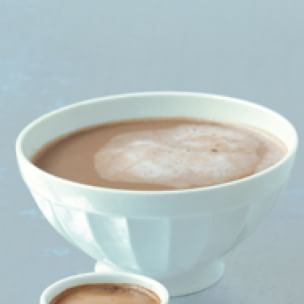
Café au Lait
Milky coffees are traditionally reserved for the morning. Many Parisians start the day with a café au lait and a croissant or a buttered baguette. Cafés make this popular morning drink in a no-frills stout cup or in a small bowl, mixing a café express with lots of steamed milk and then topping it off with a little cloud of foam.
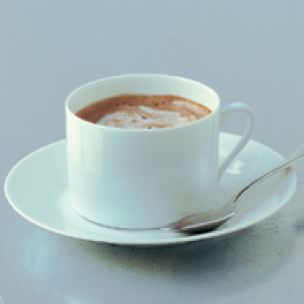
Café Creme
More widely available than the café au lait, this morning favorite is made in a short, wide cup and consists of a café express topped with a thick layer of steamed milk and then a nice layer of foam. The crème is the French cappuccino and is mostly drunk for breakfast; it comes in a large version, the grand crème, and a small version, the petit crème.
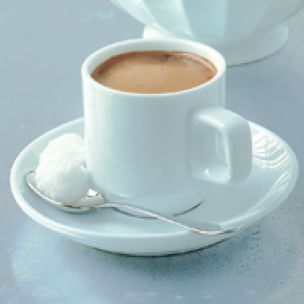
Café Express
Coffee etiquette in France takes many of its cues from Italian coffee culture. Espresso is the most common style enjoyed throughout the rest of the day, and is not typically paired with food but rather as an afternoon pick-me-up or after a meal.
This is the classic dark, strong, short coffee -- the French equivalent of the Italian espresso. Sugar is often added, but never milk. The cafe express, typically ordered with the simple "un cafe, s'il vous plait," is enjoyed any time of the day or evening when a surefire pick-me-up is what's needed.
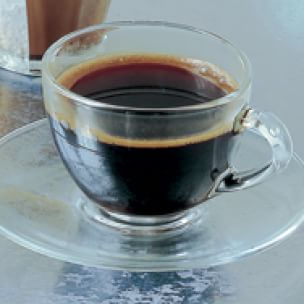
Cafe Allongé
A café express thinned with the addition of hot water. Cafés sometimes serve the water in a pitcher alongside so that the customer can add as much or as little as desired. This light-bodied cup is sometimes called a cafe americain.
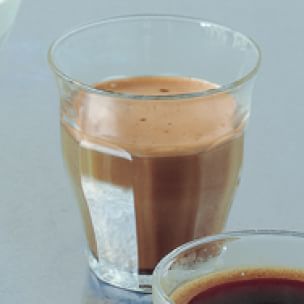
Noisette
A café express with just a dash of warm milk resting on top, like a macchiato. The coffee turns the color of hazelnuts -- noisettes -- when the milk is stirred into it.
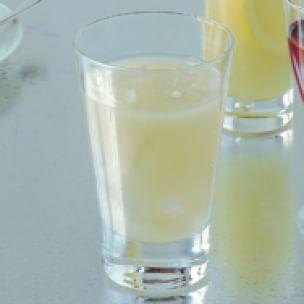
Pastis
A strong, clear, anise-flavored spirit from the south of France, pastis is a familiar aperitif in cafes, especially in the warm summer months. It is always served in a tall, tapered glass, with a pitcher of ice-cold water alongside. When diluted with the water, the pastis instantly turns a cloudy yellow.
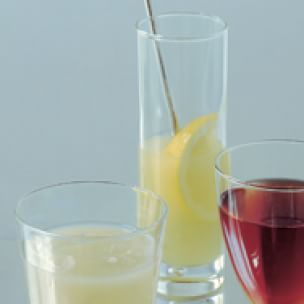
Citron Pressé
This is a Parisian do-it-yourself lemonade: a tall, clear glass with ice is half filled with freshly squeezed lemon juice, and a bowl of sugar and jug of cold water are served on the side. An orange pressée replaces the lemon juice with fresh orange juice.
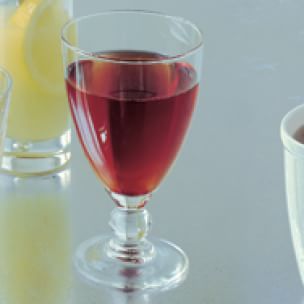
Kir
A popular aperitif named for the one-time mayor of Dijon, the kir combines crème de cassis, a sweet black currant liqueur, with dry white wine in a tulip-shaped wineglass. A kir royal replaces the white wine with Champagne.
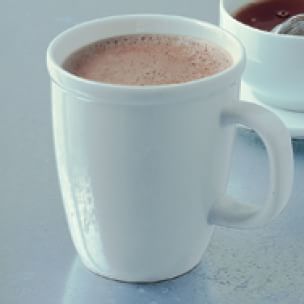
Chocolat Chaud
The best French hot chocolate is a sweet, dark concoction made by melting shards of chocolate and is so thick you can almost eat it with a spoon. Hot chocolate is drunk in the morning or at teatime, and at some cafes, the melted chocolate is served in its own thick-walled jug alongside a cup of warm milk, for mixing together at the table.
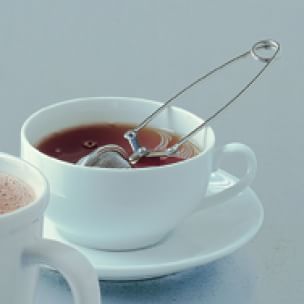
Thé
Parisians have been serious tea drinkers for more than a century, sipping it plain, with a slice of lemon (thé au citron), or more rarely with a splash of milk (thé au lait).
