Achaar
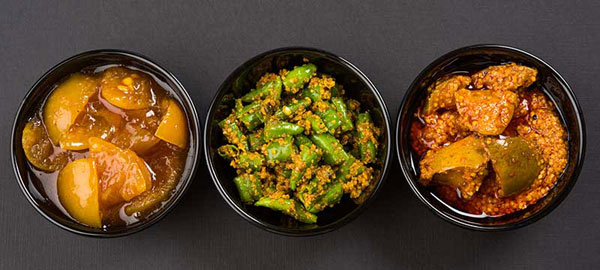
Every culture has a catchall condiment—that one sauce you can put on literally anything and it will taste great (think: hoisin, harissa, pebre). For Indians, it’s achar (also spelled achaar), a combo of sliced fruits and vegetables pickled in oil and spices that has the power to vivify even the most tired bowl of rice. For most Indian families, achar is a dinnertime condiment staple.
Unlike the vinegar based pickles common in the United States, these Indian pickles are usually made with oil. The high concentrations of salt and preserving spices like turmeric keep the pickles safe to eat for long periods of time, even without refrigeration. Traditionally, families in India make achar during the summer to serve with meals in the coming months.
Although varies by regions within the Indian subcontinent, some of the notable ingredient used are limes, lemons, mangoes, ginger, eggplants, and other regional ingredients, but the decisive ingredient is the chili pepper. In India, there are two main types of achaar, one is made with mustard oil, while the other is without oil. Lime pickle is made by putting the achaar in the salt. Pickles in the north of the country are typically made with mustard oil, while the South Indian style is made with sesame oil.
They can be made from fruits or vegetables, and be made sweet, spicy, or sour depending on the spices and flavorings used. A small amount of gingery pickle might balance the flavors in a spicy curry while a sour one can serve as an appetizer with papadum. An achar can also be mixed with fresh vegetables to make a quick salad. No matter how they’re used, these pickles are intended to enhance a dish and add new dimensions of flavor.
