What is Biryani?
from http://www.indiacurry.com/rice/r002backdropbiryani.htm
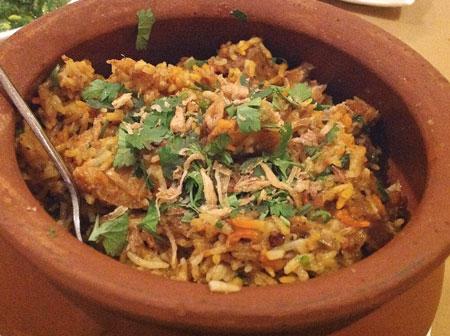
Biryani is derived from the Persian word 'Birian'. In Farsi, Birian means 'Fried before Cooking'. In the olden days, rice was fried (without washing) in Ghee (Clarified butter). It did two things: it gave the rice a nutty flavor and it burned the outside starch layer gelatinizing it. After the rice is stir-fried, it was boiled in water with spices till half cooked.
Preferred choice for meat is leg of Telangana goat. The meat is marinated in a paste of made with Papaya, whole-milk yogurt and spices. Thereafter, the meat may be cooked.
In an earthen pot called Handi, the rice and meat are layered, bottom and top layer are always rice. An interlayer of some condiments may be introduced between the meat and the rice. Cardamom, Mace, Screwpine essence, rose water may be added to give flowery and herbal aroma. The Handi is sealed and put on the coal embers to cook. For Calicut Biryani, the Handi is placed on the embers produced by coconut shell. The seal is broken only when ready to serve.
What is the difference between Biryani and Pilaf?
In Pulao, the 'meat and rice are stirred' before cooking. For Biryani, meat and rice are clustered (layered) during cooking. When making rice pilaf, long grain rice is soaked in water. In the mean while, the meat is fried in Ghee and cooked with aromatic spices in a plenty of water. After the meat is cooked you have plenty of Shorba (broth). More water and pre-soaked rice are added. It is boiled and heat turned down to simmer. The rice is basically cooked in meat broth.
Nuts like Almonds, Cashews, dried fruits like raisins or apricots may be added. The aromatic spices specially Cinnamon, Nutmeg, Cloves and Bay-leaves are used.
What type of rice to make Biryani?
Historically, long-grain brown rice was used in North India; while, short grain Zeera Samba rice was used in South India. In Bangladesh, puffed rice is used. Parboiled long grain rice has following advantages:
1) Long grain rice has low Amylopectin starch, making it less sticky.
2) Parboiling makes the starch gelatinized making it further less susceptible to being sticky.
3) The brownness of the rice is due to the bran on the rice. The bran gives the 'chewy' texture to the grain.
Most common rice used today, is white Basmati rice.
What types of meat are used to make Biryani?
Traditionally, the leg of goat was used to make Biryani. Now a days, depending on the region and restaurant, one can find Biryani made with Mutton, Lamb, Beef, Chicken, Fish, and Prawns.
What types of vegetables are used to make Biryani?
In Calcutta region, potatoes are the most common item. Cauliflower, carrots, peas, sweet bell peppers and green beans are traditional. New items include Jack fruit, Bottle gourd, and Garbanzo beans.
Types of Meat Biryani
There are two basic types of Biryani, namely; Kutchi (raw) Biryani, and Pukki (cooked) Biryani.
Kutchi Biryani does not meet the strict meaning of Biran in Farsi meaning 'Fried before Cooking'; while Pukki Biryani comes close. For Kutchi Biryani, raw marinated meat is layered with raw rice. For Pukki Biryani, cooked meat and cooked rice are layered and put in Handi for the finish.
At present, there are two competing types of Biryani served in India: Lucknow, and Hyderabad. Lucknow Biryani is a type of Pukki Biryani. Hyderabad Biryani is a form of Kutchi Biryani. Lucknow is a grand old city once ruled by Nawabs and capital of Uttar Pradesh; while, Hyderabad is a grand old city once ruled by Nizams and capital of Andhra Pradesh. This has become a friendly food fight between North and South over Biryani. After all, all the tastes are acquired. North Indians like Lucknow Biryani, and South Indians like Hyderabad Biryani.
A third type of Biryani is Tahiri which is made with Potatoes and Rice instead of meat. Other vegetables may be added. A garnish layer is added to the top. The dish is Dum-baked in sealed Handi. This would give the appearance of meat Biryani.
Recipes for
Mughlai Biryani
Hyderabadi Chicken Biryani
What makes a good Biryani?
Everyone has their own little list.
1. Aroma. It must have both sweet fragrance and herbal warm aroma.
2. It should be savory, but not spicy
3. Finally, it should meet the age old test. Drop a handful of Biryani on a hard floor. No two grains of rice should be stuck to each other.
