Indian Peppers
Mirch is the Hindi word for chili. Chilis were brought from South America to India by the Portuguese through their trading colony of Goa. India is now the largest producer and exporter of chilis in the world, growing a wide variety of different types, particularly in the south. The majority are left to ripen to red, and then sun dried.
India, the world's foremost consumer of chiles, uses hundreds of varieties representing a huge range of tastes and heat. The spicy peppers find their way into nearly every dish: chutneys and pickles, curries and stir-fries, even cold drinks.
A writer on Indian chilis who moved to the US has this to say about choosing peppers available in America to use in Indian cooking: "In a generations old display of the modern-day ‘Farm-to-Table’ concept, most Indian homes cook with the regional chili peppers produced and sold by their local farmers and spice stores. And so like many Indian living outside India, during my early days in the US, the wide selection in western markets left me wondering on my chili pepper judgment for Indian food. Based on the desired levels of spiciness, from highest to lowest, I’d suggest picking green/red Cayenne chili pepper, Thai green chili pepper or Serrano pepper; these chili peppers impart the kind of spicy taste required in India’s cuisines. Habenero peppers, although spicier, can be too intense in authentic Indian cooking, while Jalapeño in a curry may as well be green bell pepper."
Most Indian recipes use the chillies whole. But beware, a dried red chilli or a whole green chilli thrown into hot ghee or oil may puff up and explode! To avoid this, nip the ends off of the dried red chillies and split the fresh green chillies from the tail up towards the head, without splitting it in two. This will stop them exploding, yet leave them large enough in the final dish that you can locate them and leave them on the side of the plate. (Or eat them if you LOVE that level of heat.)
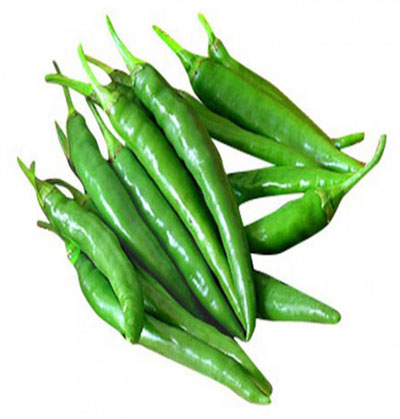
Fresh Green Chiles (hari mirch)
Many Indian recipes call for “green chilies.” Green chilies used in Indian cooking are small, heat packed chilies. In North Indian/Pakistani, there is a regular hari mirch, or green chile, which is like a skinny pinky finger and runs from green to sometimes green and red but is mostly always green. They are about the 2 inches to 3 inches in length.
Fresh green chiles can be puréed for chutneys, thrown into stews, or eaten raw as a condiment, to add fierce, herbal heat to foods. Select chiles that are bright green, plump, and unbruised.
Substitute: Thai chiles, more commonly found in U.S. markets, are the best substitute. Serrano or Jalapeno could also be substituted for Hari Mirch. Serrano makes a better substitute than the Jalapenos.
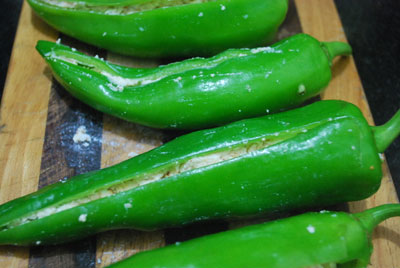
Pakora Mirch
There is also the not-hot by Asian standards Pakora mirch which is used for stuffing and for making pakoras. It is big and green. It is never used as a seasoning, only as a vegetable. It looks similar to a jalapeno.
Substitute:
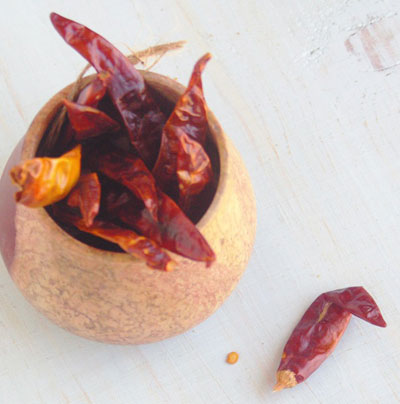
Dried Red Chile (laal mirch)
In dried red chiles there is the standard laal mirch or red chile, which is also pinky finger slized in length...that is the one usually ground up into laal mirch powder, red chile powder. I would not compare these to cayenne but rather chiles de arbol which are ground and they look exactly like them, too.
Grassy, earthy, and hot **Indian red chiles ** retain their red hue when dried. Toasting these small chiles adds depth of flavor and balances their natural astringency.
Substitute: Widely available Mexican chiles de árbol are an excellent substitute.
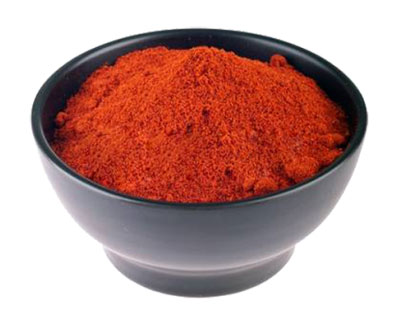
Dried Red Chile Powder
Chile powder, ground, dried red chiles, lends color and radiant heat. Its powdery consistency goes great with ground meat, like in shami kebabs.
Substitute: Ground cayenne pepper. Cayenne is used for its heat not for its flavour profile which is acidic and tart.
Note: Do not use Mexican-Style chilli powder which is used in many other parts of the world, including the US, and contains a range of other spices such as cumin, garlic and oregano. Some mixes may even include black pepper, cinnamon, cloves, coriander, mace, nutmeg, or turmeric. Indian chile powder is pure chili.
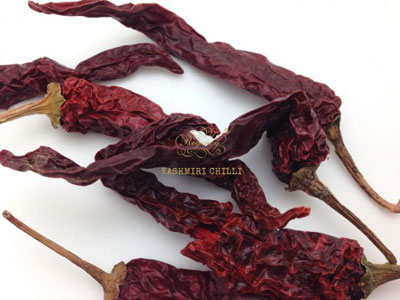
Kashmiri Chile
Then you have the Kashmiri chile, which is less hot than the regular laal mirch and also has a nice underflavor. Kashmiri chilies are good for color and flavor with low levels of spiciness. Nearly maroon in color, dried Kashmiri chiles are shorter and wider than Indian red chiles, and also less spicy. They lend a smoky earthiness to dishes like mirchi qorma.
Kashmiri Chilli Powder is made from a long Kashmiri chilli that is relatively mind in taste, but which, like paprika, gives off a lovely deep red colour. If this is not available, use a mix of paprika and dried red chilli powder.
Substitute: Mexican pasilla chiles are a good substitute. Use paprika for color.
Gol Mirch
There is also the "gol mirch" or the small cherry sized dried red chile which I don't always see in Asian markets here but it is common to use. It is also very hot, perhaps hotter than the long skinny laal mirch.
FMM: My search on "gol mirch" comes up as peppercorns. Gol mirch is Hindi.
Substitute:
