Gnocchi vs Cavatelli
Cavatelli and gnocchi are both Italian dumplings but differ in ingredients, shape, texture, cooking behavior, and culinary use.
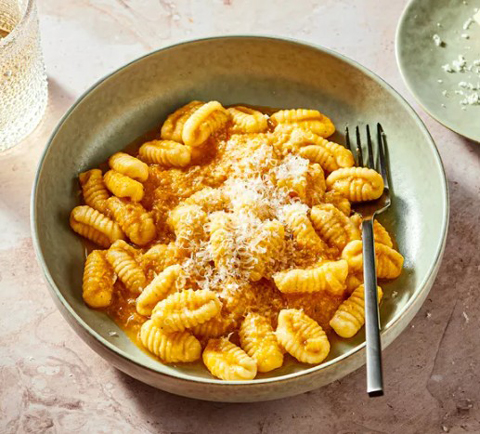
Cavatelli
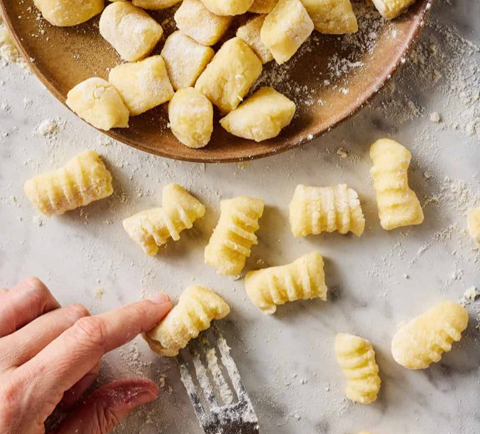
Gnocchi
Key differences:
Ingredients and dough
Cavatelli: typically made from semolina or all-purpose flour mixed with water; variations may include a small amount of durum, ricotta, or pureed vegetables (e.g., broccoli rabe). No, or minimal, potato in classic cavatelli.
Gnocchi: most commonly potato gnocchi (patate) — cooked mashed potato combined with flour and sometimes egg; other types include ricotta gnocchi, semolina gnocchi (gnocchi alla romana), and bread-based versions.
Shape and forming
Cavatelli: small, elongated shells or "little boats" — formed by rolling a tiny piece of dough and pressing/dragging it with a finger or a board until it curls over itself to create a hollow or ridged cavity that holds sauce.
Gnocchi: typically small, pillowy dumplings — formed into short, rounded pieces, often pressed with a fork to create ridges; potato gnocchi are more compact and bulbous than cavatelli.
Texture and mouthfeel
Cavatelli: firmer, chewier, slightly dense and toothsome due to semolina/flour base; the hollow captures sauces and bits of garnish.
Gnocchi: lighter, tender, sometimes pillowy and soft (especially potato or ricotta versions); delicate interior that fluffs when cooked and made correctly. Adding too much flour makes them heavy and gummy.
Cooking behavior
Cavatelli: holds shape under sauce and baking; boiled briefly until they float, then tossed with sauce. Better at retaining toothiness after reheating or in baked dishes.
Gnocchi: cook quickly until they float; potato gnocchi can become gummy if overworked or if too much flour is used; more delicate—can fall apart if boiled too long or handled roughly.
Regional origins and traditions
Cavatelli: Southern Italy (Apulia, Molise, Campania) with many local variants and names (e.g., orecchiette and cavatelli sometimes overlap regionally).
Gnocchi: widespread across Italy with regional recipes; potato gnocchi became common after potatoes were introduced to Europe.
Sauce pairings and use
Cavatelli: pairs well with vegetable-based sauces, broccoli rabe and sausage, tomato ragùs, seafood, and baked casseroles where chewiness is desirable.
Gnocchi: pairs with butter and sage, simple tomato sauces, cream sauces, pesto, or baked gratins; potato gnocchi suit light sauces that won’t overwhelm their delicate texture.
How to tell them apart in practice
If it’s made from potato and is pillowy — it’s gnocchi.
it’s a small, rolled piece with a hollow/cup and a chewier bite from semolina/flour — it’s cavatelli.
Practical cooking tips
For cavatelli: use a slightly stiff dough (not too wet), form small uniform pieces, cook in well-salted boiling water and finish in the pan with sauce to coat the hollows.
For potato gnocchi: use dry, mealy potatoes (russet), mash thoroughly, avoid overworking, add just enough flour to hold shape, cook briefly and transfer to sauce immediately.
Summary
Cavatelli = flour/semolina-based, small hollow/boat-shaped, chewy and sauce-catching.
Gnocchi = often potato-based, pillowy dumplings, softer and more delicate. Both belong to the same broad tradition of Italian dumplings but occupy different textures, techniques, and culinary roles
