Italian Cured Meats (Salumi)
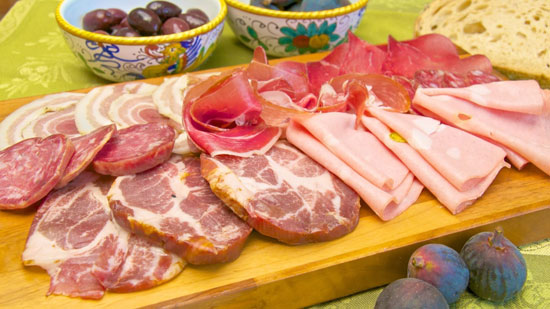 A festive Italian meal generally begins with a variety of appetizers, which are known as antipasti -- a word that literally translates as before the pasto, or meal. These antipasti vary considerably from place to place in Italy, but they will often include a selection of salumi (cold cuts), which is known as affettati misti (sliced mix). See the picture to the right.
Salumi, a word covering a wide range of salt-cured, air-dried and smoked preparations, is the most common way meat is included in an Italian meal. In the past these were made when hogs were butchered in late fall or early winter, and set aside to guarantee a supply of meat during the warmer months when uncured meats would spoil rapidly. Most salumi is made from pork although sources of salumi range beyond pork to beef (for bresaola), goose, goat, boar, chamois, turkey and more. There are two types of salumi:
- Whole Meat Cuts: The first covers whole cuts, such as prosciutto (ham), spalla (shoulder), capocollo (neck), pancetta (belly, sometimes smoked as bacon), culatello (an aged filet of rump) and speck (smoked flank).
- Sausage Type: The second covers minced meats known as insaccati (encased in protective coverings or sausages), such as salame, cotechino, soppressata, luganiga, zampone and mortadella.
Whole Meat Cuts
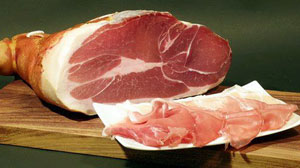
Prosciutto: the Italian word for ham. In English, the word prosciutto is almost always used for an aged, salted and dry-cured, spiced Italian ham that is usually sliced thin and served uncooked; this is called prosciutto crudo, 'raw ham' in Italian, and distinguished from prosciutto cotto, 'cooked ham'. The most renowned and expensive legs of "prosciutto" come from central and northern Italy (Tuscany and Emilia in particular), such as Prosciutto di Parma, and those of Friuli-Venezia Giulia, such as Prosciutto di San Daniele, and are considered the pinnacle of flavor and elegance in affettati (sliced cured meats).
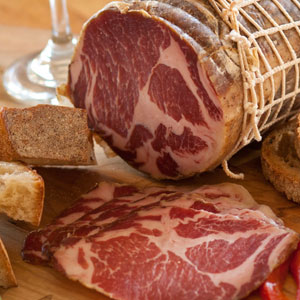
Capocollo: Also known as Coppa or Capacola: A variety of Italian dry cured pork. The name is derived from the pork cuts used to make the sausage. Capo or head cuts are combined with collo (shoulder) cuts and mixed with hot or sweet seasonings depending on the region, then air dried. In American delis capicola has a hot spicy seasoning on the outside that has a distinctive red color from the paprika used in the seasonings. The hard version is called Coppa but otherwise it is similar to prosciutto. Coppa is traditionally produced in Lombardia and Emilia Romagna. It is meaty with a rich, red color.
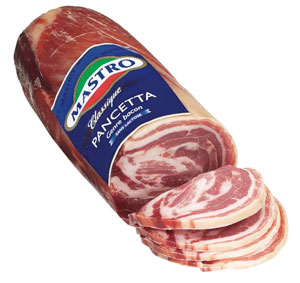
Pancetta: this is the same cut of pork we commonly call bacon, but pancetta is produced by different methods. Regular pancetta is cured not smoked like bacon, and it is rolled into a sausage-like shape. It comes in two forms – rolled, typical of northern Italy, and in its original flat form, which is favored in central and southern Italy. Smoked pancetta is also produced and is similar to American bacon, but is meatier.
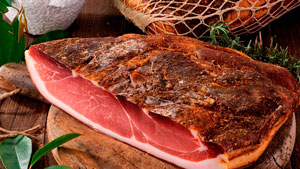
Speck is a meaty pancetta produced in Trentino/Alto Adige. It is smoke and herb cured and more closely resembles Prosciutto Crudo than regular pancetta. It's almost always used as an ingredient in other dishes, sometimes providing flavor, and other times taking a commanding role, for example pasta alla carbonara or a rich pasta all'arrabbiata.
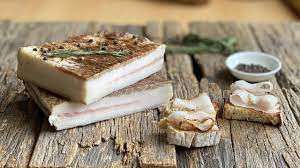
Lardo: falls in the pancetta family. Lardo is lard and that's it. It is the pure fat portion of the bacon cured in salt and herbs to draw the moisture out and then served very thinly sliced. It melts on your tongue like soft butter. I have not yet checked the American Heart Associations daily recommended portion of Lardo, and no, this is nothing like the American lard that you buy in a tub and that my grandmother used to make her extraordinary pie crusts.
Lardo can be used as a flavoring ingredient in other dishes (in the form of lardoons, or thinly sliced and wrapped around another cut of meat). Lardo isn't cooked, but rather sliced thinly and added to cheese and charcuterie platters or used as a kind of garnish or finishing element. Serve paper-thin slices with roasted almonds and olives for a luscious appetizer, and drizzle with a little olive oil and sprinkle of smoked salt for another layer of flavor.
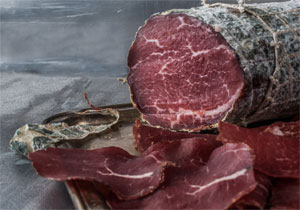
Bresaola: an air-dried salted beef that has been aged about 2-3 months until it becomes hard and a dark red, almost purple colour. It is made from eye of round and is lean and tender with a sweet, musty smell. It originated in Valtellina, a valley in the Alps of northern Italy's Lombardy region. Very lean.
Sausage Type
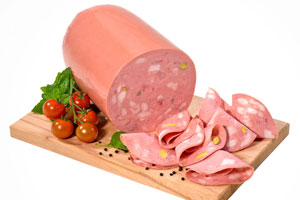
Mortadella: a sausage, often included on a plates of affettati. Delicate, pink and creamy in texture it is made from pure pork which is laced with slices of fat for richness. Sometimes pistachios are added for an additional flourish. Mortadella's origin dates back to the 14th Century, when it was first produced in a monastery in the Center of Italy, in the surroundings of the beautiful city of Bologna, and true Mortadella is only made in the area surrounding Bologna.. The secret of its unique characteristics is in the selection of spices and ingredients as well as in the slow cooking process. A similar commercial product that omits the cubes of pork fat, called bologna, is popular in the United States.
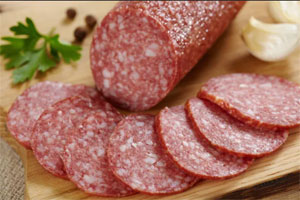
Salame: there are more types of salame than there are regions of Italy. Everyone has their specialty. Salame is usually made from pork, but there also many varieties made from wild boar, donkey, venison and horse. All are made with cured meat and fat. The differences in styles are dependent on how finely the meats are chopped, the ratio of fat to meat and the seasonings used. Salame can also be smoked. The town of Felino, in Emilia Romagna, is famed for its salamino.
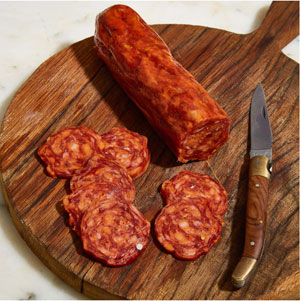
Pepperoni: is a spicy Italian-American variety of salami made from cured and fermented pork. In the United States, pepperoni can also be a mix of beef, chicken and pork. It is a descendant of the spicy salamis of Southern Italy, such as salsiccia Napoletana piccante, a spicy dry sausage from Naples or the Soppressata from Calabria. Pepperoni is a popular pizza topping in American-style pizzerias. To order the American version of pepperoni in Italy, someone would request salame piccante or salamino piccante (hot salami, generally typical of Calabria). The Italian name for a pepperoni pizza is pizza alla diavola (with hot sausages).
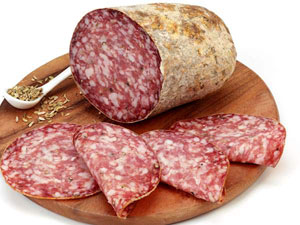
Finocchiona: is a pork salami which originates in Tuscany and supposedly owes its origins to a thief at a fair near the town of Prato, who stole a fresh salami and hid it in a stand of wild fennel. When he returned for it he discovered it had absorbed the aromas of its hiding place and had become fit for the Gods. Finocchio means “fennel” in Italian. There are two kinds of finocchiona. One is called finocchiona, and is made of finely ground pork and fat, laced with fennel, and aged for a while; it's fairly firm. The other is called sbriciolona, see below.
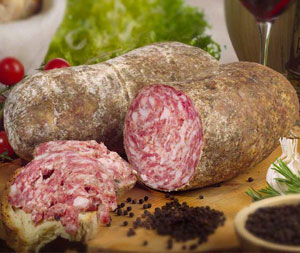
Sbriciolona: When finocchiona is given a shorter cure, it is known as finocchiona sbriciolona. The word, sbriciolona, means crumbly, and though the mixture is the same as that of finocchiona, it's much fresher - so fresh that it simply crumbles unless sliced about a half inch thick. Sbriciolona reminds some consumers more of sausage than salami. Typically it is served in thick wedges, and many Italians enjoy it on hearty artisan breads. A good sbriciolona is an amazing treat, especially on a slice of schiacciata, a type of Tuscan flatbread.
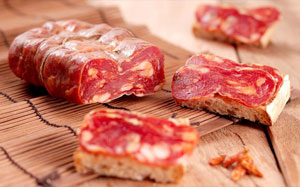
Soppressata: In Tuscany this is a sausage made primarily from leftover pork cuttings -- cartilage, snippets of meat, and so on, which are stuffed into the skin of the animal and cooked. Therefore, in appearance it somewhat resembles a porchetta, the roast pork done whole over a spit. However, the taste is quite diffe rent and rather particular; people generally make sure their guests like it before offering it.
