Italian Stuffed Meatrolls: Polpettone Ripieni
Recipe courtesy Mario Batali, 2002
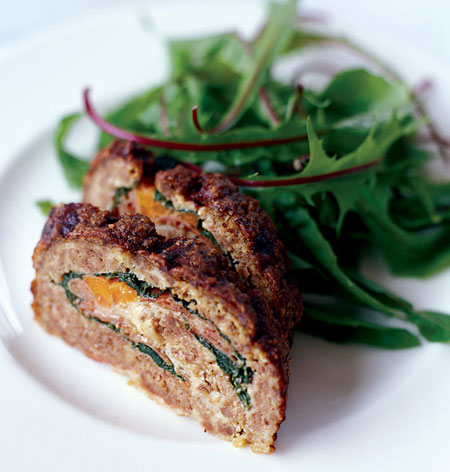
This luxurious yet easy take on classic meat loaf gets stuffed with spinach, carrots, prosciutto and cheese. The vegetables can be leftovers, says Mario Batali: "Just make sure they're cooked long enough to be very soft—if they're al dente, the meat loaf will tear when you slice it and wreck your day." Mild and tangy caciocavallo cheese, made in Italy from cow's milk, is excellent in the filling, but provolone is a fine substitute.
1/2 pound finely ground lean veal
1/2 pound finely ground lean beef
1 cup freshly grated bread crumbs, plus 3 tablespoons [use fresh bread for a fluffier meatroll]
1 cup freshly grated pecorino [or less, these are very rich]
3 eggs
Salt and pepper
20 to 30 leaves field spinach, stems removed (2 cups)
1 carrot, peeled and cut into 6 slices lengthwise
3 tablespoons flour
6 slices prosciutto (could substitute ham)
6 slices caciocavallo cheese (similar in taste to aged provolone, which we used) [or use less, these are very rich]
6 tablespoons extra-virgin olive oil
2 sprigs rosemary
1 cup chicken stock
1/2 cup dry red wine
In a large bowl, combine the veal, 1 cup bread crumbs, grated cheese, eggs, and salt and pepper, to taste, and mix thoroughly with hands.
Bring 6 quarts of water to a boil and add 1 tablespoon salt. Dip the spinach leaves in the water to just wilt and immediately remove. Add the carrot slices to the boiling water and cook for 4 to 5 minutes, then remove and set aside.
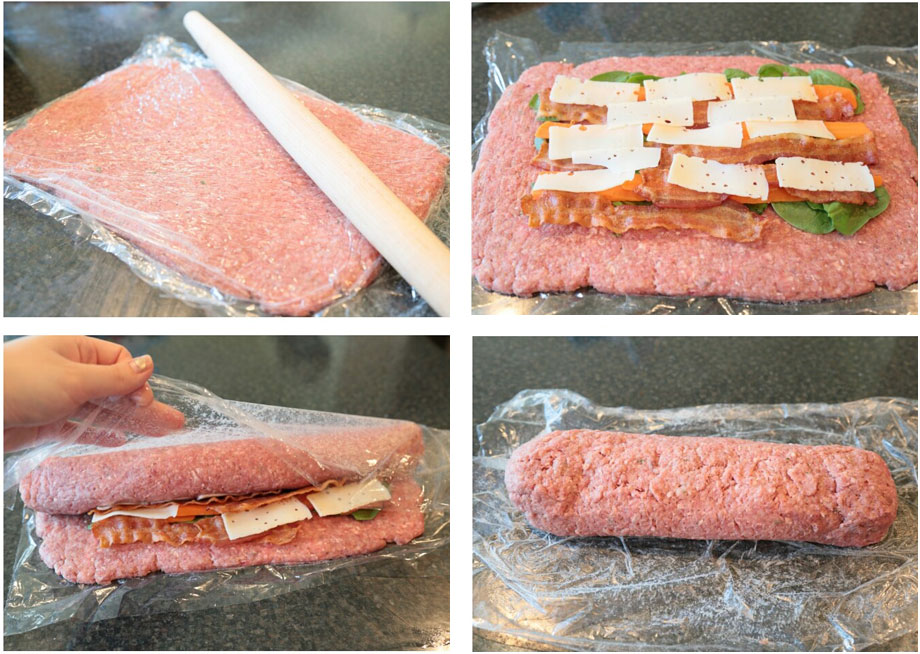
Combine the flour with the remaining 3 tablespoons breadcrumbs and heavily dust a wooden work board with the mixture. Pat the veal mixture into a 1/2-inch thick rectangle and lay the spinach leaves over the meat, leaving a 1-inch border on the short sides. Lay the carrot slices over the spinach in the same fashion, then layer the prosciutto and the cheese. Carefully roll the meat into a jellyroll, making it as firm as possible. The sausage should be about 16 inches. Cut the sausage in half crosswise, sealing the ends thoroughly with the meat to keep the cheese from oozing out during cooking. Dust outsides with flour.
In a frying pan large enough to hold both rolls, heat the olive oil over medium-low heat. (See my note below about baking these in the oven.) Add the rosemary and polpettone and brown meat on all sides, turning it carefully with a wooden spoon or 2 spatulas. When the meat is brown, remove and discard as much oil as possible. Pour half the wine and the chicken stock over the browned rolls, turn heat to medium-low, cover pan and cook 15 minutes. (If liquid evaporates, add a little water to the pan). Remove cover, turn meat rolls over and pour remaining wine and chicken stock over them, cover again, and cook for an additional 15 minutes.
Transfer the meat rolls to a cutting board. Return the skillet to medium-high heat and add 1/2 cup water to pan juices. Cook down, scraping up any brown bits, until you have 2 to 3 tablespoons meat glaze. Strain to remove rosemary leaves. Let rolls cool to room temperature, then slice as thinly as possible, and serve with meat glaze drizzled over.
FMM: I find this easiest to bake in the oven. It is very difficult to flip the rolls in the pan without them falling apart. After trying to brown them in the pan, I finished them in the oven at 375 degrees F. for about 30 minutes. Add the chicken broth and wine before placing in the oven. If you don't first brown them, they may take longer.
NOTE from a blogger about shaping the loaves: "The biggest issues with Mario’s version has to do with rolling out the meat, the size of the loaf, and flipping it around in the pan.
First, Mario has you roll out the meat using only flour to smooth the process. This is impossible. Not only will you get a sticky meaty mess all over your hands and rolling pin, but it will be impossible to pick it up off the counter. Plus you will use so much flour the loaf will be closer a loaf of bread than dinner.
The solution? Sandwich your meat mixture between two pieces of plastic wrap. Voila! You will now effortlessly be able to roll out the meat with no mess! Even better, the plastic wrap helps tremendously when it is time to roll up the meatloaf. Just use it to gently glide the meat over itself."
These pictures are from her blog: http://simpleandsweets.com/