Types of Gnocchi
from https://www.the-pasta-project.com/
Many Italian regions claim gnocchi as their own. But, although they are more most traditional in the North, Italians eat gnocchi throughout the country. The most well-known of these Italian dumplings are prepared using potatoes with flour and eggs. However, there are a number of different types of Italian gnocchi including those with bread, fresh ricotta, spinach, pumpkin or just semolina flour.
A Little Gnocchi History
Among the oldest types of Italian gnocchi are bread dumplings from the South Tirol known as canederli. Canederli are large round dumplings made with stale bread, milk, flour and egg. Some Italians refer to these dumplings as bread gnocchi (gnocchi di pane) and there are also different kinds of bread gnocchi throughout Italy.
Other types of gnocchi have existed in Italy since the Renaissance or even earlier. Actually, some food historians say it was the Romans who first discovered and then introduced dumplings to other European countries. However, the Romans made their dumplings with just semolina flour and eggs. These are similar to the gnocchi ‘alla Romana’, still popular in Rome and Lazio today.
In 15th century Lombardy, they made gnocchi called zanzarelli with bread, milk, cheese and ground almonds. Later, some gnocchi started to be made from a dough of flour and breadcrumbs mixed with water and pushed through the holes of a cheese grater.
In the 17th century, the almonds in zanzarelli were replaced by flour and the water by eggs. These gnocchi were called malfatti, which means ‘badly made’ and is still the name that Tuscans use for their flour, spinach and ricotta dumplings also called ‘gnudi'.
Interestingly, Italian potato gnocchi only date back to the start of the 18th century, long after potatoes were brought to Europe from South America by Spanish explorers and introduced to Italian kitchens. During the 16th and 17th century, in most parts of Europe, people regarded potatoes with suspicion, distaste and fear. In fact, they used them only as animal fodder, to feed prisoners of war and sustenance for the starving.
Types of Gnocchi
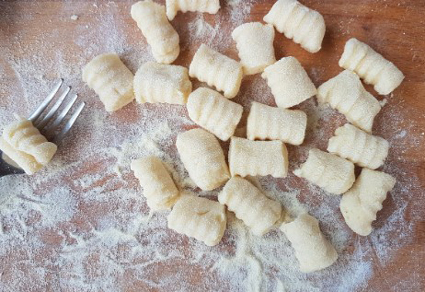
Classic potato gnocchi.
Many Italian regions claim gnocchi as their own, but although they are more predominant in the Northern regions, they are cooked and eaten throughout the country. The most widespread Italian gnocchi are prepared with potatoes.
They’re often grouped together with fresh pastas, as they contain flour and egg, but the main ingredient is mashed potato. Once everything is worked together into a dough, they’re shaped into little cylinders, rolled across a gnocchi paddle (or the back of a fork) to create ridges, then boiled for a few minutes until they rise to the surface. At this point they can be served straight away, either in a sauce or a simple dressing of olive oil, baked in the oven or pan-fried for a nice, golden crust.
Almost every Italian region, especially in the north, has its traditional gnocchi variation and recipes for serving them. In Piedmont or Lombardy, potato gnocchi are simply tossed in butter and Parmigiano Reggiano cheese or eaten with a creamy, cheesy sauce which has been browned under a grill before serving. Here, in Veneto, potato gnocchi are traditionally served in a tomato sauce. In Liguria, they often serve these potato dumplings with a pesto sauce. A Southern Italian recipe is the super delicious gnocchi ‘alla Sorrentina’; baked potato gnocchi seasoned with a fresh tomato sauce, mozzarella, and fresh basil leaves.
With the right kind of potatoes they aren’t hard to make. In fact, once you have done it, you’ll never go back to buying ready-made! Plus, there are so many delicious ways to serve them!
Homemade Potato Gnocchi
Cheese & Potato Gnocchi
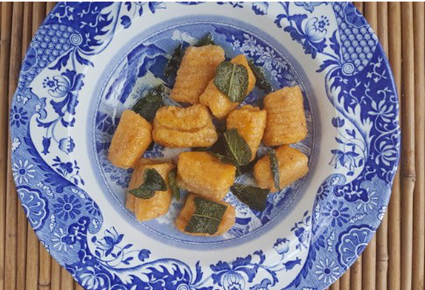
Pumpkin gnocchi with sage butter
Pumpkin gnocchi.
These traditional pumpkin and potato gnocchi are a great way to use pumpkin puree. There are a number of ways these gnocchi are served. The most traditional is with Sage Butter (burro e salvia) which involves frying fresh sage leaves in melted butter until they start to crisp and then mixing the cooked gnocchi with the butter and serving with some grated parmesan if required. So simple, yet delicious! You will find this version in Mantova and Parma, an absolute must try.
In Veneto, these gnocchi are also served with melted butter and smoked ricotta in a dish called ‘alla Bellunese’ after the town of Belluno where this recipe originated. Pumpkin gnocchi are also often served in a cheese sauce such as parmesan, gorgonzola or tallegio to which ingredients such as truffles, walnuts, broccoli or mushrooms may be added. And speck, pancetta and sausage are the most traditional ‘meat’ ingredients used in pumpkin gnocchi recipes. These gnocchi are also great baked.
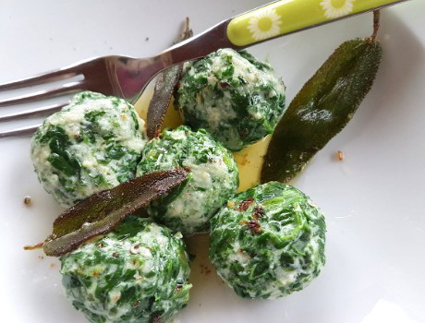
Spinach & Potatoe Gnocchi
Spinach gnocchi from Abruzzo.
A hearty homemade spinach and potato gnocchi, together with a traditional lamb ragu, is a recipe from Abruzzo in Central Italy that is perfect for Sundays and holidays, particularly Easter. You can prepare both the gnocchi and the ragu in advance and freeze for another day. Plus, you can serve the gnocchi with other kinds of ragu too!
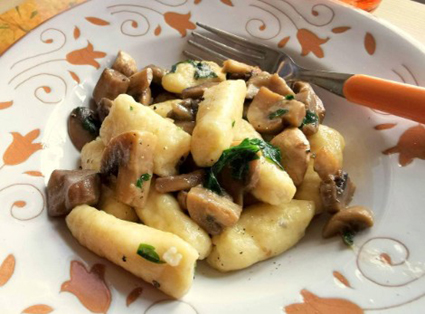
Ricotta gnocchi with mushrooms
Ricotta gnocchi
Ricotta gnocchi from Piemonte.
Ricotta gnocchi with mushrooms is a divine recipe from the mountains of Piemonte (Piedmont), in North West Italy. Typically made with Piemontese ricotta and fresh porcini, this vegetarian recipe is just as good with other types of ricotta and mushrooms.
Ricotta gnocchi (gnudi) from Tuscany.
Strained ricotta, egg, breadcrumbs, nutmeg and sheep’s cheese are combined together and rolled into balls before being dusted in semolina – the same durum wheat flour used to make dried pasta. After a quick bath in boiling water, they’re left to dry before being fried in butter until golden-brown. Tradition calls for plenty of fried sage leaves to be added into the pan, which adds a lovely flavour. Gnudi are rich in taste and have that perfect combination of crisp shell and soft, fluffy interior.
The ricotta gnudi with black truffle is a heavenly dish made with Tuscan gnudi (gnocchi). Even without black truffles you will love these exquisite ricotta dumplings!
Spinach & Ricotta Gnocchi
Ricotta/Spinach gnocchi (gnudi) from Tuscany.
Tuscan gnudi (malfatti) from Tuscany are baked in a savoury homemade tomato sauce with mozzarella or you can serve them in a simple sage butter!
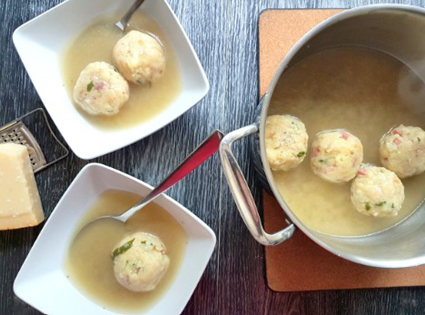
Canederli (bread gnocchi) from the South Tirol.
Italian bread gnocchi (canederli) in broth is a tasty and easy way to use up stale bread. This is a signature dish from the stunning South Tirol that is warming, comforting, filling and healthy! Simple Alpine food at its best!
Very similar to the medieval gnocchi, these dumplings are made with bread, milk, flour and often a cured meat, such as speck. They are normally served with cabbage or in broth and garnished with chives.
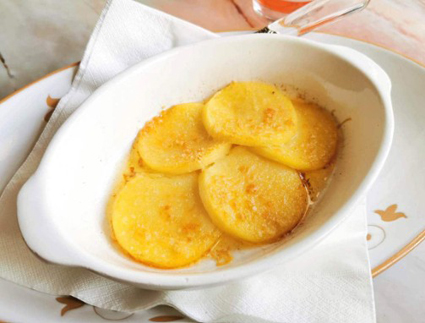
Semolina gnocchi from Rome.
These gnocchi alla Romana are one of the most famous examples of pre-or non-potato gnocchi. They are very similar to the types of dumplings enjoyed in Ancient Rome, hence the name ‘alla Romana’ (Roman gnocchi). They are rich but light and a real melt in your mouth treat!
Gnocchi alla Romana aren’t boiled but baked in a dish until deliciously golden. They are made with semolina, egg yolks, cheese, butter and milk. The ingredients are combined and gently cooked in a pan until a dough forms, which is then left to cool in a tray. Circles of dough are then cut out and laid in a pan, sprinkled with even more cheese and baked.
The classic Roman recipe uses a simple butter and cheese dressing. However, these gnocchi alla Romana can be served in other ways; such as with a bechamel sauce, a mornay sauce, a four cheese sauce or a sauce mixed with ham, bacon, pancetta or vegetables. They can also be served 'alla Sorrentina' which means baked with tomato sauce, mozzarella and basil. Plus, you can put some chopped greens or herbs, such as spinach, nettle, chicory, basil etc. into the dough.
It's important to use the correct type of semolina for gnocchi alla Romana. Some sources specify using coarse or coarsely ground semolina, sometimes referred to as 'Semolino'. Other sources suggest using finely milled semolina flour, or 'semola rimacinata'. While fine semolina is typically used for pasta, a slightly coarser grind is often preferred for these gnocchi, as it contributes to their hearty texture and helps them hold their shape during baking. If you can't find coarse semolina, finely milled semolina can be used, although it might slightly change the final texture. You might also be able to use polenta as a substitute if semolina isn't available.
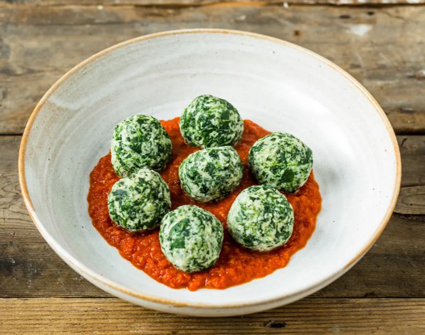
Malfatti (made with semolina)
By far the most colourful of all Italian gnocchi, Lombardian malfatti are big, beautiful balls of ricotta, spinach and Parmesan bound together with semolina and egg. They’re larger than your average gnocchi – roughly the size of a golf ball – and they're simply boiled to preserve their light, fluffy, soft texture. A bed of tomato sauce is all malfatti need; the dish might sound simple, but we can guarantee after one bite you’ll realise just how special Italian dumplings can be.
