What are Panini?
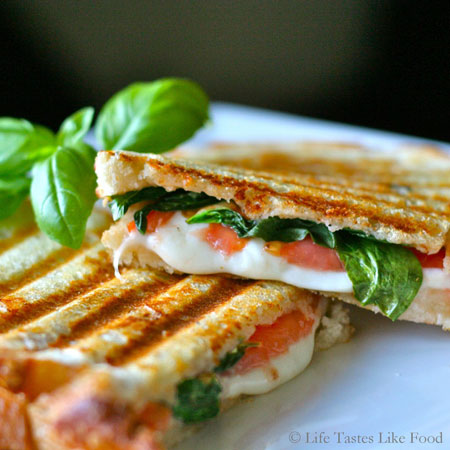
In Italy, a panino (Italian pronunciation: [paˈniːno]) is a grilled sandwich made from bread other than sliced bread, in which case Italians call it a tramezzino. Examples of bread types used for panini are ciabatta, rosetta and baguette. The bread is cut horizontally and filled with deli ingredients such as salami, ham, cheese, mortadella, or other food, and sometimes served warm after having been pressed by a warming grill. A toasted sandwich made from sliced bread is not called "panino" but "toast" by Italians, and is usually filled with ham and a few slices of cheese, and heated in a sandwich press. A popular version of panino in Central Italy is filled with porchetta, slices of pork roasted with salt, rosemary, and sage.
In the United States, United Kingdom and Canada, the term panini has been adopted to refer to pressed and toasted sandwiches; there is widespread availability and use of sandwich presses, often known as "panini presses" or "toasted sandwich makers." In Australia and New Zealand an intermediate meaning of the term exists, referring to toasted sandwiches made with bread other than sliced bread, most frequently baguette.
The word panino [pa'ni:no] is Italian for "bread roll"; its plural form is panini. The word is the diminutive form of pane (bread). In some English- and French-speaking countries, panini is sometimes used as a singular word (like salami, also an Italian plural noun) and sometimes pluralized as paninis. In Italian, panino refers properly to a bread roll and panino imbottito (stuffed panino) to a sandwich. Paninoteca is the word for a sandwich bar. Panino is also often used to refer to a sandwich in general.
History
Originally, this basic sandwich had working-class Italian origins. Whether you’re referring to one — un panino — or more — due panini — the first sandwiches were made with a simpler recipe: a single filling, usually meat, paired with a rustic bread. Cured meats, such as prosciutto, salami or pancetta, were often used because they didn’t require refrigeration. Panini were usually eaten on the go as a quick meal or snack and weren’t toasted or grilled.
Over the years, panini grew in popularity and ingredients began to evolve. Rustic breads such as ciabatta, francesino and focaccia became the signature foundation of the sandwich (sliced bread is not used for panini — those sandwiches are called un tosto). People also began to experiment with fillings. Cheeses, from mozzarella to brie, became standard and added welcome depth and flavor. Vegetables — including tomato, arugula, eggplant, or butternut squash — brought garden-fresh taste and texture. Pesto, herbs, olives and even anchovies were added to balance and complement flavors. The combinations are endless and make each panino an individual dining experience.
Somewhere along the way, a crucial discovery was made: while a regular panino is good, a toasted panino is even better. Panini were originally warmed in regular fry pans, and spatulas were used to flip them over halfway through the cooking process. Today, many people use an electrics countertop grill or a stovetop grill pan and press grill to cook both sides at once and get that perfectly toasted, crunchy exterior paired with a warm and melted interior.
Food historians generally agree panini (plural, the singular is panino), as we Americans know them today, originated in the panintecas (sandwich shops) of Italy, perhaps as early as the 1960s. A of newspaper articles confirms panini origin captured American attention in the mid-1970s. As time progressed, panini evolved from upscale fare to trendy sandwiches for the masses. Industry experts credit novel combinations (ingredients/textures) and the product's *staying power* (they can be made ahead of time) for paninis modern success. In the 1990s, panini nudged their way into family restaurants and institutional menus (colleges, hospitals, airports). Sales of panini grills soared, both commercial and home versions.
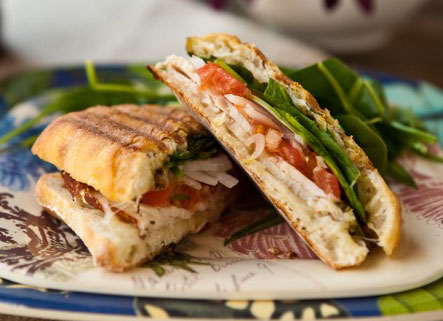
The earliest print reference for panini (as a food) in an American newspaper is 1954. We cannot tell from the article if the panini served at this fair is the same as the one commonly found in contemporary menus.
[1954]
"The visitors ate Italian sausage, also pizze fritta, zeppole, calzone, torrone, panini, pepperoni, taralli."
---"Old World Festival in East Harlem," New York Times, July 25, 1954 (p. SM 22)
[1976]
"Another attraction, even for northern Italian visitors to Rome, is the nice price of a meal, now even nicer...Most cafe-bars serve sandwiches--which may be called tramezzini, panini, or medaglioni, depending on their composition..."
--"Revel in Rome's Unholy Year '76," Los Angeles Times, March 7, 1976 (p. G7)
[1976]
"By noon today it is probable that lines will already be forming at the brand new Caffe Orsini, opening at 11:30 this morning at Bonwit Teller's second floor, overlooking 57th Street. Luxuriously decorated with rough white plaster walls, tomato-pink upholstered banquettes, tile inlaid tables and polychromed wooden wall sconces and frames, this Continental style coffee house is an offspring of Orsini's restaurant on 56th Street. The menu will offer stylish Italianate salads and panini sandwiches..."
---"Food and Style: Shoppers Find Both in Store Restaurants," Mimi Sheraton, New York Times, October 7, 1976 (p. 77)
[1982]
"Speaking of Italian foods, many readers wrote in about an earlier reference to "panini." I stated that the only recipe for panini that I could uncover in my research was for panini di pasqua, or Easter Breads. Panini, I was told is simply the plural of the Italian panino, an overall word for rolls. One reader wrote that "the sandwiches you get on small rolls in cafes in Italy are 'panini imbotiti' - stuffed rolls.""
---"Q & A," New York Times, April 14, 1982, (p. C8)
[1985]
"The restaurant also makes a pungently flavorful lasagna, the thin sheets of pasta layered with cheese and so barely sauced that it is reminiscent of the spare food that Kleiman popularized at Verdi. This is not the southern Italy that comes out of No. 10 cans of tomatoes, but the southern Italy of light-handed cooks. There are calzone, both fried and baked (I found the fried version rather bland), and a whole range of wonderful panini, Italian sandwiches stuffed into crusty home-made rolls."
---"Ethinic Places Serve Foods That They Love Best," Ruth Reichl, Los Angeles Times, Jan 13,1985 (p. 86)
[1995]
"I'll bet a hundred bucks that panino, the Italian word for sandwich, will soon slip off your tongue like honey. Pretty soon, you'll start noticing restaurant menus and sandwich shops featuring panini (plural) exclusively. You'll find them at such places as the MOCA (Museum of Contemporary Art) cafe, Il Panino, in the new downtown museum complex, and at a spot in Beverly Hills called Giannino's. You'll see them on the menu at Il Piccolino and at Angeli Caffe, both in Los Angeles, and you'll see them at picnics and party buffets.An Italian might shrug if you ask the origin of panino. Said Celestino Drago, who operates Il Panino, "No one ever asks where or how they came about. They are just there." In Italy, panini are everywhere. They are fast food eaten on the run, to and from work, on the job, in train stations, in cars on the street. Sky-high piles of panini are packed in glass cases at almost every bakery and coffee shop for the hordes who want to grab a bite before or after work or a movie. Mothers pack them in schoolchildren's lunch bags. . .
In Milan, upscale paninotecas have emerged only in the last five years as havens for gourmet sandwich-eaters, who stand at tables to nibble on such fillings as duck or wild boar prosciutto while sipping fine wine. In Los Angeles, the panino has just begun to find a place among those who enjoy Italian flavors and great bread. For it's the bread that distinguishes every panino. The word derives from the word pane, meaning bread. There are dozens of different types of bread used for panini. Every region in Italy boasts a specialty. In Tuscany, you'll find michetta, a roll with a hole in middle, a strong favorite, whereas in Milan the specialty is rosetta, a rosette-shaped roll, and in Genoa it is focaccia, a flatbread with baked-on flavorings such as pesto, garlic butter and onions. The rolls may be elongated, round, square or flat. They may be seasoned or not. . .
Some Italian bakeries such as Il Fornaio in Beverly Hills and Santa Monica carry several popular panino varieties used by Il Panino, including michetta and ciabatta. Kaiser rolls, onion rolls and the like are ideally suited for panini. Square loaves such as pane in cassetta, ideal for grilling, can easily be substituted with firm-textured white or wheat bread. In Italy, with the exception perhaps of those found at paninotecas in Milan, panino fillings tend to be traditional types-sausage, roast peppers, cheeses, tomatoes, vegetables, mortadella, salamis and other sausages. In Sicily, veal and chicken cutlets are slapped between two pieces of bread. Roast peppers are also a popular panino filling. The panini appearing in Los Angeles, however, are something else. "They are not as fancy as those you'd find at the paninotecas in Milan, because we want to educate slowly, but they are interesting," Drago said. Actually, anything goes. At the MOCA cafe, Il Panino, Drago has introduced eight sandwich fillings that are California variations on the traditional Italian theme. In a sandwich called Milano, sliced turkey is served with California goat cheese, avocado, sun-dried tomatoes, and arugula. A smoked salmon and mascarpone cheese filling is garnished with salmon roe, capers and chives. Evan Kleiman, chef and co-owner of Angeli, a California-style Italian restaurant, fell in love with the sandwiches on her first visit to Italy at the age of 16 and does take-offs on traditional themes. "You open your mind to what is put in between two pieces of bread," she said. A sandwich Kleiman has called panino rustico contains chicken salad, dressed with Dijon mustard and arugula. This and other fillings such as roast pork are found in her book, "Cucina Fresca," co-authored with Viana La Place (Harper & Row: 1985). The roast pork is seasoned with Dijon mustard and topped with pickled onions. Dino Baglioni of Il Piccolino restaurant in Los Angeles serves several types of panini, including some using long, tapered rolls and round ones. They may be filled with red and green peppers and sausages; veal scaloppine with mozzarella cheese or ricotta cheese with prosciutto. There is also a sandwich made with smoked salmon, horseradish and capers. At Giannino's, the paninoteca in Beverly Hills, the sandwiches are simple and basic. Nothing fancy here. The sandwich called Godfather contains ham, mortadella, provolone and mixed peppers; the Capone has capocollo (sausage) and mixed peppers, and the tachinello contains smoked turkey and Swiss cheese." Panino Translated as "little loaf," panino is known throughout Italy as a sandwich you pick up on the go. Now panini are here in Los Angeles to delight the palate . . .
---"Sandwich Repertoire," Rose Dosti, Los Angeles Times, Jul 23, 1987 (p. 1)
[1995]
"Just watch. In coffee bars, cafes and delis everywhere, soon you'll hear: "Give me a grilled veggie panino." The distinctive little sandwich familiar at way stations on Italian autostradas, the pressed panino (panini in the plural) is gaining a foothold in Washington. Picture a good old grilled cheese, but without the grease, layered with sauteed vegetables or deli meats or a combination. Light, flavorful and, yes, oh-so-trendy, panini (like coffee bars) have leap-frogged across the country. From Seattle to Chicago to Dallas, hot pressed sandwiches, made with focaccia or rustic bread, striped with grill marks, are a have-to-have with that latte. "People want a little something other than sweets at a coffee bar," says Joel Edwards, president of Issaquah, Washington State-based Caffe Andiamo, which manufactures a panini press called Pane Bella Grill. "And for cafe owners panini are a way to attract that 11-to-2 customer base." Edwards credits Nordstrom stores with spreading the craze eastward. All Nordstrom espresso bars feature pressed panini. "What's unique is the press itself," says restaurant consultant Mark Caraluzzi, co-owner of Bistro Bistro and D'Angelo. "It's a gentle heat that crisps the bread but steams the inside so it doesn't dry out." Grill stripes, Caraluzzi contends, let the customer know his sandwich was not browned in a puddle of oil. "We are the grilling country," he says."
---"Let Them Eat Panini," Walter Nicholls, The Washington Post, July 5, 1995, (p. E11)
