How to Eat Sushi
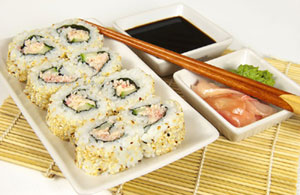
This article is not about the etiquette surrounding eating sushi at a sushi bar or restaurant or how to order sushi. It has to do with the mechanics of eating the sushi with the condiments it is served with. The Internet has a wealth of sources on the proper etiquette to use when dining out.
The Condiments
Whether you order out or make sushi at home, sushi is usually served with three items as shown in the picture: Tamari soy sauce (the dark colored liquid), wasabi, a Japanese horseradish (the green ball of paste), and pickled ginger (thin, pink slices next to the wasabi). If you are not familiar with sushi, you wonder what you are suppose to do with these condiments.
Tamari Soy Sauce
Tamari is a Japanese-style of soy sauce and has a slightly sweeter taste than the soy sauce you get from the local Chinese take-out. Sushi bars generally provide you with a bottle of soy sauce; in addition, you will be provided with an small empty shallow dish to use for dipping your sushi in soy sauce. Pour soy sauce in the tiny plate, half-full or less. Some Americans like to put a small bit of wasabi in this plate with the soy sauce, although this is frowned upon by the Japanese.
There is a proper way to dip your sushi in the soy sauce so that it doesn't fall apart before getting it to your mouth.
A good Nigiri (a mound of sushi rice with a strip of fresh fish on top) ought to fall apart in the mouth, so chefs prefer not to pack the rice too firmly. Most connoisseurs pick up sushi with their fingers, since chopsticks are likely to break apart a loosely-packed nigiri. Some people claim that chopsticks are preferable because the flavors of the different fish linger on their hands, preventing full appreciation of each separate topping. Either way, you want to dip the fish side of the nigiri in the soy sauce, rather than the rice side. If the diner dips the rice side of a loosely-packed nigiri into the soy sauce, the nigiri will disintegrate in the soy-sauce dish.
Similarly, with Maki (sushi rolls), you don't want to dip the rice side in the soy sauce otherwise it could tend to fall apart. Instead dip the side of the maki, the seaweed side, into the soy sauce. And always, lightly dip the sushi in the soy sauce or the soy sauce will overpower the sushi.
Note if you are eating out, a good sushi chef adds all the flavoring the sushi needs before he hands it to the customer. He mixes his own sauce and brushes it onto the sushi behind the bar. Dipping the sushi in soy sauce is not needed because it is already seasoned.
Wasabi
As for wasabi, most commercial wasabi served in sushi bars isn't wasabi at all. It's a mix of horseradish powder, mustard powder, mustard extract, citric acid, yellow dye No. 5, and blue dye No. 1. Real wasabi is a rare and finicky plant. It's hard to grow, nearly impossible to keep fresh, tricky to prepare, and absurdly expensive. It's also much more delicious than its contrived counterpart; it has a sweeter and subtler taste.
You can add a small amount of wasabi directly to each piece of sushi if you desire. Be aware that sometimes nigiri has wasabi tucked in between the fish and rice; sushi prepared this way rarely needs extra wasabi. Although some people choose to mix the wasabi paste with the soy sauce, this practice makes it hard to control the balance of spicy and salty flavors and may be considered disrespectful to the sushi chef when you are dining out. I, myself, prefer to eat it this way. Just be careful of the amount of wasabi you add.
Gari, Pickled Ginger
Gari, or pickled ginger, is considered a palate cleanser and eaten between bites or different types of sushi. It is not meant to be eaten in the same bite as a piece of sushi. A thin slice or two is enough; it is quite strong.
One final note: Shushi should be eaten in one bite. Again the problem here is that the sushi could fall apart on you if you bite it in half.
