Japanese Noodles
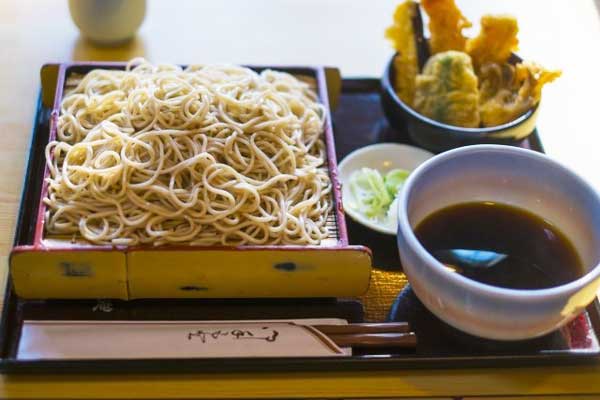
Cold Soba Noodles with Tempura & Dipping Sauce
Japanese noodles = menrui
The Japanese like to serve noodles in soups and salads. It's customary to make loud slurping sounds when eating noodle soup, though younger Japanese are rebelling and eating more quietly. Most of Japan gets very hot and humid in the summer. To combat the heat, a number of dishes meant to be eaten cold have been developed. One of the main cold summer dishes is cold noodles. Kishimen, udon, hiyamugi, ramen, chuka soba, and somen are all wheat noodles, while soba is made from buckwheat, shirataki from yams, and harusame from mung bean or other starches. Substitutes: Chinese wheat noodles (may cook more slowly than Japanese noodles)
Ramen are thin, wheat-based noodles made from wheat flour, salt, water, and Kansui (a type of mineral water) or eggs. The dough is set to rise before being pulled. These Japanese noodles were originally imported from China, as a noodle soup, during the Meiji Period. Since then it has been integrated into several Japanese dishes, thousands of Japanese restaurants specializing in ramen have opened, instant ramen was invented, and dishes containing the noodle have grown in popularity around the world. Instant ramen has become especially popular in the United States and Mexico. Ramen noodles have a firm texture and are usually pale yellow in color. The noodles may vary in shape, width, and length. They are served in a broth. Unlike soba, ramen broth is never served cold. Ramen is an egg noodle and it has different flavored broths (miso, soy and salt), and meat stock (chicken, pork, etc.). Whether it’s the rich tonkotsu (pork bone) ramen of Kyushu, the hearty miso ramen of Hokkaido, or the light chicken broth of Tokyo, every region has its own style.
Udon are the thickest of the noodles served in Japanese Cuisine. Udon are white, wheat-based noodles, that are 4-6mm in width. These noodles are served chilled with a dipping sauce in the summer months, or in hot dishes and soups when the temperature is cooler. The most common style is kake udon, served hot in tsuyu (soy sauce-based) broth and sprinkled with sliced green onions. Plain udon noodles readily absorb flavours, making them an ideal base for strong ones. They are also eaten cold, tossed in a stirfry or topped with tempura – there are plenty of variations.
Sōmen noodles are a very thin, white, wheat-based noodle. They are usually served chilled in the summertime with dipping sauces although they may be used in soups and other hot dishes. Sōmen noodles are very similar to hiyamugi and udon noodles, only they are thinner (about 1.3mm in width). During the summer months Japanese consume chilled sōmen to stay cool. The chief difference between somen and other types of wheat noodles is that they are extremely thin, stretched that way with the aid of vegetable oil. Somen is usually served cold, a great way to cool down in the heat of a Japanese summer. Sometimes they are served plain with ice, or tossed with raw vegetables, and always with tsuyu (soy sauce-based) dipping sauce. When served in a hot broth of meat and vegetables, somen is called nyumen.
Recipe for Cold Somen Noodles
Hiyamugi are wheat flour noodles similar to sōmen and udon noodles and somewhere in between the two in size. These noodles are often served in the same manner as sōmen and udon noodles. While they are mostly white, there are bundles mixed with noodles of pinkish or brown hues.
Kishimen - made with wheat flour. Kishimen is much like udon, in that it is a long, thick, soft white noodle. But what makes kishimen unique is that it is flattened out and has rough, crinkled edges. It can be served in a number of ways, but the broth is usually either white (salt) or red (soy sauce), although curry versions are also available.
Chuka soba, or Chinese soba - Chuka soba are the Japanese version of Chinese egg noodles. They're curly, made with wheat flour, and often used to make the soupy dish known as ramen. Chuka soba ("Chuka" is the Japanese word for Chinese) shouldn't be confused with Japanese soba, the straight, tan-colored noodles made from buckwheat flour. Sometimes saffron or yellow dye is added for color. Chuka soba noodles cook quickly and are often used in cold noodle salads, soups, main dishes and stir-fries. At Asian markets and in the Asian foods section of some supermarkets, look for a brick of dried, curly noodles wrapped in cellophane similar to ramen noodles. They are often used as a substitute for ramen noodles.
Soba is a noodle made from buckwheat and wheat flour, roughly as thick as spaghetti. Soba noodles are available dried or fresh. They may be served with hot broth or cold with dipping sauce. Soba noodles, made of soba (buckwheat), are available all year round but are really popular when the heat turns unbearable. Soba broth is made with fish stock, has a dipping sauce that is soy-based and is served cold in addition to being served hot. The most common way of eating the noodles is zaru soba, or chilled soba, served with a dipping sauce and seaweed sprinkled on top. Take the noodles and dip them into the broth. Or, if you have warm broth, pour it over the noodles. Popular toppings for soba in hot broth are mushrooms, duck and tempura, usually shrimp. For cold soba, sea urchin and bottarga* are popular. More unusual ones that work are cold soba topped with sardines. Cold soba can also be topped with grated yam. Although the popular Japanese dish Yakisoba includes "soba" in its name, the dish is actually made with Chinese style noodles (chūkamen).
* An all time favorite tasty delicacies is bottarga, or karasumi in Japanese. It’s very popular and well known around the Mediterranean and in Japan, but few Americans know about it. Bottarga is silver mullet roe, cured in its original sac form with sea salt, then dried, waxed and vacuum sealed for preservation. The wax coating prevents further drying and exposure to light. Although it’s been called the poor man’s caviar, it’s highly prized and just as expensive! Each package comes with 2 roe sacs, and in Japan a good quality bottarga can cost as much as $200-300. Taiwanese versions are less expensive, so many Japanese tourists who visit Taiwan come back with a suitcase full of bottarga. Bottarga has a deep salty ocean flavor with a nutty finish that is more delicate and refined than anchovies, and more mellow and rounded than caviar.
Shirataki - Known as the "white waterfall" these clear Japanese noodles are made from the root of Amorphophallus Konjac (aka Devil's Tongue plant), or from a similar plant. The roots are processed into a gelatin, Konnyaku, from which the noodles are made. These noodles are often described as chewy or rubbery. shirataki noodles have a high nutritious value. These noodles contain high amounts of the fiber Glucomannan and are low in carbohydrates and low in calories. As a result of this, these noodles have recently becoming popular among dieters in the west. However shirataki noodles have been used in traditional Japanese cooking for many years to add texture to sukiyaki and oden, winter stews. shirataki - yams
Harusame are glass noodles made from potato starch. A package of noodles will typically contain several bundles of the noodles, which take the form of long flat or rounded rods. When the noodles are uncooked, they are slightly whitish with a hint of translucence. After cooking, the noodles will turn totally clear. There are a number of ways to use harusame noodles. Some cooks break the raw noodles up, using the chunks for texture in a salad. This usage leads some people to call the Japanese noodles “salad noodles.” The noodles can also be fried until crispy, used in soups, or served as part of a stir fry. Soaking the noodles before cooking will make them more tender and slightly chewy. The noodles can then be used for things like filling fresh spring rolls. After soaking they can also be coiled into nests. These nests can be deep fried and used as bowls or nests for food. Although these noodles are generally flavorless, they absorb flavor readily, making them a great choice for a wide range of dishes since they will sop up sauces and spices quite effectively. "Harusame" in Japanese means "Spring Rain."
Ryokuto harusame is made from mung-bean starch, and harusame is made from potato starch. The mung-bean noodles originated in China, and the harusame noodles were developed in Japan. The potato starch noodles are thin and straight like “spring rain.” The mung bean noodles are like wrinkle wires.
Japanese Noodle Toppings
The final touch on any bowl of Japanese noodles is the toppings. While some are popular for certain dishes only – corn on ramen, tempura on udon, pickled ginger on yakisoba – several are common to most Japanese noodle styles.
Negi (Spring Onions)
Sliced green onions garnish most types of Japanese noodles. The negi, or Japanese onion, is known in English as the spring onion, Welsh onion or scallion. Negi is an essential part of Japanese cooking, and in noodle dishes is sliced thinly on top.
Tamago (Egg)
Egg is another popular topping. You will often find half a boiled egg in a bowl of ramen, but there are other methods too, particularly the tsukimi (moon viewing) style, where a raw egg is cracked into a bowl of udon or soba.
Nori (Dried Seaweed)
The Japanese diet consists of seaweed (nori) in several forms, and noodles are no exception. It is not unusual to find a square of nori (dried, flat seaweed) on top of a steaming bowl of noodles, but other forms include aonori (seaweed flakes) sprinkled over yakisoba and wakame (soft, sweet seaweed) on udon or soba.
Shichimi Togarashi (7-Spice Chili Powder)
Togarashi chili powder is more than just ground up chilli peppers: various ingredients are added, often sesame seeds, pepper, citrus peel, ginger, garlic, poppy seeds, hemp seeds, nori and shiso (Japanese basil). The blend depends on the cook, region or manufacturer, but no matter what it’s a delicious addition to a bowl of steaming udon or yakisoba.
Tsuyu (Dipping Sauce or Broth)
Tsuyu (properly called Mentsuyu) is a versatile sauce that brings the umami flavour to so much Japanese cooking, and when it comes to noodles it is essential. As tsuketsuyu it perfectly accompanies cold noodles as a dipping sauce, and as kaketsuyu it provides a delicious base for a hot broth.
The essential ingredients of tsuyu are soy sauce, mirin and sake but others such as sugar, kombu (dried seaweed) and bonito flakes, or dried tuna flakes, can be added. Whatever the version, tsuyu sauce provides a delicious and truly Japanese way to eat noodles.
How to eat soba
Depending on how your soba are served, the way of eating differs:
Soba served in a soup (usually the hot ones) are enjoyed by using your chopsticks to lead the noodles into your mouth while making a slurping sound. The slurping enhances the flavors and helps cool down the hot noodles as they enter your mouth. The broth is drunk directly from the bowl, eliminating the need for a spoon. It is not considered rude to leave some unfinished soup in the bowl at the end of the meal.
For soba that are served with a dipping sauce (usually the cold ones), there are a few more steps before you can enjoy them. First, mix some of the green onions and wasabi into the dipping sauce. Then take a few strands of soba noodles and dip them into the sauce before eating them.
If your soba were served with a dipping sauce, some soba restaurants will give you a little teapot towards the end of the meal that is filled with what looks like hot cloudy water. This is sobayu, the water that the soba noodles were cooked in. Sobayu is meant to be poured into your remaining dipping sauce after you have finished your noodles. This is how you can finish your dipping sauce by drinking this mixture and adjusting the amount of sobayu as you prefer.
