Banchan (Korean side dishes)
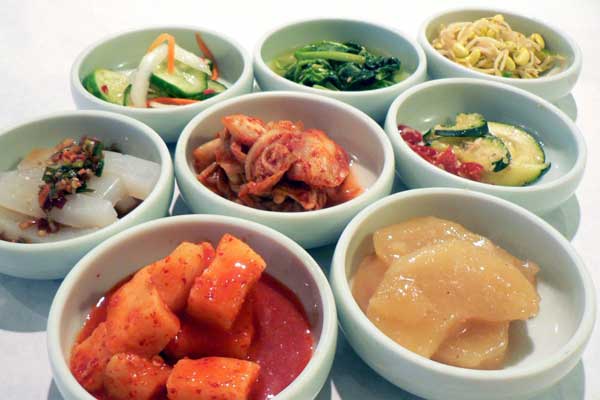
If you've ever dined out at a Korean restaurant, you're sure to have been served those tasty, complimentary sides. They could very well have been the best part of the meal; the tiny portions of bright red squares, shiny noodles and dehydrated somethings. The only caveat -- for an American palate, at least -- is the food can be tough to identify. These "free side thingies" are actually called "banchan," which translates to "side dishes."
Banchan is eaten at practically every meal in Korea -- it's considered any small food dish served alongside rice. All banchan is communal. You get your own bowl of rice and your own bowl of soup, but in general everything else is shared. There are endless variations of banchan fare, but kimchi and a seasonal vegetable are likely to make it to the table.
Even dishes that can hold their own as main dishes, such as pajun (savory pancakes with green onions) and japchae (stir-fried glass noodles with vegetables and meat), transform into banchan as soon as they make their presence in small dishes to be shared with the whole table.
One of the easiest ways to enjoy banchan is with a bowl of rice. Just take some banchan, put it on your rice, and proceed to eat. While this can often be a meal at home, if you’re at a restaurant, it’s likely that you’ve ordered other dishes. There is no right or wrong way to eat banchan. You can start whetting your appetite by nibbling on some namul with a glass of beer before your main dish arrives. You can eat kimchi by itself, or, if you like, use it as a spicy condiment for grilled meats like bulgogi and galbi. You can enjoy a refreshing bite of pickled daikon to cleanse your palate. You sometimes see people wrapping a small amount of rice with lettuce kimchi.
Korean imperial court cuisine differs from home-cooked meals in that it is essentially all banchan and no main dish. An imperial meal consists of about a dozen different banchan accompanied by rice and soup. Of course, the content of the banchan gets an upgrade: Rare delicacies like abalone and sea cucumber make the statement that banchan can surely wear the crown. In a way, the imperial banchan meal is like a tasting menu presented all at once, allowing your chopsticks to wander from dish to dish depending on what your stomach desires.
Here are some dishes commonly served in the West.
kimchi = fermented/pickled vegetables with chili pepper
namul = cooked vegetables seasoned with sesame oil, garlic, and soy sauce
jorim = vegetables and/or proteins simmered in broth
Kimchi (cabbage kimchi)
Oi Sobagi (cucumber kimchi)
Kkadugi (cubed radish kimchi)
Quick Dongchimi (radish water kimchi)
Buchu kimchi (garlic chives kimchi)
Mu Saengchae (Spicy Radish Salad - sweet and sour)
Mu Namul (Stir-fried Radish)
Sukju Namul (marinated mung bean sprouts)
Kongnamul Muchim (Seasoned Soybean Sprouts)
Oi Muchim (Spicy Cucumber Salad)
Oi Bokkeum (Stir-fried Cucumbers)
Watercress Namul
Hobak Bokkeum (Stir-fried Zucchini)
Gaji Namul (Steamed Eggplants)
Gaji Bokkeum (Stir-fried Eggplants)
Sigeumchi Namul (Seasoned Spinach)
Putbaechu (Young Cabbage) Doenjang Muchim
Sesame Broccoli
Gamja Jorim (Braised Potatoes)
Myulchi Bokkeum (stir-fried dried anchovies)
Ojingeochae Muchim (dried shredded squid)
Eomuk Bokkeum (Stir-Fried Fish Cake)
Yeongeun Jorim (sweet soy glazed or candied lotus root)
Japchae (stir fried glass noodles)
