Medieval Cooking Techniques
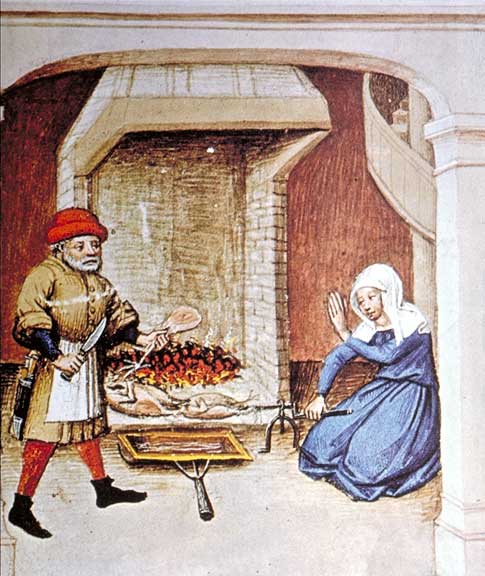
Fowl roasting on a spit. Under the spit is a narrow, shallow basin to collect the drippings
for use in sauces or for basting the meat; The Decameron, Flanders, 1432.
The basic cooking methods of the time are clear both from literature and archeology: boiling and roasting. The image of a stewpot simmering in the hearth with random foods being thrown into it has endured into recent centuries. In a period where much cooking was done on a hearth – that is, essentially, a simple fire, crudely contained – efficient use of heat, not to mention limited equipment, would have led many to cook everything together. In more nuanced cooking, even without great means or skill, more controlled additions could be made.
Another common method was frying. While this may have been done with olive oil in the South, in the north oil was rare and so pork fat was used. The degree to which pork fat replaced oil through this period may shock some modern eaters.
Medieval menus reveal that roasting was one of the most popular methods for preparing feast foods. It required little expert attention except when covered with a paste of saffron, egg yolks and flour to give it a gilded appearance, known as 'endoring.'
Other techniques involved 'parboyling, stewying, broyling, and tostying,' the first being suitable for softening salted meats. Recipes order to 'seethe it standing,' or cook it thick.
Food could be place in water-tight earthenware jars or cloth bags and immersed in boiling water, such as when making a pudding.
It was considered important to make sure that the dish agreed with contemporary standards of medicine and dietetics. This meant that food had to be "tempered" according to its nature by an appropriate combination of preparation and mixing certain ingredients, condiments and spices; fish was seen as being cold and moist, and best cooked in a way that heated and dried it, such as frying or oven baking, and seasoned with hot and dry spices; beef was dry and hot and should therefore be boiled; pork was hot and moist and should therefore always be roasted.
- Boiling - Soups and stews were cooked in large iron, bronze, copper, or clay pots placed directly on the fire. Eggs were boiled
- Spit-roasting - Meat could be roasted at different degrees and brushed or coated with brine, wine or honey, at the least.
- Frying
- Broiling
- Grilling
- Baking - An oven might be used to make bread or cook other dishes like pastries or pies.
- Poaching
- Smoking - A fireplace could also be used to smoke meat, a form of preserving it.
