Tarte owt of Lente
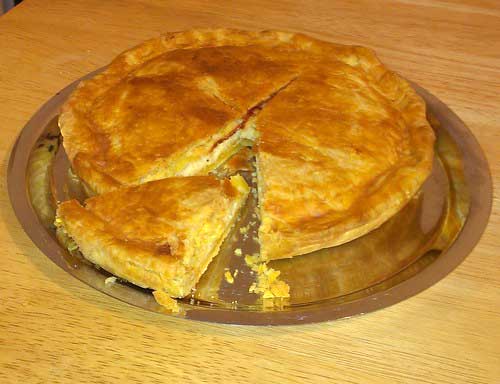
Lent is still very significant to many Christians, but during the medieval period it was probably the most important religious observance of the year. It was a 46 day period, starting on Ash Wednesday and ending just before Easter. It signified the 40 days Jesus spent in the desert, and people were meant to spend the time abstaining from luxuries, in penance, prayer, and fasting. There were strict rules regarding the food that could be eaten – no meat of land animals, no milk, and no eggs.
This Elizabethan cheese tart is so named as it includes all the things that you are not supposed to eat during lent – cheese, eggs and cream.
Take neshe chese and pare hit and grynd hit yn A morter and breke egges and do ther to and then put yn buttur and creme and mell all well to gethur put not to moche butter ther yn if the chese be fatte make A coffyn of dowe and close hit a bove with dowe and collor hit a bove with the yolkes of eggs and bake hit well and serue hit furth.Gentyll manly Cokere (MS Pepys 1047, c.1500)
Translation:
Take fresh cheese and cut it and grind it in a mortar and break eggs and thereto and then put in butter and cream and mix all together well. Do not put too much butter in if the cheese be fat. Make a coffin of dough and close it above with dough and colour it above with egg yolk. Bake it well and serve it forth.
Modern recipe:
2 cups freshly grated cheese*
6-8 eggs, beaten
2 Tbs. softened butter
1/2 cup light cream
optional - pinch salt & pepper; not specified in the medieval recipe but often expected in both medieval and modern foods.
1 nine inch pie shell, with lid
1 egg yolk, beaten
Combine first five ingredients; place in pie shell and top with pastry lid. Brush top lightly with egg yolk; reserve/refrigerate remaining yolk for later use. Bake at 350º F for 1/2 hour - 45 minutes, or until the pastry is golden brown. Remove from oven and brush top with remaining egg yolk. Return to oven for no longer than 10-20 seconds to allow yolk to set. Remove and serve.
*Modern cheeses to use appropriate for this recipe that were either in existence during the middle ages or are very similar include: Beaufort, Brie, Camembert, Cheddar (first recorded use is in 1500), Comté, Emmenthal, Farmer's (similar in both taste & texture to medieval cheese), Grana (first recorded use is in 1200), Gorgonzola (first recorded use is in 879), Gruyére, Maroilles, Mozzarella, Port-Salut, Reblochon, Romano, Roquefort (first recorded use is in 1070), and Stilton.
