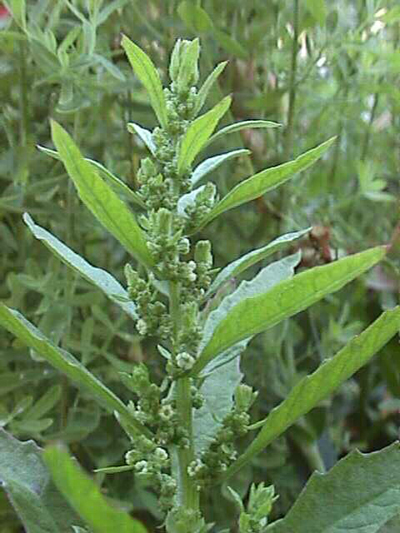
Epazote
Epazote, pronounced [eh-paw-ZOH-teh], is an herb well-known to Mexican and Caribbean cooking. The name comes from the Aztec (Nahuatl) epazotl. It is also known as pigweed or Mexican tea and is frequently regarded as a garden pest. It grows in the wild in Mexico and America and you may even have it growing in your own backyard. It is hearty and sometimes is referred to as a weed. Much like cilantro, it is referred to as an "acquired taste".
A Mexican herb that has a very strong taste and sometimes has a gasoline or perfumey type odor. It has been used in Mexican cuisine for thousands of years dating back to the Aztecs who used it for cooking as well as for medicinal purposes. Although epazote is poisonous in large quantities, it has been used in moderation to help relieve abdominal discomfort (gassiness) that can come from eating beans. It has become a distinct flavor in Mexican cuisine and is now used to season a variety of dishes including beans, soups, salads and quesadillas. The older leaves have a stronger flavor and should be used sparingly. Younger leaves have a milder, yet richer flavor.
Epazote has a distinct taste that cannot be replaced by other herbs. If you do not have access to it, you can leave it out. If you leave it out, use more of the other seasonings to balance out the loss of the epazote.
Rick Bayless's (in his book "Authentic Mexican") describes this herb as the well-known essential ingredient in Mexican black bean recipes as well as in quesadillas and some moles (moh-LAYS).
You can find this herb in most Latin markets or Hispanic grocery stores.
