Mexican Closed Pit Cooking
Anybody from Texas, Kansas or North Carolina understands that Real Barbecuing is NOT grilling meat. Instead, Barbecue refers to a slow cooking technique involving smoke & indirect heat. Today, authentic American Barbecue is prepared in Clay Brick Ovens to comply with contemporary sanitary standards. Likewise in Mexico City, Barbacoa is prepared in Brick Ovens...but in rural Mexico (particularly Mexico State, Hidalgo & the Yucatan) "Barbecues" are still prepared in Underground Covered Clay Pits as they have been prepared for thousands of years.
Barbecue is the Anglicized word for Barbacoa, which itself is the Spanicized word of Taino (Carribean) indigenous origin. Columbus first encountered this style of cooking in the Carribean...and that name has come to dominate. Food historians believe that Barbecue originated in the Yucatan (where it is refered to as Pibil), and then spread throughout the Caribbean as tribes populated the Carribbean from the Mexican & Central America mainland.
Anthropologists, have found Pits that date back to the Early Olmec Civiliation (about 2,000 B.C.) in Eastern Mexico (just north of the Yucatan).
As in the U.S., Mexico has regional variations. One of Mexico's most lauded is the Central Mexican Barbecue that is popular in Mexico State & Hidalgo. Today, it is is prepared with a Whole Lamb (in Ancient Mexico it was probably made from Small Deer, Rabbits & Turkey).
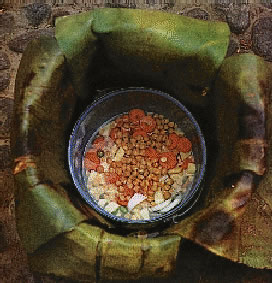 The Lamb is marinated with Garlic, Dried Herbs & Vinegar wrapped in Agave Leaves (the same plant form which Tequila is made)...the Agave wrapped Lamb is set on top of a Pot filled with Vegetables & Chickpeas (so that the juices drip into the pot to create a tasty soup). Volcanic rocks are heated for 24 Hours...then set at the bottom of the pit, dried aromatic wood is place on top of the rocks to create smoke...the Pot & Lamb is set on top of the wood, the pit is sealed and the food allowed to cook for about 12 Hours.
In Southern Mexico, the Lamb is typically marinated in a Paste (similar flavor profil as Chile Colorado with a little more Cloves)...then slow cooked.
In the Yucatan, Pibil is usually made with Pork that has been marinated in Tropical Spices such as Achiote (aka Annatto...a Flower Bud with an earthy flavor & strong brick red color that is also used to give American Cheddar Cheese its yellow color...without affecting the flavor), and Bitter (Seville) Oranges.
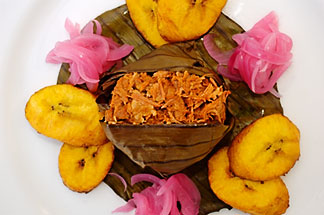 In the Yucatan, they prefer to use Banana leaves as the wrapper (not surprising given that is what they have in the Tropics). And they serve their Pork Pibil with Plantains & Red Onions Marinated in Bitter Orange juice.
As with the Sauce Pot Roasts, when I make Barbacoa/Pibil at home, or have it at a nice restaurant, I prefer "whole meats" rather than pulled shreaded meats...e.g., Lamb Shank, Whole Squab, Game Hen or Rabbit...etc., |
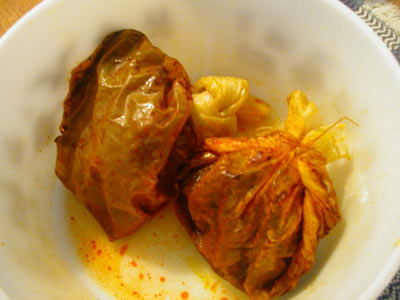 Ancient Pressure Cookers
Another brilliant Ancient Mexican cooking technique is the use of Plants to create pouches filled with Meats & Vegetables that are cooked on a Griddle. The moisture in the vegetables turns in to steam that cooks the food, very similarly to a Modern Pressure Cooker...resulting in brilliantly melded, fork tender, earthy meals that take on the flavors of their Pouches. This cooking technique, which has survived for thousands of years, has even influenced French cooking where they regularly make little pouches in wax paper as appetizers.
In Central Mexico, these Pouches were traditionally made from Agave leaves, and edible Cactus Leaves.
In Southern Mexico they were traditionally made with Banana leaves, which has become the most common method in Mexico since making Mixiotes from Agave was outlawed.
In the Gulf of Mexico, the Hoja Santa aka Yierba Santa, aka Hierba Santa, aka Acuyo, aka Root Beer plant....is used primarily to wrap fish.
This is an extremely versatile way of cooking, as such there are thousands of Mexican receipes that combine every imaginable combination of Herbs & Spices with veggies & Poultry, Meats, Seafood or Vegetarian dishes. |
Direct Grilling
Grilling over Mesquite Charcoal has also been part of the repertoire for thousands of years. There are tree types of grilling done in Mexico:
> Grilling right on the Iron Grates...exposed to the direct flame
> Grilling indirectly...via a barrier of Banana Leaf or Agave
> Grilling way above the flame...as a combination of Grilling & Smoking (Zarandear)
There are several great Mexican traditions around Direct Grilling:
> The use of "flavorful" mesquite dead wood
> The invention of the Skirt Steak cut of meat....which takes a tough but extremely flavorful & gamey cut, that is vastly improved by cutting across the grain & lightly marinating with a little bit of acid.
> The use of Citrus Marinades and Chipotle Marinades/Bastes on Chicken, Turkey & Pork to render supremely flavored grilled meats.
> The use of Beer, Onion & Cilantro marinade on Skirt Steak
Most of Mexico...is uninterested with expensive Center of Animal cuts like Ribeye & Filets. However, that is what Northern Mexico has always been known for. In addition, the Unites States did not have a strong Beef or Grilling tradition prior to the annexation of Texas.
> Angus cattle was brought to the New World by the Spaniards. At the time of the American Revolution, pork was the staple in the U.S., and nobody grilled. People stuck to traditional English & German cooking methods of Boiling & Oven Roasting.
> Grilling was a Mexican/New Spain innovation that fused the traditional Pre-Hispanic Griddle Searing with Spain's Middle Eastern methods of Roasting over a direct flame.
In Northern Mexico...you will still find Angus Cattle ranches that produce prime cuts of beef. The North has bragging rights over a couple of dishes:
> The Filet Mignon served on Chipotle-Mushroom sauce
> The Filete Cabreria (a bone in, hefty veal Ribeye)
In addition, in Contemporary Mexican restaurants you will find Filet Mignons served in a great variety of tradtional Mexican sauces as well as some innovative ones like Espresso-Mole sauce.
Mexican Skirt Steak served quite rare:
Steaks & Mexican Onions on the grill:
Mexico also has its version of the Parillada. Similar to Argentinian Parrillada & Brazilian Churrascaria...a small grill, with a small glowing fire, packed with various cuts of meat & vegetables is brought to the table. In Mexico, the Parillada is not limited to beef & includes Pork Chorizo & Chicken as well:
We place Banana Leafs (and other plants) directly on the Grill to protect delecate items such as Fish Fillets....allowing us still grill them quickly, capture smokey flavors, produce grill marks, and add the herby flavor of Banana Leafs with out destroying the food.
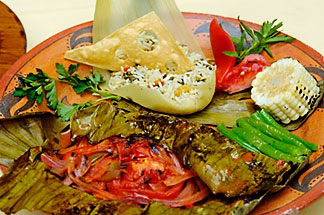 This cooking method is very, very common in the Yucatan were it is refered to as Xic.
Zarandear is the process of grilling fish (or other tender foods such as vegetables) in a grilling basket high above an open fire. The result is a juicy, smokey fish that doesn't need much accompaniment to entice. Trout & Salmon are the perfect fishes for this technique:
|
Griddle Searing
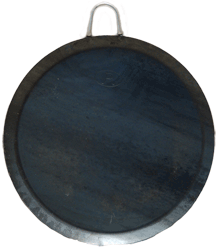 The Comal is used to griddle Tortillas as well as for preparing any type of food imaginable. It is particularly used for quickcooking meats, seafood & vegetables and for roasting chiles, tomatoes, tomatillos, garlic for salsas. This ancient tool, which goes back 4 to 6 thousand years, is used to perfectly sear your favorite foods (a very popular contemporary technique in Haute cuisine).
For a very easy, yet impressive, Mexican dish use a Comal (or Griddle) to produce perfect spicy Shrimp:
> Put a very, very light coat of oil on the Comal and bring it up to temperature over a Medium-High heat
> Place the lightly salted shrimp on the Comal...& flip as soon as the bottom half has turned pink (about 30 seconds)
> When the other side is slightly pink, but not yet fully cooked...spoon your favorite salsa over the shrimp (traditional combinations include Tomatoe-Jalapano, Tomato-Chipotle & Salsa Verde)
> The sauce will immediately boil & lock on to the shrimp producing a perfect glaze (without using sugar or fat)...allow the shrimp to cook thoroughly (no more than 30 seconds or so)
> This tecnique works great with very thin pounded (or Mongolian sliced) filets of sirloin, skirt steak, pork, chicken breast, turkey, lamb, crawfish...you name it.
The Comal method is also great for vegetables, simply julienne or slice vegetables thinly, add a little bit of oil...sear on medium / medium-high until the vegetable is al dente (if the vegetables dry out too much...just sprinkle on a little bit of water)....then add the salsa, adobo or mole of your choice.
One of my favorite dishes when I go back to Mexico are "Huevos Divorciados" (Divorced Eggs)....which is a breakfast of 1 Egg that is Poached in Green Sauce, 1 Egg that is Poached in Red Sauce...and they are divided by Beans or Potatoes or Fresco Cheese etc., I use the same concept at home...where I prepare say Shrimp & Vegetables (Mex Zucchini, Scallions, Greens) on the Comal at the same time....but I keep them on seperate side and use Tomato-Jalapeno salsa on the Shrimp & Tomatillo-Serrano salsa on the vegetables....then a nice cool wedge of Avocado or Fresco Cheese in between them for contrast (& to cleanse your palette).
In addition, the Comal is also used to make great Lobster & Crab....however in that case....you need to continously add a little bit of water, broth, or watered down salsa...so that you maintain a light vapor throughout the cooking process. |
 Steaming
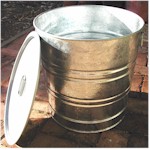
The classic Tamalera (Tamale Pot) is used mainly to steam Tamales, but is also used for Seafood steaming & boils...very similar to the Cajun counterpart.
The Tamal is one of Mexico's classic party foods. They are definitely not something you eat on a daily basis, are very laborious to make....and their best use is as a hearty, imaginative small dish...that holds up great for several days. You can make them ahead of time...then just Steam Re-Heat what you need at the moment.
A tamal is basically, a Corn Dough (laced with high quality Lard)...spread in a thing layer over a wrapper, then topped with Saucy Meats, Vegetables, Cheeses or Fruits, Nuts, Jams for Sweet Tamales. And then steamed until tender.
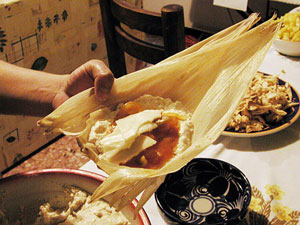 Most tamales are wrapped in the Dried Corn Husks. In Southern & Eastern Mexico they are usually wrapped in Banana Leafs.
The tamal also ranges in size from the very petite sweet & cocktail tamales (3 inches long) to the tamalones in Veracruz which are typical 3 to 6 FEET long. One of the things I like about the tamalon, is that they serve a slice of it over a similarly flavored sauce....so the flavor experience is very intense.
I stress again that the tamal, in its native environment, is a small plate used for parties & get togethers...any attempt to serve it with Rice, Beans & Sour Cream and pass it off as an Authentic Mexican meal....is wrong. I object to this, not only as a Mexican, but as a foodie because it destroys the tamal flavor profile & the experience. |
