Mexican Salsas and Sauces
from jmarquez1976, "Understanding Mexican Cuisine" at http://www.bigsoccer.com/forum/showthread.php?t=291205
My next post will on Salsas and Sauces...where I will talk about how flavors are layered in Mexico.
To truly understand Mexican Cuisine....you need to understand the Salsas & Sauces. In fact, Culinarily Anthropologists often say that Mexicans use meats & vegetables to decorate the sauces.
At the core of Mexican Cuisine there are six major types of Salsas & Sauces:
- Raw Chopped Salsas
- Relishes & Pickled Relishes
- Raw Smooth Salsas
- Roasted Smooth Salsas
- Seared Salsas / Simple Mole aka Calidillos & Mole de Olla
- Moles, Pipian & Peanut Salsa
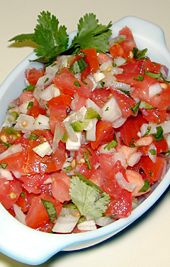 Raw Chopped Salsas such as Pico de Gallo are the most simple in the repertoire....yet they are sooo unbelievable often completely screwed up by lazy people or misguided innovators. The crux of the salsas like Pico de Gallo, is the use of very fresh, high quality flavorful ingredients.
To make a basic Pico de Gallo, simply combine fresh chopped tomatoes, white onions, cilantro, serrano or jalapeno peppers & salt. Do NOT add spices like Cumin (a common misinterpretation is that everything in Mexico has Cumin), Coriander or Black Pepper....do NOT add vinegar, chili powder, garlic or bell peppers. Those types of ingredients will just destroy the nuances of this classic 500 year old recipe. The ingredients are already flavorful...there is no need to mess with them.
There are a couple of simple tricks to a Pico de Gallo:
1) Deflamar - To deflame the onions. In order to not get the burps, that are often associated with Faux Mexicaine, what you need to do is chop the onions then let them sit in either lime juice or vinegar for 5 to 15 minutes....then rinse them thoroughly. This will get rid of a lot of the pungency while retaining flavor.
2) Let the salsa sit for at least an hour, particularly in a tightly sealed plastic bag, to let the flavors meld a bit. To goal is to have both a convergence of flavors while still being able to taste each ingredient separately.
Variations of Pico de Gallo, include adding a little bit of chopped Cucumber, Oranges, Jicama, or Sour Cactus (Xoconostles) ....another variation is using Chopped Raw or Slightly Grilled Tomatillos instead of Tomatoes for more of a green chopped salsa.
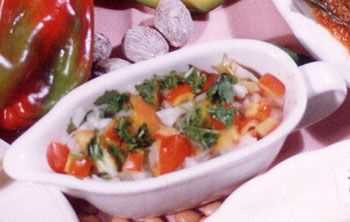 In the Yucatan, instead of Pico de Gallo they have Xnipec.
The differences are:
1) Use the fruity but fiery hot habaneros instead of jalapenos/ serranos
2) Use Red Onion instead of White
3) Add Sour Orange Juice (Seville Oranges). The Sour Orange can be replicated by combining fresh Lime, Grapefruit & Orange juice with a little bit of the Orange & Grapefruit zest (strain the zest out after they have sat for 5 minutes)
Tip: This salsa is about capturing the fruity essence of the Habanero pepper...and not about trying to create a salsa that will kill you. So don't hesitate to carve out the white film on the inside of the chile.
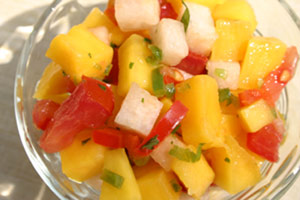 Another very popular Chopped Salsa, of course, is the Mango Salsa.
Its basically a Xnipec (or Pico de Gallo) with the addition of Mangos & less Tomatoes. Variations of this include using tropical fruits such as Papaya, Guava, or Zapotes.
Now this is key: We talk a lot about Authentic Mexican....but its important to understand that Contemporary Mexican cuisine is a Fusion Cuisine. Its a Fusion of Pre-Hispanic, European, African & Asian ingredients & techniques. And while I particularly like to emphasis the Pre-Hispanic elements....Mexican Cuisine is evolving as we speak. As such, I am NOT against innovation....I am against bad innovation. What is bad innovation? Ultimately its up to the person eating....my suggestion is make the Classic Recipe that has been successful for 100s of years...then make changes as you see fit. But, too often, people make up crap without understanding the Classic Recipe first (why would anyone add Black Beans & Coriander Powder to a Mango Salsa for example?)
With that said, one of my favorite innovations on the Fruit Salsa comes from Bobby Flay...who uses Grilled Peaches instead of Mangos & adds Mint:
http://wchstv.com/gmarecipes/yucatanstylechi.shtml
Other uses for Chopped Salsas
(A) I am sure you all know to use Pico de Gallo as a dip with Tortilla Chips. Its also very good with Grilled Meats....specially as a crisp, refreshing counterpoint to heavily marinated or seasoned cheap steaks & Garlic-Citrus marinated Chicken (a la Pollo Loco).
Another great use is as a Salad Dressing...maybe you you partially mash a little bit of tomatoes so that it is cohesive, and then you add to Romaine and bump up the Cilantro & Lime juice for a virtually non-fat Salad.
(B) The Xnipec and Fruit Salsas also go very well with Citrus Marinated Pork Steaks, and Banana Leaf Grilled fishes...particularly when they are rubbed with Achiote based seasoning. And they also go very well as a topping to an Avocado salad.
In Eastern Mexico...they have Avocados with very big pits...which are kind of nice...because you can remove the pit, stuff with Mango Salsa....voila....you have a great little Hors D'oeuvre.
For an interesting experiential trick...you can take half the Salsa and sear it quickly on a very hot griddle...then mix it back with the chilled Salsa...so that people get a the intense temperature interplay.
You can also Grill a Catfish Steak, brush it with a thin guacamole right before finishing...& serve it with a tomatillo pico de gallo to reproduce a dish common in the the rural area where my parents grew up
Relishes & Pickled Type Salsas
Alright, its time to continue with Relishes & Pickled Type Salsas. As I mentioned in an earlier post, that in Mexico people don't have rice & beans as a side with everything they eat...as a matter of fact, it is fairly rare (there are sometimes when it makes the perfect complements) ....instead you usually get one side dish that complements the flavor of your main dish. Often it is just refried beans....but it is just as common to get some kind of chunky relish or little salad known as Recaudos or Guarnicion (garnish).
The most popular guarncion, both in the U.S. and in Mexico is Guacamole. Guacamole is the perfect side dish to Grilled Skirt Steaks, Sirloin Skewers, & Chicken Breasts. As with chopped salsas...people often screw them by trying to get slick. Trust me....hold your impulses to add packaged seasonings, black pepper, cumin or ground coriander....and just let the avocados, tomato, onion, serranos, & cilantro shine through. A couple of tips, don't over mash the avocado...and add a little bit of fresh squeeze lime & orange juice (very little)...to get a little bit of sauciness & citrus. Enjoy!
I am sure most have had a pickled Jalapeno. In Mexico, they all also pickle Mushrooms & Cauliflower in the same solution and serve them as marinated little bits to accompany a nice cold beer. In Southern Mexico....they love to serve a pickled slaw as an accompaniment to greasy dishes like Carnitas (Pork that is deep fried in its own fat)....and Gorditas (really thick corn tortillas) stuffed with melted cheese. Everybody has their own vegetable mix...but the most common is shredded cabbage, finely julienned zucchini, carrots & cauliflower and some people like to add a little bit of fruit for some sweetness.
This is one of the best cabbage slaws you will ever eat...and its virtually fat free...and I am going to give you an easy, easy recipe:
Shred cabbage, julienne zucchini (add broccoli slaw if you want) and put this in a plastic zip lock bag with dried Mexican Oregano (preferably) & whole cloves of garlic, kosher or sea salt....then pour in enough pickling juice from a can of Jalapenos to cover most of the mix....then seal tightly...getting as much air out as possible. Let it sit for 24 hours (at least 2 hours & up to 36 hours)...then drain & enjoy.
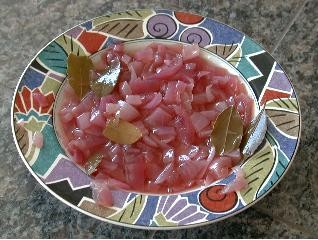 Another, classic slaw is the ubiquitous pickled red onions so common from the Yucatan. These are classic with Cochinita Pibil (I believe Dark Knight provided a recipe earlier)....or trying them with Southern Pulled Pork, Grilled Bratwurst, Chorizo, Linguica...or any other type of fatty meat that is seasoned with "sweet" spices likes cloves, cinnamon or nutmeg.
In Southern & Eastern Mexico....they also do things like combine mashed chiles & meaty tropical fruits like coconut, plantain or mamey, with leftover herby tamales (like Chaya or Hoja Santa)....into Chutney like relishes. Which are great with pork pot roasts & poultry in adobos (barbecue like sauces). Yum!
Next, we discuss the Raw Smooth salsas that are incredibly refreshing & tasty with a well seasoned grilled meat. As a frame of reference think about the El Pollo Loco chain (if you have one in your town). Their House Salsa is basically the same ingredients as a Pico de Gallo...except that it is smooth. People in Mexico will tell you that the salsa needs to be pulverized in a Volcanic Molcate or Metate to get the right flavor.
I have watched Nahautl-speaking women identify the difference with a blindfold, but you I guarantee you will be very pleased by simply using a blender. Simply add the chopped ingredients with a few drops of water & salt into a blender & pulsate briefly until you get the desired texture.
Tip: Add the Cilantro (or any other herb) on the final pulse so that your red salsa doesn't become muddied with lots of green.
You can also add the tomatoes in batches to create interesting textural contrasts. For example, I add half of the tomatoes in the beginning & blend till they are smooth, then I add the onions & chile..pulse, add more tomatoes pulse again...so you have a thin base plus slightly chunky tomatoes.
The variations include using Tomatillos or maybe some Habaneros. Feel free to experiment but remember that the emphasis on these salsas is freshness, lightness and a little bit of heat....so keep them simple.
Finally, to make the best Tortilla Chip Dipping salsa follow this recipe:
2 Tomatoes
1/2 Onion
1 Teaspoon Pickling Vinegar from can of Jalapenos
1 Jalapeno
2 tablespoons of cilantro
A few pinches of salt
.....and follow my tip above.
We now come to the real deal...Roasted Salsas. This is where Salsas start becoming a sophisticated layering of flavors (not that multi-dimensional chopped & fresh salsas aren't World Class in & of themselves)....this is where we start talking about Salsa tastings etc.,
Roasted Salsas are identifiable as smooth, with a little bit of textures particularly seeds & black speckles, also they look cooked...that is they are typically not brightly colored, instead they are muted and earthy.
You can think of Roasted Salsas as a method...more than a specific combination of ingredients....because this is one area where each cook combines the basic components to exploit the nuances of the dried & fresh chiles, tomatoes, & tomatillos to create myriads of unique flavors.
The basic components:
> Griddle roasted Tomatoes or Tomatillos or Both
> Griddle roasted Garlic or Onions or Both or None
> Griddle roasted Chiles, fresh or dried or both
> Fresh onions or not
> Cilantro or Mexican Oregano or both or None
> Spices like cumin or none
Lets start with a recipe:
> 8 tomatillos
> 2 serrano chiles
> 2 cloves garlic
> 1/4 onion diced finely
> handful of cilantro
> sea or kosher salt
> a little bit of water
Griddle Roasting:
> Place the tomatillos, chiles & unpeeled garlic straight on a hot griddle (no oil) & blacken on all sides
> Once they are blackened remove from the griddle, put a layer of wax paper on aluminum foil & create a little pocket...place the blackened ingredients in the pocket & seal it, put everything back on the griddle for about 5 minutes...so that everything cooks through.
> put the cooked ingredients in a blender & puree (adding a little bit of water so it doesn't stick to the blades)
> add chopped onion, cilantro & salt to taste
The roasting develops the natural sweetness of the ingredients, adds hints of smoke & charcoal, while excarcebating the natural characteristics of the ingredients. For example, the tomatillo becomes quite lemony while the serrano contributes muted herbal & bacon like flavors. This salsa makes a great pairing for barbecued ribs & a pulled pork, as well as Garlic Rotisserie chicken.
Now lets take out 1 Serrano chile & add 2 arbol chiles. For the arbol chiles we take the dried chile & roast on the griddle for about 10 seconds on each side then we submerge them in hot tap water for 20 minutes....drain & blend with the remaining ingredients.
Now we have added a little bit of bold, direct heat with raspberry tones....to offset some of the smoky tones.
Now lets replace half the tomatillos with 1 large tomato, also griddle roasted, and we now have a sweeter, redder salsa that pairs better with dark meat chicken.
Now lets add half an Ancho chile (process like the Arbol)....and we have add more of a tangy tamarind flavor.
I think you guys get the idea. There about 20 basic combinations of chiles, tomatoes & tomatillos...and each can & is taken in different directions by varying the herbs & processes. Some notable variations are:
Salsa Borracha (serrano & dried passilla with pulque, tequila, wine, or beer)
Salsa de Cacahuate (tomatillo, tomato, arbol chile & peanuts)
The possibilities are unlimited.
Note, these Salsas are important to understand & get to know....because they are not only consumed as spicy condiments, but actually form the base for main dishes....like the saucy pot roasts we talked about early in the thread.
For now I will give you another interesting one:
4 Ancho Chiles
1 Guajillo
1 Chipotle from a can
1 Cup of Mexican Sour Cream or Plain Yogurt
1/4 Cup of Beer
1/2 Roasted Onion (chopped)
Salt
Mix the roasted Chiles & Crema or Yogurt in the blender...puree. Add sliced Roasted Onion, Beer & Salt. Use it to as a substantial sauce for Grilled Fish & Poultry or brush it on after grilling one side.
Seared Salsas (used in Pot Roasts, etc.)
Alright, lets get back to where I left off....the next type of Salsa....the Seared Salsas used in Pot Roasts etc., The great thing about Roasted Salsas, is that once you master the process, you are not just making a great condiment, but it unlocks a whole world of culinary possibilities.
Basically, when you make a Roasted Salsa...do not add raw chopped onions, cilantro or other fresh herbs. Instead, put some Olive Oil, Peanut Oil, or Lard in a Sauce Pan over medium high until the its quite hot....then you add the Salsa (careful with the splatter) slowly to sear the salsa, and you will cook it down for about 5 to 10 minutes (you want the salsa to thicken & become even more muted in color).
Why searing? You sear to meld flavors, to incorporate some fat...and to round out any the rough flavors.
What to do with a Seared Salsa?
> Add it to cooking greens (Spinach, Mustard, Collards, Chard, Quelites)...roughly 1 cup for every 6oz of greens. Put the raw greens in a pan with the seared salsa....bring up to a boil over medium high...then turn down to simmer...and allow the greens to wilt into the Salsa (about 10 minutes). If you are a vegetarian....serve this with a thick slice of Fresco cheese & corn tortillas.
If you are meat eater...these greens go perfectly with a simple Pork dish, like a grilled pork chop or carnitas.
These greens also go very well with Shrimp (seared or grilled). You can even save some of the Pre-Seared salsa...to cook with the Shrimp for an interesting progression of flavor.
> Add it to Mushrooms.....roughly 1/2 cup of Salsa for every cup of cooked Mushrooms. Sauté the Mushrooms with onions, and once they carmelize add the Salsa and simmer for a couple of minutes.
> Make a Pot Roast....by adding back water and or broth for the right consistency for simmering.
(1) Make a Roasted Green Salsa (instead of cilantro & raw onions add Mexican Oregano)
(2) Brown Pork Ribs in a Skillet and remove.
(3) Sauté Onions in the leftover fat and remove.
(4) Sear the Salsa in the leftover fat.
(5) Add water and broth (in equal proportions) to bring the sauce back to its original volume.
(6) Add back the Ribs & Onions & simmer on low for about 1 hour.
(7) Add chopped greens to the pot & simmer for another 10 minutes
I like it with crispy White Beans (drain beans until very dry...then mash, on a hot pan with olive oil or some reserved pork fat...add the mashed beans...and let them crisp on one side....flip over to crisp on the other)
The brothy sauce in this technique can also be used with Bake Steamed (Mixiote) foods. A Whole Chicken with Green Beans & a Roasted Tomato-Jalapeno Seared salsa tightly sealed in foil & baked in the over oven or on a grill....is particularly satisfying.
> To use as a Rub for grilling meat, add spices like cumin, cloves, cinnamon etc.....sear it down until is almost solid & then let it cool. Rub on your favorite cut of meat.
Moles, Pipians & Peanut Sauces
We have discussed the first 5 types of Salsa & Salsa variants. Its now time to tackle the Moles, Pipians & Peanut Sauces.
What is Mole? Strictly speaking the word Mole comes from the Nahuatl (Aztec) meaning Sauce....plain & simple. To the Aztecs...Guacamole was a Sauce made from Avocado (Aguacates). However, in the contemporary sense Mole is used to describe a group of very rich, velvety, complex & unique salsas that are thickened with nuts and/or seeds.
What is Pipian? Pipian is basically the same as a Mole but the sauce is mostly thickened with Pumpkin Seeds (Pepitas). Pipian tends to be more common in Southern Mexico....and not surprisingly in Guatemala it is also very popular under the name Pepian.
The typical Mole & Pipian is very lush & complex, warping anywhere from 10 to 30 ingredients. Lets start with a specific Mole. Mole Poblano is considered to be the National Mole. This specific concoction, an exemplary fusion dish, was created in the Santa Clara convent in Puebla for some religious dignitary in the 17th century. The same convent is also famous for its Rompope (Spiked Egg Nog) & other sweets...their original cookbooks are still in high demand.
Mole Poblano
1 whole garlic (roasted)
5 tablespoons of sesame seeds
500 grams of almonds
2 tablespoons of anís seeds
sugar to taste
50 gramos of Ceylon Cinnamon
1 tablespoon of dried cilantro leaves
12 pods chile ancho
6 pods of chile chipotle
1 kilogramo of chile mulato
125 gramos of chile pasilla
1/2 bag of chocolate chips
1 tablespoon vanilla
4 blackened tomatoes
4 slices of stale white bread...sauteed
1 tablespoon black pepper
salt to taste
1 fried tortilla
1 boiled plantain
500 grams of raisins
13 pounds of Turkey
1 Cup of Water
1 Cup of Broth
1) Toast the Dried Chiles on a Griddle...then submerge in hot water to soften, then blend or mash into a paste & strain
2) Sauté the tomatoes, onions, garlic, almonds bread & tortilla then blend or mash
3) Bring all the ingredients (except Sesame Seeds) together in a pot and bring up to a boil....then reduce heat to a simmer for about 90 minutes
4) Add the Turkey to the pot & simmer until the Turkey is almost cooked (about 1/2 hour)...taste & adjust seasoning.
5) Cook until the Turkey is cooked through under 1/2 hour or so.
6) Serve the Turkey with plenty of sauce & top with toasted Sesame Seeds
Now that you have the sample recipe...lets break down the Mole. They typically have three components:
1) Roasted Salsa
2) Nut butter
3) Bread stuffing
The three components are brought together over very low heat...and cooked for a couple of hours to thoroughly meld & fuse.
There are dozens, if not hundreds, of fundamentally different Mole & Pipian sauces, every state has its own types & every town has its specific recipes....so you can get very creative. Some of the common Moles & Pipianes:
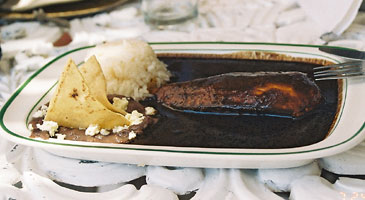 |
Very smokey, glossy & rich Black Mole |
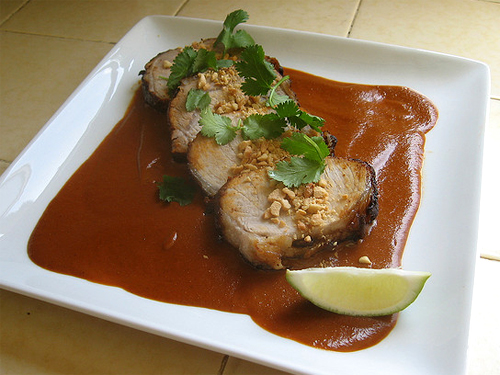 |
Sweet & spicy Red Mole |
| Tangy & herby Green Mole |
In addition to Moles & Pipianes....there are Peanut Salsas which go back thousands of years. Basically, you bring together two cups of very dark red roasted salsa with 2 tablespoons of fresh roasted homemade peanut butter and simmer until integrated....you will have a great, rich salsa for topping tacos or better yet, to quickly simmer shrimp for a classic Shrimp a la Diabla.
Pipian makes a great versatile sauce that can be used in an infinite amount of Mexican & Non-Mexican dishes. You can use it to make Yucatecan Papadzules (basically an Enchilada that is stuffed with shredded chicken, topped with Pumpkin Seed Sauce & slices of hard boiled Eggs).
For lunch today....I just reheated about 1/2 cup of Sauce, served on a plate with a wedge of Queso Fresco, diced Serrano Chile, julienne of raw Cauliflower and a couple slices of Sourdough bread to soak up the sauce.
That.....was......delicious!
