Chickpea Starter Cretan Traditional Bread (Eftazimo)
from https://www.thehungrybites.com/
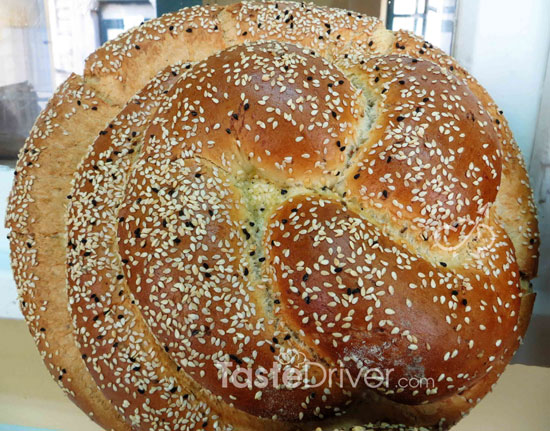
This chickpea bread has no yeast, no baking powder or soda, and no sourdough starter. It rises solely with the power of bacteria found in chickpeas!
I have already told you that I love the smell of a yeasty dough while it rises and the smell of freshly baked bread. But my favorite bread of all is this one, called “eftazimo” in Greek. This bread is utterly delicious and very aromatic, with a very fine and tender crumb. It doesn’t need any yeast, baking powder/soda, or a sourdough starter to rise, but uses a cultivation of bacteria found on chickpeas. That’s why its real name is “aftozimo” which means “self-rising”, but over the years, and probably due to mispronunciation, it got the name “eftazimo” which means “kneaded seven times”.
So no, you don’t have to knead it seven times, but you do have to be extra careful when making it, since if you deviate even a little from the instructions it may never rise (I think this has to do with the chickpea bacteria being very sensitive to temperature changes and maybe other environmental factors).
Eftazimo bread is a Cretan traditional bread made on special occasions and religious holidays, but it can be tricky for someone who doesn’t know how to make it. Because of its difficulty and the fact that it doesn’t require any yeast or sourdough starter, it is accompanied by many superstitions to the point that it has been called the bread of the devil! Of course, this didn’t stop the fearless Cretan people from making it and even bringing it to church as offering on special occasions and religious holidays!
This bread also makes a very popular type of rusks, called ouzo rusks. As their name suggests, they are best eaten with finger food and seafood along with a couple shots of ouzo.
What you need to do for the recipe to be successful:
- Make sure you use spring water or any type of bottled water that is not chlorinated. If you use chlorinated water, the chickpea bacteria will die.
- Use ground dried chickpeas or chickpea flour without any preservatives or pesticides. The best way to ensure this is to buy organic chickpeas/flour. Preservatives or pesticides can kill the bacteria we want.
- Use this years’ chickpeas and not older.
- Don’t use too much salt (yes, you guessed right! Too much salt can kill the chickpea bacteria).
- Make sure you have a warm place for the chickpea cultivation to develop. Either make this recipe on a very hot day or do as I do and keep the chickpea mixture and the dough inside your oven with only the oven light on. Another option is to use a carton box and a hot lamp over it as the heat source. Try to keep the ambient temperature between 86°F – 104°F (30°C – 40°C).
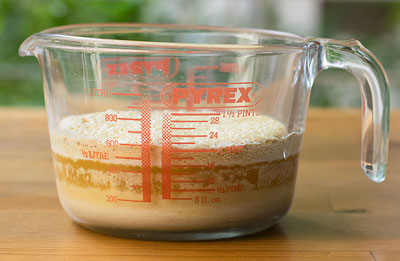
First, you must mix the chickpea flour with some warm scented water (not hot) and let it rest for 10-12 hours until thick foam develops on the surface (in the above photo you can see the chickpea flour settled at the bottom, the liquid in the middle and the foam at the top). This is the sign that the bacteria are active. If no foam has developed, wait for another 6 hours. If after six hours you have no luck, you must start over.
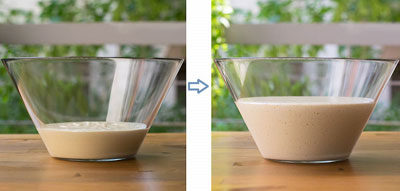
Then, you mix in some flour until a thick batter is formed, and let it rise until tripled in volume. Some people use only the foam and some water and flour to make the batter, but I like to use all the chickpea mixture. However, if you use coarsely ground chickpeas instead of chickpea flour, it is best to strain the mixture first.
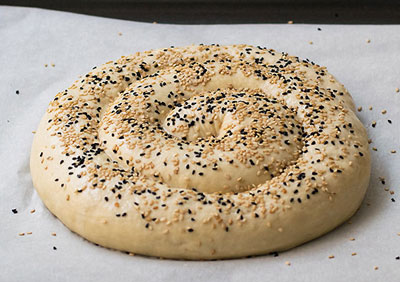
After the batter has tripled in volume, add the rest of the ingredients and knead into a dough. Form the bread and let it rise until almost doubled in volume (it will also spread a little, but that’s normal) and bake it in a preheated oven for 45-50 minutes.
SOME NOTES/TIPS:
- This bread makes the most delicious rusks. Just cut it into slices and bake them in a low oven until dry. They usually accompany ouzo and finger food.
- The smell of the chickpea mixture is very strong and you will probably find it unpleasant. This is natural, so don’t worry.
- Don’t use any yeast. It will not be eftazimo bread.
Chickpea Starter Cretan Traditional Bread (Eftazimo)
from https://www.thehungrybites.com/
This bread has no yeast, no baking powder or soda, and no sourdough starter. It rises solely with the power of bacteria found in chickpeas!
2 cups water, not chlorinated
4 bay leaves
1/2 teaspoon black pepper kernels
2 teaspoons sugar
1/2 cup chickpea flour or 1 cup coarsely ground dried chickpeas, organic
3 1/2 cups bread flour (you may need some more)
1 1/2 teaspoons (7 grams) fine salt
2 tablespoons olive oil
1 teaspoon sesame
1/2 teaspoon black sesame
Make the starter: Bring to a boil 2 cups of water with the bay leaves, the pepper, and the sugar. Let it cool until you can dip your finger in it for ten seconds or more. Strain, discard the bay leaves and pepper and mix 1 cup of the water with the chickpea flour (or ground chickpeas). Let it rest in a warm place for 12-16 hours until foamy. You will probably not see any action before the 10 first hours, so it is best to do this overnight.
Add 1 1/2 cups bread flour into the mixture (if using ground dried chickpeas instead fo chickpea flour, strain it first), and let it rise in a warm place until tripled in volume (about 2-4 hours).
Make the bread: Add 1/2 cup of the scented water, 2 cups bread flour, the olive oil, and salt and knead until a pliable dough is formed. Make a long string and form a spiral like a snail. Or you can just put it in a loaf tin. Brush some water over the surface and sprinkle the whole sesame and the black sesame. Let it rise in a warm place until almost doubled in volume (about 2-3 hours).
About 15 minutes before baking, preheat your oven to 365°F (185°C)
Bake for 45-50 minutes or until done.
Eat!
Eftazymo bread
from https://tastedriver.com/
A bread that banishes evil…
*eftazymo means to knead seven times and is the Greek word for chickpea leavened bread
The recipe was a total secret. The housewives didn’t reveal anything not even on the very same day they would make it. They didn’t want to “put an evil eye on” and thus prevent the dough from rising.
There are many unofficial rumours about the eftazymo bread. The housewives hesitate to make it because they consider it quite difficult. Some even believe they have to knead the dough seven times, as the name suggests… which is untrue…
The fact is that the fermentation of the yeast from chickpeas takes a few hours to rise completely. However you’ll see it’s going to be unique and tasty.
Father Dositheos gave us the recipe because they also make it as festive bread in the Monastery. They put the pieces that are left over in the oven and make rusks. So if you happen to be lucky you may have eftazymo bread rusks with a cup of blessed coffee.
The recipe is not difficult and it’s worth trying to make…
Eftazymo bread
From Father Dositheos of Panagia Tatarna Monastery, Lake Kremasta Evritania
1 In a bowl with hot water add the basil, laurel leaves, the flower and the cloves and leave them there for 30 minutes, while keeping the temperature warm without boiling.
2 Then add the ash, salt, sugar and flour.
3 Whisk them vigorously and place them in a warm place for 7 hours. Our mixture will start to foam. We collect the foams in a pot where we will knead the yeast. We strain with a small strainer.
4 In the same pot we add the above mixture with the broth with the foam and we knead again the yeast with the flour.
5 Put it in a warm place wrapped up in a woollen blanket. After rising knead with lukewarm water.
6 Add a little salt and sugar as you knead.
7 Put the dough in a warm place to rise, then knead it a little longer and give it a round shape. Sprinkle with sesame and brush it with egg or milk.
8 Put the dough in a baking pan and bake in a well preheated oven at 200°C for 1 hour.
9 We may cut it into pieces and bake them to make rusks the next day.
