Greek Tomato Fritters (Ntomatokeftedes)
from https://www.seriouseats.com/
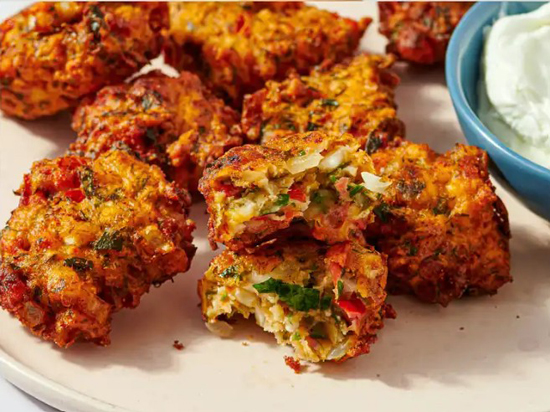
These Crispy Tomato Fritters Taste Like Summer on a Greek Island
Vegetable fritters are one of the best summer dishes, no matter your setting. They're a delicious, practical way to make the most of peak-season produce, and their appeal stretches across many cuisines, the Greek table among them. One of my favorite Greek fritters is ντοματοκεφτέδες, written as ntomatokeftedes (tomato fritters) in English. Ntomatokeftedes, also spelled tomatokeftedes, are one of Greece's most iconic vegetable fritters, a beloved specialty of Santorini. The island's dry climate and volcanic soil yield tomatoes with concentrated flavor and minimal water content, perfect for fritters. You'll also find versions throughout many Greek islands, particularly in the neighboring Cycladic islands and on the Greek mainland.
The term keftedes is often associated with meatballs. Still, in Greek, it also refers to any small fried round—whether it's made from zucchini (kolokithokeftedes), chickpeas (revithokeftedes), or, as in this case, tomatoes.
One of the joys of this recipe is its flexibility. Got bruised tomatoes from the market? A few underripe ones languishing on the counter? Use them. Juicier tomatoes may require extra flour, while firmer ones need less. And though these are best made in summer with ripe fruit, they're forgiving enough to satisfy off-season tomato cravings, too.
Unlike many fritters, such as zucchini fritters, which require squeezing out moisture from the main vegetable to achieve crispness, tomato fritters embrace their juicy star ingredient. This recipe balances tomato's natural moisture with flour, egg, herbs, and briny feta to create a spoonable batter that's dolloped directly into hot oil—no fussy shaping required. The texture of the batter is key.
If, after mixing, the batter feels too loose—often the case with juicier, ripe tomatoes—add a tablespoon of flour at a time until it just holds its shape without becoming stiff or cakey. I like to use a blend of both chopped and grated tomatoes in my fritters. The chopped tomatoes create bursts of flavor and vivid red flecks on the surface, while the grated tomato gives the fritters an even, sunburnt hue and a lush tomato flavor throughout.
12 ounces tomatoes (340 g; about 3 medium tomatoes), divided
1/2 medium yellow onion (4 ounces; 113 g), diced
4 ounces (112 g) sheep's milk feta cheese (see notes)
1 ounce (28 g) fresh flat leaf parsley leaves and tender stems, roughly chopped (about 1/2 cup)
1/2 ounce (15 g) fresh dill fronds, roughly chopped (about 1/2 cup)
1 teaspoon dried thyme
1 teaspoon dried oregano or marjoram
1 large egg
1 teaspoon Diamond Crystal kosher salt; for table salt, use half as much by volume
1/2 teaspoon freshly ground black pepper
3/4 cup all-purpose flour (3.3 ounces; 93 g)
4 cups (960 ml) neutral oil for frying, such as safflower, sunflower, or avocado oil (see notes)
Plain whole-milk strained (Greek-style) yogurt for serving, optional
For the Batter: Coarsely chop 8 ounces tomatoes (about 2 tomatoes) and either gently pulse in blender or food processor until just combined or shred on large holes of box grater set over a bowl, flesh side facing the blades.
Carefully chop any excess tomato skin after shredding. Transfer shredded tomato to a large bowl. Dice remaining 4 ounces tomato (about 1 tomato) into 1/4 inch pieces, and add to bowl with shredded tomato. (You should have about 1 1/2 cups tomatoes.)
Add onion, feta, parsley, dill, thyme, dried oregano or marjoram, egg, salt, and pepper to tomatoes and stir to combine. Use the back of a large spoon to break feta into blueberry-sized chunks. Slowly start adding flour 1/4 cup (30 g) at a time, until fritter batter is loose but not runny, similar in consistency to a loose tuna salad. Batter should be set enough to scoop and rest on a spoon and barely hold its form without falling off, but not overly thick or cakey. Set aside. [The picture shows a glop of batter on a spoon, not runny.]
For Frying the Fritters: Line a rimmed baking sheet with a double layer of paper towels and set aside. In a 10-inch cast iron skillet or Dutch oven, add oil (oil should measure 1 to 1 1/2 inches deep) and heat on medium-high until oil registers 350°F (175 °C) on an instant-read or deep-fry thermometer. Once oil reaches 350°F, lower heat to medium. Using a 1/4-cup dry measuring cup, drop five 1/4-cup portions of batter into pan, evenly spaced apart, using a spoon to gently transfer batter into hot oil.
Fry, adjusting heat as needed to maintain oil temperature around 300 to 350°F (150 to 175°C). Note that some loud, vigorous bubbling is common when fritters make initial contact with oil. Fry fritters for 10 seconds, then give a gentle nudge underneath with a fork to ensure they are not sticking to bottom of pan. They should slightly puff up and float when frying. Fry until deep golden brown on the exterior and yellow-orange on the inside, 3 to 5 minutes per side.
Use a slotted spoon to transfer fritters, letting excess oil drain into skillet, to prepared baking sheet. Sprinkle lightly with salt and let sit for at least 2 minutes to cool. Return oil to 350°F (175 °C), adjusting heat as needed, and repeat frying fritters in batches of 5 at a time. Let the last batch sit for 2 minutes after removing from oil, then serve immediately, accompanied by a side of yogurt for dipping, if desired.
Make-Ahead and Storage
The tomatoes, fresh herbs, and onion can be chopped up to 1 day ahead and stored in separate airtight containers in the refrigerator.
The fritters are best served immediately, but leftovers can be refrigerated in an airtight container for up to 3 days. Reheat on a parchment paper-lined rimmed baking sheet in a 350°F (180°C) oven until recrisped and heated through, 5 to 7 minutes.
Serves 4 to 6
