Swedish Fika
Something else Scandinavians—specifically the Swedes—have perfected is the art of the coffee break. Meet fika (pronounced fee-ka), the Swedish tradition that involves setting aside quality downtime for drinking coffee slowly. It often also includes a kanelbulle, the deliciously sweet Swedish cinnamon bun, and bonding with good company. Fika is tied to the appreciation of coffee and pastries, yes, but it’s really meant to be a way to hit the pause button on work and life stress and just enjoy the moment.
The word fika originated from the 19th century word kaffi (coffee) – then Swedes switched positions of the two syllables and removed one f. kaffi -> ffi-ka -> fika During the history of Sweden, coffee had been banned several times. Some Swedes didn't follow the rules and had to come up with a secret word to meet for “kaffi”.
Fika really is a cultural touchstone of Sweden, but it is a tradition that is about more than just having a coffee. It means catching up with friends, sharing the joy of a little break and enjoying the chance to appreciate a sweet treat. Fika is about genuinely slowing down, getting back in touch with your body and the people around you, and recharging on a deeper level. It’s about connecting with people and yourself.
In Sweden, fika is incorporated into everyday life in many different ways. At any Swedish office, there is always a fika break, both in the morning and in the afternoon. Fika is an excuse for friends to meet up at a cafe and spend some time together. If you take a train somewhere, you pack a thermos of coffee and a baked good, and if you don’t have time, you can be sure that there is a fika special — a cup of coffee and a sweet bun — on board in the dining car. Fika isn’t just a coffee break, it’s a lifestyle, and one that we could all probably use a little more of in our lives.
Essential for a fika is the cup of coffee. But, of course, not everyone likes it. To have a tea, soda or any other drink instead is just as fine. Most Swedes combine their break with some pastry, called fikabröd. Among the most popular are kanelbullar (cinnamon buns), chokladbollar (chocolate balls) and biscuits.
A lot of these fika pastries were traditionally homemade and are often correlated to different occasions. Princess tortas are for birthdays, cinnamon buns have their own dedicated day in October, gooey cakes are a late-night comfort dessert and chocolate balls are great with kids. Here’s a guide:
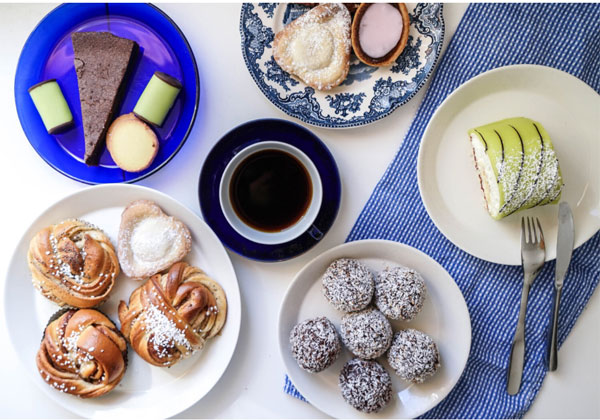
Cinnamon or Cardamom Buns (Vetebullar)
These are one of the most popular fika treats, a sweet twisted bread embedded with cinnamon or cardamom and glazed with light egg wash. Unlike American cinnamon buns, which are cloying and topped with a layer of icing, the Swedish iterations are more delicate, with more spices than sugar, and often garnished with a dash of pearl sugar.
Chocolate Balls (Chokladbollar)
These are one of the first sweet things kids learn how to make in Sweden, mostly because it’s a no-bake recipe with really simple ingredients like butter, sugar, cocoa powder and oats. A bit of brewed coffee is sometimes added for extra flavor and to help melt the butter. Simply mix it all together, compress into smooth balls, and coat with shredded coconut.
Small Cookies (Småkakor)
Shortbread cookies are universal, and they’re so central to the fika experience that in the 1800s, it was commonly said that a proper housewife should entertain with at least seven or more of these cookies. In 1945, a crowdsourced recipe collection of fika pastries was created, called Seven Kinds of Cookies (Sju Sorters Kakor), a nod to all the different variations of these shortbread cookies. Today, the book is a classic and a family heirloom, and it remains one of the most comprehensive cookbooks of Swedish fika treats. There is your classic shortbread cookie, made simply with butter, sugar and flour, and a variation of that called Märta's Sliced Chocolate Cookies, made with cocoa powder and topped with pearl sugar.
Gooey Cake (Kladdkaka)
The kladdkaka is a chocolate cake with a sticky consistency in the middle because it’s only lightly baked, for about 15 minutes. Traditionally made with flour, butter and cocoa powder, it is similar to the French flourless cake.
Vacuum Cleaner (Dammsugare)
This playful sweet is called a vacuum cleaner because it resembles Swedish vacuum cleaners of the 1920s, and because the insides contain every last crumb—they’re made with leftover cookies or cake flavored with cocoa powder. You can put anything you want, as long as it’s fresh. That’s why it’s called a vacuum cleaner. It’s spiked with a tiny bit of Swedish punsch, a liquor made with a variety of spirits, and then wrapped in a green marzipan.
Vanilla Hearts (Vaniljhjärtan)
Vanilla hearts are shaped the way they sound and comprise a shortbread exterior filled with custard. The vanilla custard is made by cooking together milk, sugar, vanilla, egg yolk and starch and placed in the shortbread. Then they’re dusted with powdered sugar. They are a pretty ensemble to any coffee table.
Princess Cake (Prinsesstårta)
This is a delightful cake that’s brought out especially for birthdays: a sponge cake with a layer of jam and cream, covered with a bright green marzipan shell and often garnished with a hot pink flower on top. Its green exterior makes it a recognizable staple for Swedes.
Almond Tart (Mazariner)
This is a sweet tart filled with ground almond paste and then topped with a generous layer of white or pink icing. Think of it as sort of an almond cup cake, but with a pastry shell base stuffed with butter, sugar and crushed almonds. This treat is rarely made at home, mostly because it’s difficult to get the pastry dough just right. You have to roll it really thin.
