Swedish Smörgåsbord
Smorgas or in Swedish 'smörgås' means literary 'sandwich,' and bord means 'table.' The traditional smorgasbord contains more than sandwiches though. Both hot and cold dishes as well as bread, cheeses and sometimes also desserts are served. There are many versions of the smörgåsbord, though they are all served buffet-style and traditionally contains for instance Swedish meatballs, new potatoes, janssons-frestelse (gratin with potato and anchovies), different kinds of seafood like salmon, shrimp, eel, pickled herring, various salads, pies, sauces, prinskorv (prince-sausage), cold-cuts like ham and roast-beef, eggs, bread, cheese and butter and as earlier mentioned, sometimes also desserts.
History of Smörgåsbord
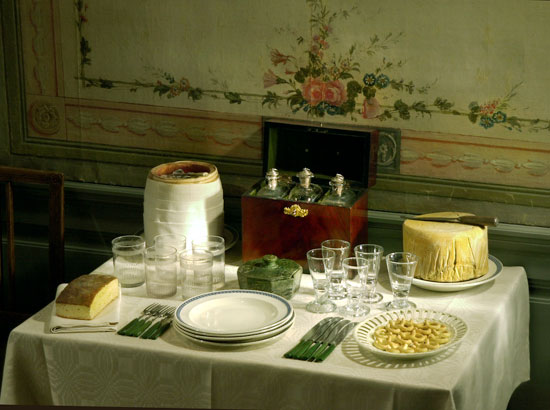
Smörgåsbord has its origin in the 18th century Swedish upper class tradition of serving spirits and small appetizers for the gentlemen before the meal. The beverages and snacks were placed on a separate small table which hence was called brännvinsbord — meaning "table of spirits". The centerpiece was a small barrel of aquavit with small dishes of food around it and was offered to a houseguest on arrival. The guests enjoyed the snacks and drinks while standing.
The drinks on brännvinsbord consisted of several differently flavoured clear spirits or aquavits. There had to be at least two or three different varieties, flavoured either with caraway, anise, wormwood, lemon, etc. Also today in the Nordic countries it is a custom to have a shot of vodka or aquavit at the start of festive meals.
The snacks consisted of bread, butter, sharp cheese, sprats (a fish) pickled in spiced marinade and pretzels or small rusks spiced with anise seed, fennel seed and/or bitter orange peel. The evolution of the brannvinsbord into the smorgasbord parallels that of the Russian zakuski. The richer the host and the more distinguished the guests, the greater the choice was of aquavit and dishes. Neighbours competed with each other to demonstrate their prosperity, and in this way, more dishes were gradually added.
In due course, the choice of dishes became increasingly large and extensive, but the brannvinsbord centerpiece remained. In well off households, the centerpiece was a magnificent silver plated drinks service, with seperate containers for the different kinds of spirits on a receptacle filled with ice. This was equipped with taps from which people could serve themselves.
As the number of appetizers on the brännvinsbord grew, they were transferred onto the dinner table, forming a large buffet served as proper meal. Thus the separate brännvinsbord disappeared from homes. In the late 19th century it re-emerged as the smörgåsbord buffet, served to travellers in railway station and hotel restaurants, from where it spread to become widely known among the public.
Because of the strict laws which were introduced for serving alcohol in 1917, the smorgasbord diminished in significance and was only available in a smaller version; the hors d'oeuvre smor, ost och sill (butter, cheese and herring). Smörgåsbord became internationally known during the New York World’s Fair in 1939 and since the beginning of the 1960's the smorgasbord has been undergoing a renaissance, though nowdays it is really only available in restaurants as Scandinavians have lost the habit of offering a smorgasbord at home except for special occasions.
While the famous Swedish smörgåsbord is rather less common these days, most Swedish hotels offer a smörgåsbord-style breakfast and if you are in Sweden during the weeks before Christmas you may wish to sample the traditional "julbord" (Christmas buffet). Nowadays in Scandinavia, smörgåsbord buffet is served at any occasion, from house warming, cocktail and garden parties to graduation, confirmation, birthday and engagement parties, at christenings, anniversaries, weddings and funerals, or as Midsummer, Easter or Christmas dinner.
Smörgåsbord buffet is known and served throughout the Nordic countries, enriched with local delicacies in each country. This type of buffet is known as koldt bord in Denmark, seisova pöytä, noutopöytä or voileipäpöytä in Finland, koldtbord in Norway, and kalt borð or hlaðborð in Iceland. Also the famous Russian appetizer buffet, zakuska table, has several characteristics similar to smörgåsbord.
Schnaps
To the smorgasbord, like most of Swedish and Scandinavian cuisine, the best company is cold beer and snaps (schnaps), but also wine is perfectly acceptable and common.
Schnaps, sometimes seen "anglicised" as "schnapps," is a German term for a small shot of some strong, unsweetened spirit, usually served ice-cold. The German verb schnappen means "to snatch" or "to snap". Serving schnaps is especially popular in northern European countries like Germany, the Netherlands, Russia, Poland, Sweden, Norway, Denmark, Finland, Iceland and the Baltic countries.
Schnaps are most often drunk at the beginning of a meal, to accompany the strong-tasting and salty dishes served for appetizers, for example at the Scandinavian smörgåsbord and Russian zakuska buffets. These schnaps are usually neutral-tasting and clear in colour, like vodka, aquavit (Scandinavian caraway-flavoured spirit) and other eaux-de-vie.
Vodka can be mildly flavoured with lemon, honey, pepper, dill, caraway, juniper berries, rowanberries, blackcurrants, birch leaf buds, horseradish or numerous other herbs and spices. The taste of the flavouring ingredient in the schnaps should be just barely detectable. Schnaps are never sweetened.
Schnaps should always be served well chilled, although some flavoured schnaps are at their best when served less chilled (eg the Hungarian Vilmos Pálinka or some Norwegian aquavits). Schnaps is never served with ice, but the bottle is chilled beforehand in refrigerator or freezer.
Common Buffet Items
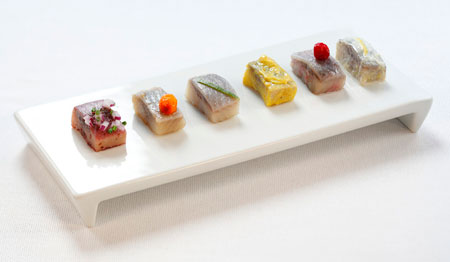
Inlagd Sill is a type of pickled herring that is very popular in Sweden.
This dish has a long tradition in Sweden and was a way to preserve the herring.
Today it is a given element on all Smorgasbord. Sill from right to left:
Lemon pickled Sill, Sill with linginberry and blackpepper,
Curry Sill, Vanilla and limeleaf Sill, Buckthorn Sill, Spiced Sill.
To try at home, here are some common dishes at the smorgasbord:
Prinskorv-sausage, small Swedish sausages
Swedish Meatballs
Potato-salad
Janssons-frestelse, gratin with potato and anchovies
Cured salmon
Toast Skagen, classic Swedish seafood sandwich. Shrimps, mayonnaise and dill served on a fried toast.
Vastkustsallad, seafood salad from the Swedish west-coast
Rodbetssallad, beetroot-salad
Inlagd Sill, pickled herring
Vasterbottenpaj, Vasterbotten cheese-pie, often served at the annual kraftskiva, or crayfish party held in August. Made with Crème Fraîche, Vasterbotten cheese, and onion baked in a whole wheat pie crust.
Also serve for instance pickled herring, bread, crisp bread, butter, cheese, sauces like dill mayonnaise, boiled potatoes and various cold cuts.
Other Typical dishes served at a Nordic smörgåsbord:
Cold fish dishes:
- one to seven differently flavoured varieties of pickled herring
- marinated Baltic herring, anchovies, sardines and other pickled or marinated fish
- salted fish and freshly salted whitefish and salmon (gravlax)
- fish roe (salmon, rainbow trout, vendace, burbot, Baltic herring) served with smetana and chopped onion
- oysters, cooked prawns, mussels, lobster or other shellfish
- salad with smoked fish
- hot and cold-smoked fish (salmon, whitefish, Baltic herring, sprat, eel, lamprey)
- poached fish (salmon, trout, etc)
- to accompany the above dishes: boiled potatoes, hard-boiled stuffed eggs, chopped onion, dill, mustard, horseradish or tomato flavoured mayonnaise dressings, bread, crispbread and butter, cheeses
Cold meat dishes:
- cold cuts: cooked or smoked ham and turkey, roast beef, pork roast, smoked lamb, cold-smoked reindeer roast, cooked tongue, salami, sausages, etc
- liver pâtés, foie gras
- meat aspic, brawn
- meat or game pie
- chicken salad
- to accompany the above dishes: mustard, blackcurrant, red currant, gooseberry or rowanberry jelly, Cumberland sauce, horseradish cream, etc, bread, crispbread and butter
Salads:
- fresh green salad with tomatoes, cucumbers, etc
- potato salad
- mushroom salad
- beetroot salad
- Russian salad, Waldorf salad, etc
- mixed beetroot and herring salad
- fresh vegetables (sliced tomatoes, cucumbers, radishes, celery sticks, etc)
- pickled and/or marinated vegetables (cucumbers, gherkins, beetroots, mushrooms, pumpkin, onions, olives, etc)
Hot fish dishes:
- whole or fillet of oven-baked fish (salmon, pike, trout, bream, powan, etc)
- fried or grilled fish steaks or fillets
- poached fish
- anchovy or herring and potato gratins (Jansson's temptation, etc)
- to accompany the above dishes: boiled potatoes and other vegetables, various sauces, bread, crispbread and butter
Hot meat dishes:
- whole oven-baked roast or fillet (beef, pork, lamb, reindeer, turkey)
- fried or grilled chicken, beef, pork, lamb, reindeer (steaks or chops)
- meatballs and hamburgers (eg Wallenberg steaks)
- meat stew, pot roast, etc
- meat or game pie
- wieners, frankfurters, knackwurst, etc
- to accompany the above dishes: boiled or mashed potatoes, jacket potatoes, creamy potato gratin flavoured with garlic, cheese, etc, cooked rice, risotto or pasta, boiled vegetables (carrots, asparagus, broccoli, Brussels sprouts, green peas, etc), vegetable puree casseroles (potato, rutabaga, carrot), various sauces, mustard, bread, crispbread and butter
- in addition to the hot dishes, also various egg dishes and soups can be served
Desserts:
- fresh fruit/berry salad
- fruit or berry flavoured quark mousse
- ice cream, parfait or sorbet
- fruit or berry soup with whipped cream
- chocolate mousse
- tarts and cream filled layer cakes flavoured and garnished with fruit, berries, chocolate, cream toffee, etc
- pastries, petits fours, confectionery
- cheeses with fruit, bread, crackers, rusks and crispbreads
Beverages:
- schnaps (with herring dishes)
- water, mineral water
- milk, buttermilk
- homemade sweet beer ("kotikalja")
- beer
- wine
- coffee and tea with cognac, liqueur, etc (with desserts)
A Summer Smörgåsbord
A Selection of Easy and Refreshing Dishes for a Scandinavian Cold Table, by Kari Diehl, About.com Guide
In Norway and Denmark, the generous buffet table commonly known as a "smorgasbord" (a Swedish term) is called a koldtbord, a "cold table." While traditional smorgasbords, typically reserved for Christmas and other holidays, contain a course of hot dishes such as meatballs or casseroles, in summer it makes sense (and is far less work!) to offer a wide selection of easily prepared cold dishes. Variety, complementary flavors and textures, and a colorful presentation are key to the pleasure of a well-laden koldtbord. Here are both traditional and a few original recipe ideas for your next summer smorgasbord:
Icelandic Lumpfish Caviar
Icelandic lumpfish caviar, while far less expensive than Russian sturgeon caviar, nonetheless lends a touch of elegance to time-tested appetizers such as new potatoes or stuffed hard-boiled eggs. A little goes a long way in optimizing both the presentation and the flavors of simple foods, demonstrating the native Scandinavian genius for turning a few available local ingredients into magnificently uncomplicated delights for the eye and the tastebuds.
Cold-cured Gravlax on Rye Crispbread
Perhaps Scandinavia's most famous food, cold-cured gravlax is a breeze to make, requiring only a few simple steps and next-to-no labor. Sliced paper-thin and served on rye crispbread with sweet dill mustard, it is a necessary and delicious part of a smörgåsbord buffet.
Pickled Herring
A smörgåsbord wouldn't be Scandinavian if it didn't include a few different types of pickled herring! Although most commonly available marinated in wine or sour cream in the fish sections of most American grocery stores, pickled herring is also fabulous (and very healthy) when prepared with tomato, mustard, curry, and a wide variety of other sauces.
Scandinavian Cheeses
Scandinavian cheeses, made from the milk of goats, cows, and even reindeer, are extraordinary whether enhancing a cheese platter or used to make unique baked goods, omelets, casseroles, or sauces. A few hallmark varieties to include on a smörgåsbord cheese board: brown Norwegian Gjetost, Nøkkel ost with caraway, Danablu, Adelost, Jarlsberg, and the many types of Danish Havarti (dill, cranberry, mustard, garlic). Plain Havarti lends itself particularly well to baked appetizers such as Savory Havarti Cheese Cookies with Caraway.
Marinated Cucumber Salad
Open any refrigerator in a Scandinavian or Scandinavian-American kitchen, and you'll most likely discover a jar of freshly prepared crisp marinated cucumbers sitting between the butter and the pickled herring. Using centuries-old methods of pickling and preserving, Scandinavian cooks excel at creating vinegar-based recipes that intensify and exploit the flavors of seasonal foods. These cucumbers are excellent both as a stand-alone salad and as a relish accompanying meats, sausages, or open-faced sandwiches.
Herring Salad with Lemon-Caraway Vinaigrette
Either smoked or pickled herring can be used to make Scandinavian herring salad. Pickled beets, fresh cucumbers, green apples, new potatoes, and fresh dill combine with the herring and a light lemon-caraway vinaigrette to make this salad as crisp and colorful as it is healthy.
Pickled Beets
Pickled beets are as ubiquitous across Scandinavia as marinated cucumbers, and for good reason. As "winter" vegetables, beets keep well for long periods of time in cool conditions, providing a valuable source of healthy antioxidants when summer vegetables are unavailable. And when pickled, both their vibrant red color and their natural sweetness is enhanced; superior as pickles when served alone, they also contribute color, flavor, and a refreshing crispness to herring salads, Swedish hamburgers (Biff à la Lindström), and open-faced sandwiches (in Danish, smørrebrød).
Smoked Gravlax
Cold-cured gravlax takes on a new dimension of flavor when lightly smoked for an hour or two before serving. It's an excellent alternative to provide for less adventurous guests who prefer their salmon cooked.
Smörgåstårta
Smörgåstårta, a creamy and savory "sandwich cake," is the centerpiece of most Swedish celebratory buffets. Prepared with two or three layers of delicious sandwich fillings and then decorated with vibrant and fresh vegetables, seafood, and / or cold cuts, it is as glorious to look at as to eat.
Strawberry Snow
Scandinavia is a serenely beautiful land of midnight sun in the summer, of the northern lights in the winter. And even in the balmy days of July, snow can be found not only on the glaciers of the fjords, but also in the form of Mansikkalumi – Finnish Strawberry Snow. Equally refreshing whether prepared and served immediately in dessert glasses or frozen into a superlative molded dessert, strawberry snow is a sure cure for the steamy dog days of July.
Almond Valkyries
Norse legend has it that the valkyries, shieldbearers to Odin and cupbearers to the heroes of Valhalla, would occasionally take a day off from battle and bloodshed, don their elegant swan skins, and float peacefully across silent waters … tempting both men and gods to further mayhem with their regal beauty. Here they have shape-shifted into choux pastry, filled with lingonberrry sorbet and gliding on a pool of almond dessert sauce.
Danish Raspberry Bars (Hindbaer Snitter)
One of Denmark's most popular pastries, hindbaer snitter, layers raspberry jam between two delicate shortbread cookies. One bite of these, and you'll never go back to stale processed toaster pastries from cardboard boxes.
