Scottish Oatcakes
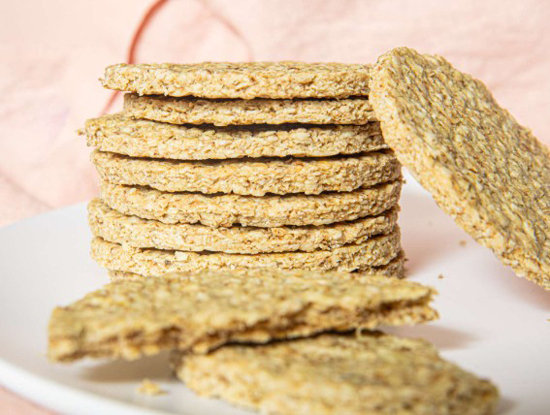
Scottish oatcakes are a traditional Scottish flatbread or cracker-like food, typically made with just oats, a bit of fat (like butter), salt, and water, resulting in a crisp, savory biscuit often eaten with cheese, butter, or jam, considered a staple in Scottish cuisine; essentially, they are a type of oat-based cracker rather than a cake-like dessert. Considered a traditional Scottish food, often serving as a substitute for bread in the past due to the harsh Scottish climate that favored oat cultivation. Oats became the staple cereal in Scotland due to the country’s cooler, damper conditions. This meant the land was better suited for growing oats rather than the wheat more common further south.
Oatcakes can be eaten as plain cookies/biscuits or sandwiched together with jam or date filling. They can be consumed as crackers served with various condiments such as tangy gourmet preserves and marmalades alongside cheese, such as Brie. Traditionally, they are made in an oven or on a griddle. For some in Scotland, they replace toast as a breakfast staple.
There can be a wide variety in regards to the texture of an oatcake. Depending on how the oats are ground, the oatcake can be very rough to very fine. They can be slightly chewy or hard. This depends on the water content in the batter and how long they are baked for. Today there are a number of commercial bakers that mass produce oatcakes.
The recipe on Spruce Eats calls for melted goose or bacon fat.
Scottish Oatcakes
from https://www.seriouseats.com/
Whenever my husband and I travel to Scotland to see his family, his grandmother Gaga greets us with a giant box of homemade oatcakes: savory, crumbly crackers made with oats, water, and melted fat, such as shortening, butter, or lard. Though oatcakes don’t look like much—they’re brown pucks of cooked oats—they’re hearty and satisfying, and extremely snackable.
These cracker-like savory cookies, or biscuits in British parlance, are made and sold throughout the UK, where they’re enjoyed on their own or with cheese. They can be square, rectangular, or round, and vary in thickness.
Luckily, Gaga happily shared her oatcake recipe with me. Making oatcakes is a relatively simple process that requires just stirring together oats, baking soda, salt, melted fat, and hot water, then rolling, cutting, and cooking them on a griddle or skillet.
Use quick-cooking oats. Traditionally, oatcakes are made with Scottish oatmeal, which are stoneground and finer than rolled oats and steel-cut oats. Scottish oats aren’t as readily available in American grocery stores, so I opted for quick-cooking oats. Like Scottish oats, they are finer in texture. Because quick-cooking oats are made to cook more quickly, they absorb liquid more readily than rolled oats or steel-cut oats when combined with hot water, making the dough more cohesive and easier to work with.
226g Scottish or quick-cooking oats (8 ounces; 2 1/2 cups), see notes
1 teaspoon Diamond Crystal kosher salt; for table salt, use half as much by volume
1/4 teaspoon baking soda
6 tablespoons melted clarified butter or ghee, homemade or store-bought (2 1/4 ounces; 66g)
3/4 cup hot water, around 200ºF (93ºC)
Adjust oven racks to second-from-top and second-from bottom positions. Preheat to 350ºF (175ºC).
In a medium bowl, stir oats, salt, and baking soda to combine. Add melted clarified butter or ghee to oat mixture and, using a flexible spatula, toss to evenly coat oats with fat. Add hot water and stir until mixture begins to thicken, 30 seconds to 1 minute. Let sit until oat mixture has hydrated and is slightly sticky, about 5 minutes.
Using a flexible spatula, scrape oat mixture onto a 18- by 13-inch piece of parchment. Top with another 18- by 13-inch piece of parchment so oat mixture is sandwiched between and, using a rolling pin, roll oat mixture to 1/4-inch thickness. Grab both ends of the parchment, set onto a 18- by 13-inch rimmed baking sheet, and freeze until mixture is firm but pliable, about 30 minutes. Line two 13- by 18-inch rimmed baking sheet with parchment; set aside.
Set a clean piece of parchment on your kitchen counter. Remove oatcake mixture from freezer. Peel off top layer of parchment, then invert oatcake mixture onto prepared sheet of parchment. Using a 3-inch round cookie cutter, cut out 16 oatcakes. (Scraps can be rerolled, frozen, and punched out into additional oatcakes.) Transfer oatcakes to prepared baking sheets, spacing them about 1 inch apart, and bake until crispy and lightly browned, 25 to 30 minutes. Remove from oven and let cool completely before serving or storing.
After cooking and cooling, oatcakes can be stored in an airtight container at room temperature for up to 1 week.
Notes
Do not substitute Scottish or quick-cooking oats with rolled oats or steel-cut oats, as the latter two will produce a crumbly dough that won’t hold together.
A few reviewers said they put rolled oats in a blender, ground it up close to flour and had no problem with it.
Makes 16 oatcakes
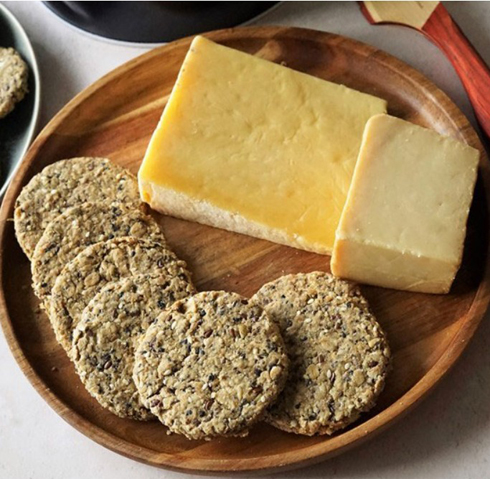
Seeded Scottish Oatcakes
Scottish Oatcakes
from https://moorlandseater.com/
For the Scottish Oatcakes in this post, I used a combination of medium oatmeal and rolled oats. I whizzed up the rolled oats (in a coffee grinder, actually) but not too finely. I think it’s nice to have some largeish pieces of oat remaining for a rustic feel and more interesting texture.
The dough should be firm but not sticky. I experimented with resting the dough, but found it became crumblier and more difficult to work with. It’s worth noting that oats can be very ‘thirsty’. This means that when bringing together the dough scraps to re-roll, I almost always have to add a touch more water to prevent it going dry and crumbly. If, when rolling out, the edges start to split, just push everything back together and keep going.
I love Scottish Oatcakes best with some really good cheeses. Smooth cream cheese is also a nice contrast to the pleasantly rough and rustic oatcakes. A blob of homemade chutney makes it extra special. Or how about spreading on some homemade Potted Cheese flavoured with your choice of herbs, spices and booze?
Oats. The oats you buy for making porridge are fine for making oatcakes. Here in the UK, they’re labelled rolled/jumbo or porridge oats. Rolled/jumbo are larger and less flaky than porridge oats and will give you a coarser, more rustic oatcake.
Oatmeal. Although in the US the word oatmeal usually refers to what we call porridge, here oatmeal means a flour that’s made from oats. Sold as fine, medium, or coarse, oatmeal is easier to find in wholefood shops rather than supermarkets. However, it’s dead easy to make your own by whizzing up rolled or porridge oats in a blender or food processor.
140 g rolled oats or porridge oats
140 g oatmeal (fine, medium or coarse) See Recipe Notes for making your own
3/4 tsp salt
75 ml olive oil OR 75g butter, melted
100-150 ml boiling water
wholemeal flour or oatmeal (wholemeal flour recommended as it's less sticky)
Preheat the oven to 180C/160C Fan/Gas 4.
Line 2 baking trays with baking parchment or greaseproof paper.
Mix together the oats, oatmeal and salt in a bowl, then make a well in the centre.
Pour the olive oil or melted butter into the well, along with 100ml of the boiling water. Stir quickly to bring the mixture together into a firm dough. Add more boiling water if necessary.
Ideally cover your work surface with a silicone mat, then sprinkle over a little wholemeal flour or oatmeal. Transfer the dough onto it.
Sprinkle the dough and a rolling pin with oatmeal and roll out to 3-5 mm thick, depending on how thick you'd like the oatcakes. If the dough starts to come apart at the edges, just push it back together with your hands. If the dough seems to dry, sprinkle with extra water.
Cut out oatcakes using a 6-7 cm cutter then transfer to the baking trays.
Bring together the scraps and re-roll to make more oatcakes until all the dough is used up. The oat dough can be very 'thirsty': you will most likely need to add a little more water when bringing together the scraps.
Put the trays in the preheated oven and bake the oatcakes until lightly brown and cooked all the way through. Unless you've rolled the dough very thick or very thin, this should take around 30 minutes. Turn the oatckes over after the first 20 minutes for even browning.
Transfer the oatcakes to a wire rack to cool.
Store in an airtight container once completely cold.
Should keep for a least a month.
24 oatcakes (approx)
Seeded Scottish Oatcakes
from https://moorlandseater.com/
Seeded Scottish Oatcakes are easy, wholesome savoury biscuits or crackers packed with nutritious seeds and oats. Great with cheese, pâté, nut butters, or alongside soup, they’re so good, you can even snack on them just as they are. You can use any combination of seeds you like. I roughly chop bigger ones like pumpkin seeds so they’re less intrusive.
Different oats absorb different amounts of water, so it’s not possible to be exact about the amount you’ll need. 100 – 120 ml is usually enough to bring the dough together, but add more if the dough still seems dry. Note that seeds such as flax and chia can absorb lots of water so including these in your mix might mean more boiling water will be needed.
Roughly chop any larger seeds such as pumpkin. You can also replace some of the whole seeds with ground: this is thought to increase the nutritional value of some seeds e.g. flax, chia.
[She likes to use a mix of rolled oats and oatmeal (oat flour) for texture.]
140 g rolled oats or porridge oats (for texture)
140 g fine oatmeal see notes above on Scottish oatmeal, which is more like an oat flour
140 g mixed seeds e.g. flax, chia, sunflower, sesame, pumpkin, hemp hearts
3/4 tsp salt
1/4 tsp black pepper
75 ml oil e.g. hemp, pumpkin seed, olive, or sunflower oil
100-150 ml boiling water
wholemeal flour (for rolling out)
Same instructions as above.
Around 26 Seeded Scottish Oatcakes.
