Aji Amarillo: Peruvian Yellow Chili Pepper,
This Spicy Chili Has a Fruity Twist
by Marian Blazes, Updated 05/23/17, https://www.thespruce.com/
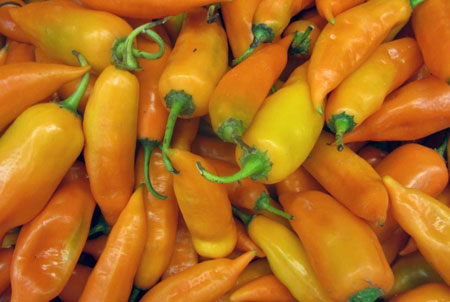
The aji amarillo is a member of capsicum baccatum, one of the five domesticated pepper species, and is grown all over Peru. Aji means chili pepper and amarillo means yellow in Spanish. This chili is 30,000 to 50,000 on the Scoville Heat unit scale and is considered part of the Peruvian "holy trinity" when it comes to their cuisine, along with garlic and red onion.
Appearance and Flavor
Although this pepper is literally named "yellow chili pepper," its color changes to a bright orange as it matures.
The chili pods have a thick skin, are 4 to 5 inches long and are considered hot on the spicy scale. But the aji amarillo balances that heat with a bit of fruity flavor. Smelling a bit like a raisin, this chili's taste is somewhat subtle with hints of passion fruit and mango and imparts a unique flavor to any dish.
Importance in Peruvian Cuisine
The famous Peruvian chef Gastón Acurio named this spicy, fruity chili pepper the most important ingredient in Peruvian cooking. Aji amarillo is used in many classic Peruvian dishes, such as causa rellena and papa a la huancaína. Aji amarillo is also used in many sauces, where it adds a bright complex flavor as well as its distinctive yellow/orange color. It is most often incorporated in ceviche, combined with root vegetables and used to give seafood dishes a bit of zip.
Other important chile peppers used in Peruvian cuisine include aji panca, a dark red chile pepper with a smoky flavor, and rocoto, a fiery hot red pepper that resembles a small bell pepper.
Availability of Aji Amarillo
If you can't find fresh aji amarillo in your produce section, look for frozen aji peppers, dried peppers (in the spice section) or jarred aji amarillo paste in Peruvian grocery stores or in the Peruvian section of a Latin American grocery.
The fresh or frozen aji amarillo chilis can replace more traditional chilis in Mexican dishes that call for a spicy chili.
The dried peppers can be ground up and used as part of a chili powder or spice rub. The chili paste can be mixed into rice or sauces for an unexpected flavor.
Recipes Using Aji Amarillo
Aji amarillo adds spice, interesting flavor and beautiful golden color to a dish. Make a simple ají amarillo sauce (crema de ají) to serve with roasted chicken, vegetables and even French fries. Papa a la huancaína, potatoes in spicy cheese sauce, is an unexpected side dish at dinner. A delicious layered meal in one is causa rellena con pollo, yellow mashed potatoes with chicken salad and avocado.
What’s A Good Aji Amarillo Substitute?
The aji amarillo chili is very popular in its native Peru, but finding it elsewhere can be a bit tricky. If your recipe calls for it, you’re likely looking for alternatives. So what’s a good aji amarillo substitute that you’re more likely to find in stores? You have some tough choices ahead. Be prepared to make a sacrifice on the fruity flavor or a drastic bump up in the heat. There really aren’t any substitutes that provide a good mix of both.
Your best heat profile alternative, often available in stores: Serrano pepper
The serrano pepper does come in a tick under aji amarillo on the pepper scale: 10,000 to 23,000 Scoville heat units compared to 30,000 to 50,000 SHU. There are chilies that are better heat matches – like the cayenne and the tabasco pepper – but they aren’t often found fresh in stores, while serrano pepper is fast becoming a common sight.
But here’s the catch: the flavor profile between these two chilies is completely different. Aji amarillo is fruity and a little grassy (like summer in a chili) while the serrano is bright with a crisp bite. It tastes more like a jalapeño with the heat turned up a few notches. Most recipes that call for aji amarillo do so to take advantage of the fruitiness of the pepper, so you will be losing out here. Still, it’ll provide enough heat to be a substitute when needed.
Your best flavor alternative with a big time heat bump: Habanero or Scotch bonnet
These two chilies play in a different playground completely, with Scoville heat ranges from 100,000 to 350,000. This is at least double the spiciness with the potential for a whole lot more – up to eleven times spicier. For many, this is a challenging level of heat, so don’t think of this as a family-friendly substitution.
But while the heat profile is vastly different, the flavors are more of a match. The habanero and especially the Scotch bonnet have fruity flavor profiles that perform well as taste substitutes for the aji amarillo. The actually can be sweeter, with hints of tropical fruit. If you can stand the heat, these are your best bets to maintain a recipe’s flavor intent. Both can be found in stores, but the habanero is the one you’ll more likely see.
