What are Tapas?
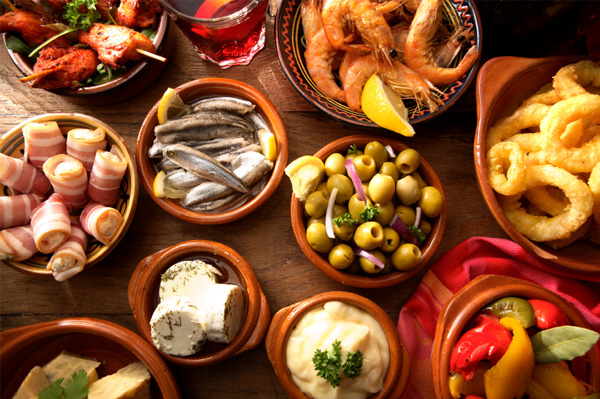 Tapas, montaditos, pinchos (pintxos in Basque), banderillas, raciones, cazuelitas, pulguitas - all are variations on the same theme: small servings of food eaten before a meal. While today Spaniards rarely have to explain the nature of Tapas to visitors, the meaning of the term has taken on outside Spain doesn't convey the full sense of the ritual that is such an important part of the Spanish daily existence.
Spanish tapas are defined by bold Mediterranean flavors, focusing on olive oil, garlic, pimentón (smoked paprika), and sherry.
Key taste profiles include:
- salty (cured meats, cheeses, olives),
- pungent garlic (shrimp, potatoes),
- tangy (pickled vegetables, vinegar),
- smoky, with popular dishes like patatas bravas, jamón ibérico, and croquetas.
Key Flavor Profiles in Tapas:
- Garlic & Oil: Found in almost every dish, especially gambas al ajillo (garlic shrimp) and pan con tomate.
- Pimentón (Smoked Paprika): Defines the smoky, earthy, and sometimes spicy flavor in sausages (chorizo), patatas bravas, and octopus (pulpo a la gallega).
- Salty & Cured: Dominated by jamón ibérico, manchego cheese, and cured meats.
- Tangy & Pickled: Marinated white anchovies (boquerones), olives, and pickled peppers.
- Savory & Fried: Croquetas (fried béchamel with ham/cod) and fried calamari.
The Tapas Experience
Many cuisines offer foods meant to awaken the appetite. Variously called antipasti, hors d'oeuvres, or mezes, among countless other names, these dishes are typically eaten at restaurants or at home just before, or as part of, a meal -or in the case of trendy small-plates restaurants, as meals themselves. In Spain, however, eating tapas is a separate dining experience that, in principle, does not substitute for a meal. And Spaniards do not eat tapas at home. In fact, the term tapas and its various regional equivalents have come to imply the act of going out: de tapeo means barhopping, or the art of eating while standing.
Even small villages have clusters of bars with inviting counters full of finger foods and a sea of cured hams hanging from the ceiling. Happy patrons walk in, usually in groups and, depending on the region, order a zurito (minibeer) or a fino sherry along with an array of tapas. Each bar has its specialty or specialties, and Spaniards are particular about what eat where. After completing the first round of lively conversation and small plates, the group moves on to the next bar, often only footsteps away.
In the tapas bars of Andalusia, small cazuelas of sizzling garlic shrimp and platters of deep-fried little fish served with fino are familiar sights, while in the Basque Country, typical pintxos* (pronounced “Pintchos”) include sliced bread topped with baby eel salad and sautéed mushrooms skewered on toothpicks. Equally popular in every region is tortilla española, the potato and onion omelet that appears in a trio of guises: a ración (larger appetizer-sized portion), a montadito (a small slice of bread with a topping), or a pulguita (a tiny bread roll, usually no longer than three inches, split and filled). Platters of sliced jamón ibérico, commonly offered as raciones, are also beloved across Spain.
*(A "pincho" (or "pintxo") is a small snack or appetizer from Spain, particularly the Basque Country, typically served on a slice of bread and held together with a toothpick.)
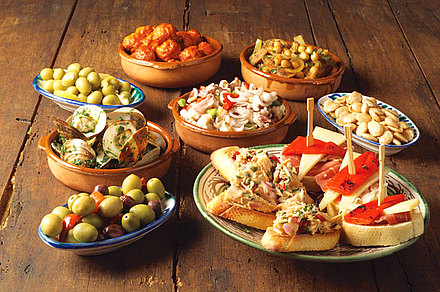 The idea comes from Andalusia. It started, or so they say, with a piece of bread, soon topped with ham or cheese, balanced over a glass, to keep out the flies - the word tapa means a cover. They were once free snacks included in the price of the drink but today they are mostly ordered separately. In dim caverns, where the sherry barrels are stacked high, men revolve the wine in their copitas, gently sipping, then select a new wine from a different cask. To compare and contrast is part of the ritual. An old man may sit by the door, with a bucket of conchas finas, opening the clams slowly and to order. It is a life less hectic than our own.
In North America and the United Kingdom, as well as in select bars in Spain, tapas have evolved into an entire, and sometimes sophisticated, cuisine. In these countries, patrons of tapas restaurants can order many different tapas and combine them to make a full meal. The serving of tapas is designed to encourage conversation because people are not so focused upon eating an entire meal that is set before them.
Common Spanish Tapas
Depending on where you are, the offerings vary, but there's always a beguiling assortment. Among the cold plates are the world's best ham, and dozens of kinds of chorizo. There's the humble potato tortilla, boiled octopus, sheep's milk cheeses, sweet peppers and marinated mussels.
Most bars serve hot tapas, too, some quite simple: A plate of sizzling mushrooms. Baby eels in hot oil. Garlicky shrimp in the shell, sprinkled with salt. Fried tiny squid. Salt cod croquetas. Later at night, perhaps a steaming cazuela de callos, the flavorful Iberian tripe stew.
For casual entertaining, the tapas experience translates easily to the small home kitchen. You need only assemble a small spread and call a few friends. For authenticity, serve chilled fino sherry, cold beer or a big Spanish red. It's a no-frills stand-up affair.
A delicious hot tapas classic easily made at home is called pinchos Moruños, or Moorish skewers — essentially small kebabs of pork marinated in Arabic (Moorish) spices and grilled, usually on a hot steel plancha. Because most Muslim Arabs wouldn't eat pork, one presumes the original dish was lamb. It's anyone's guess how it evolved into this ubiquitous tapa selection in Christian Spain. Nevertheless, now it means pork seasoned with garlic, cumin, coriander, pimentón and sometimes oregano. Once skewered, they need only about five minutes on a hot griddle.
These skewers are quite small, only two ounces per portion, and cut thin for quick cooking. As a rule, tapas means small. The best way to enjoy them is as an aperitif with a glass of fino sherry, a good wine or a cold beer.
- see http://www.proper-spanish-tapas.com/tapas-recipes.html and http://spanishfood.about.com/od/tapas/u/tapas.htm for recipes
Sauces
Spanish Sofrito - sauce of onion, garlic and tomato
Allioli - Means "Garlic and oil" in Catalan. The classic ingredients are only garlic, oil and salt, but the common form of it includes mayonnaise and garlic. Served on bread or with potatoes, fish, meat or grilled vegetables.
Mojo sauce - a garlic, spanish paprika, red pepper, cumin seed, olive oil, wine vinegar, salt and bread "miga" (fresh bread crumbs without the crust) to thicken it.
Salsa brava - a spicy tomato sauce
Vegetable Tapas
Aceitunas - Olives
Banderillas - Banderillas, or pinchos (picks/toothpicks) de encurtidos, are cold tapas made out of small food items pickled in vinegar and skewered together. They are also known as gildas or piparras and consist of pickled items, like olives, baby onions, baby cucumbers, chillis (guindilla) with pieces of pepper and other vegetables. Sometimes they include an anchovy. Traditional banderillas are made with a gherkin pickle, cocktail (pickled) onion, olive and tuna in oil skewered onto a toothpick.
Champiñones al ajillo (garlic mushrooms)
Papas Arrugadas / Papas con Mojo - Canary Islands: Very small new potatoes boiled in salt water similar to sea water, then drained, slightly roasted and served with Mojo sauce, a garlic, spanish paprika, red pepper, cumin seed, olive oil, wine vinegar, salt and bread "miga" (fresh bread crumbs without the crust) to thicken it.
Pimientos de Padrón - Small green peppers from Padrón (a municipality in the province of A Coruña in the region of Galicia) that are fried in olive oil. Most are very mild, but a few in each batch are quite spicy.
Patatas bravas - Fried potato dices (sometimes par-boiled and then fried, or simply boiled) served with salsa brava, a spicy tomato sauce. Alioli is often served with it too.
Tortilla de patatas, also known as Tortilla Española - A type of omelet containing fried chunks of potatoes and sometimes onion. A variety containing vegetables and chorizo (similar to frittata) is known as Tortilla paisana. Tortilla Española - Spanish Tortilla & Saffron Aioli
Cheeses
Manchego Cheese Marinated in Olive Oil & Herbs
Brie Cheese w/ Roasted Garlic-Paprika Filling
Seafood Tapas
Bacalao - Salted cod loin served very thinly usually served with bread and tomatoes
Boquerones - White anchovies served in vinegar (boquerones en vinagre) or deep fried.
Calamares or rabas - Rings of battered squid.
Chopitos - Battered and fried tiny squid. Also known as puntillitas.
Ensaladilla rusa - This literally means (little) Russian salad and is made with mixed boiled vegetables with tuna, olives and mayonnaise.
Gambas - Prawns sauteed in salsa negra (peppercorn sauce), al ajillo (with garlic), or pil-pil (with chopped chili peppers).
Pulpo - Pulpo means Octopus, and it is usually served in small chunks in the oil in which it was cooked. In its most basic form, salt is also added. Pulpo, as with many of Spain's seafood dishes, comes predominantly from Galicia due to the region's access to the rich resources of Atlantic Ocean.
Pulpo a la gallega (Octopus the Galician way) - This Galician dish, known both as Pulpo á galega (Octopus the Galician way) and Polbo á feira (Octopus the fair way) in Galicia, is served hot in the olive or vegetable oil in which it was cooked. The octopus pieces are seasoned with substantial amounts of paprika, giving it its recognisable red colour, and sea-salt for texture and flavour.
Puntillitas - Battered and fried tiny squid. Also known as chopitos.
Queso con anchoas - Castilla or Manchego cured cheese with anchovies on top.
Tortillitas de camarones - Battered-prawn fritters.
Gambas al Ajillo - Garlic Shrimp
Stuffed Mussels (Tigres) - In Navarre, these stuffed mussels are called tigres ("tigers") because of their fieriness.
Zamburiñas - Most renowned from the region of Galicia, zamburiñas are Chlamys varia, a type of small scallop, which are often served in "Salsa Vieira," which is a tasty and zesty Galician sauce, made of tomato and Spanish paprika.
Oysters - Strawberry Escabeche & Cava Granita
Sardinas Curadas - House Cured Sardines, Pine Nut & Olive
Almejas Con Chorizo - Clams & Chorizo
Piquillos Rellenos - Crab-Stuffed Peppers
Revuelto - Shrimp & Wild Mushroom Shirred Eggs in marinera, a tomato-based sauce.
Meat Tapas
Albóndigas - Meatballs, Albóndigas - Lamb Meatballs & Shaved Manchego
Carne mechada - Slow-cooked, tender beef.
Cojonuda. (Superb female) - A kind of "pincho". It consists of a slice of Spanish morcilla (blood pudding) with a fried quail egg over a slice of bread. It is very common in Burgos, because the most well known and widespread Spanish morcilla is from there. It can also be prepared with a little strip of red spicy pepper.
Croquetas - A common sight on bar counters and in homes across Spain, served as a tapa, a light lunch, or a dinner along with a salad.
Empanadas or empanadillas - large or small turnovers filled with meats and vegetables.
Pincho moruno - A spicy kebab-like stick, made of pork or chicken. Its name means 'Moorish spike'.
Rajo - Pork seasoned with garlic and parsley. A variety with added paprika is called Zorza.
Solomillo a la castellana - Fried pork scallops, served with an onion and/or Cabrales cheese sauce
Solomillo al whisky, or al güisqui - Fried pork scallops, marinated using whisky, brandy or white wine and olive oil.
Cured Meats & Sausages
Cured Meat - Jamón Serrano/Iberico
Croquetas De Jamón - Ham Croquettes
Melón Con Jamón - Melon, Serrano Ham, Yogurt & Sherry Reduction
Cured Meats, such as chorizo Pamplona and lomo embuchado, served with caper berries, cornichons, Dijon mustard and crusty baguette
Cojonudo. (Superb male) - A kind of "pincho". It consists of a slice of Spanish chorizo with a fried quail egg over a slice of bread.
Chorizo al vino - Chorizo sausage slowly cooked in wine.
Chorizo a la sidra - Chorizo sausage slowly cooked in cider.
Chorizo Pamplona
Chorizo Blanco
Salchichón
Lomo Embuchado
