Kuay Tiaw Pad Thai (Kuay Tiaw = rice noodles)
Recipe courtesy Nongkran Daks, Throwdown with Bobby Flay
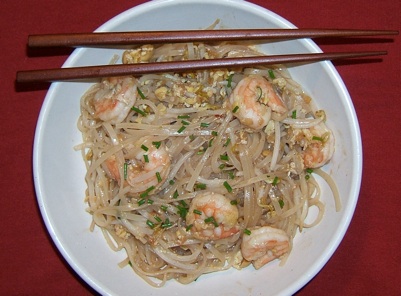
"Born and raised in Southern Thailand, Nongkran Daks of Reston started cooking at age eight when she had to wake early every morning to pound curry pastes for her sister-in-law's catering business. She has since broadened her culinary horizons by owning a restaurant in Bangkok; teaching Thai cooking in Laos, Taiwan, China, Thailand, Hawaii, and Northern Virginia; and becoming a member of the professional culinary association, Les Dames d'Escoffier. One of her most requested dishes is pad Thai, a stir-fried noodle dish. In Thailand, this is typically eaten as a main luncheon course and not as an accompaniment to curries and stir-fries, as is often the case here.
Daks stirs up her pad Thai the old-fashioned way, and what emerges from the wok is a robust, flavorful noodle dish. For authenticity, don't take any shortcuts or leave out any ingredients, particularly the sauce that gives the final dish its rich amber color and succulent taste.
Select the rice stick noodles marked "M" for medium; the thinner and the wider ones are used for other noodle dishes. Salted, or preserved, turnip is sold in cellophane packets at Asian markets and lasts almost indefinitely in the refrigerator after opening.
Have all the ingredients within reach because you'll have to work fast and be at the stove throughout the cooking time. With one bite of this pad Thai, which serves two people, you will discover noodle heaven." (from http://www.washingtonian.com/)
4 tablespoons vegetable oil, plus extra as needed
1 teaspoon chopped garlic
1 tablespoon dried shrimp, optional
1/2 cup sliced pork
1/2 cup whole shrimp, shelled and deveined
1 tablespoon (shredded) preserved radish (or preserved turnip - salted turnip shreds)
1/4 pound medium-size dried rice noodles, about the width of linguine (soaked 60 minutes in cold water and drained)
Water
5 tablespoons Pad Thai sauce, recipe below [Note: the recipe makes a lot more sauce than is needed]
2 large eggs
1/2 teaspoon ground hot chiles, or more to taste (can substitute red pepper flakes)
2 tablespoons ground roasted peanuts
1/2 cup sliced garlic chives or green onion
2 cups bean sprouts, rinsed, plus more for garnish
1 wedge lime
First make the Pad Thai Sauce, recipe below. Soak the rice noodles. Don't soak until the noodle is soft enough to eat, or it will turn into mush in the wok. Just soak them until they are pliable and almost edile, like very al dente pasta, then drain well. Get the rest of the ingredients for the Pad Thai ready.
Heat the oil in a wok. Add the garlic and stir-fry until golden brown. Add the meat and shrimp and keep stirring until the shrimp changes color. Remove the shrimp to prevent overcooking and set aside.
Add the noodles. They will stick together so stir fast and try to separate them. Add a little water, stirring a few times. Then add the Pad Thai sauce, and keep stirring until everything is thoroughly mixed. The noodles should appear soft and moist. Return the cooked shrimp to the wok.
Push the contents of the wok up around the sides to make room to fry the eggs. If the pan is very dry, add 1 more tablespoon of oil. Add the eggs and spread the noodles over the eggs to cover. When the eggs are cooked, stir the noodles until everything is well mixed-this should result in cooked bits of eggs, both whites and yolk, throughout the noodle mixture.
Add chiles, peanuts, garlic chives and bean sprouts. Mix well. Remove to a platter. Serve with raw bean spouts and a few drops of lime juice. A spoon or two of sugar, chili flakes, and vinegar, are always an option by way of condiments.
Yield: 2 servings
Cook's Note: If you want to double this recipe, DO NOT simply double the ingredients, for the bulk will be too much to work with. Rather, make the dish twice. If you plan to make this for company, cook noodles ahead of time and add bean sprouts and garlic chives when you heat it up. If it is an informal gathering, it is fun to let your guests cook their own noodles.
Pad Thai Sauce:
1 cup tamarind juice* [or 3 tablespoons of tamarind paste and soak in 1 1/2 cups of warm water for 20 minutes - see below]
1 cup palm sugar plus 3 tablespoons
1 cup water
1/2 cup fish sauce
2 teaspoons salt
Mix all ingredients in a saucepan for about 60 minutes until it is well mixed and syrupy. Stir occasionally to prevent burning.
*You can buy premixed tamarind concentrate or make your own tamarind juice. Buy a package of compressed tamarind pulp at any Asian market, cut off 3 tablespoons of paste and soak in 1 1/2 cups of warm water for 20 minutes. Squeeze out the pulp and discard; the remaining liquid is tamarind juice. Store any leftover juice or noodle sauce in a tightly sealed container in the refrigerator or freezer.
