How to Make Tamarind Paste from Pulp
from https://hot-thai-kitchen.com/
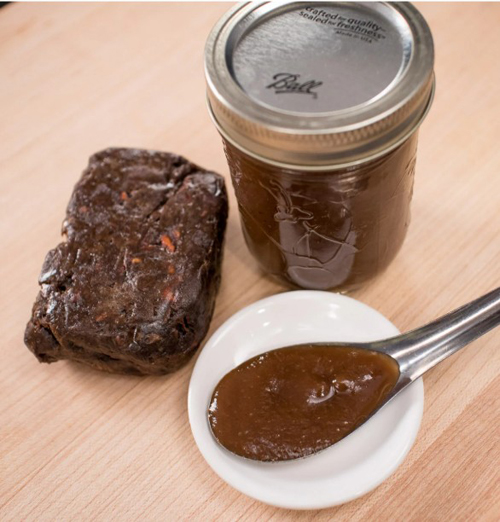
Growing up in Thailand we always made our own tamarind paste for cooking, but when I arrived in Canada I was delighted by the convenient jars from the store! But after years of using it, I don't know if the products became worse or my standards became higher, but I eventually I became more and more dissatisfied with the quality of premade pastes.
Tamarind is a fruit. Its sticky brown flesh ranges from being very sweet to very sour, depending on the variety. The sweet ones are for eating fresh, and the sour ones are for turning into a paste for cooking.
Important Tamarind Buying Tip
If you find whole tamarind fruit pods at the store, those are the sweet ones for eating as snacks NOT for cooking. Do not make this mistake as many people have done! Though you should get them anyway as they're delish :).
Cooking tamarind comes either in ready-to-use liquid in a tub or jar, or in a brown block. The brown block is what you'll need to make your own tamarind paste at home. The brown block is simply compacted tamarind fruit pulp. The pulp is seedless (though I've seen some rogue seeds occasionally), but it has lots of fibers that need to be strained out.
Instructions
1/2 lb seedless tamarind pulp (see note)
2 cups hot water
1/2 cup room temp water
Use your hands to pull apart the tamarind block into small chunks and place it in a large, heat-proof mixing bowl. Pour the hot water over the tamarind and let it sit until it’s cool enough for you to handle, about 20 minutes, though you can let it sit for as long as you need at this point—the longer it sits, the easier the next step will be.
Use clean hands, preferably gloved, to squeeze and scrunch the pulp to loosen it from the fibers. You should end up with something that has a consistency of a smoothie. A little thinner than smoothie is fine, but too thick will make it hard to strain, so if it looks super thick add a little water.
Once you can feel that most of the pulp has been released from the fibers, strain the tamarind mixture, into a pot through a sieve, preferably not fine-mesh as the paste will be thick and it'll hard to push through. Push as much of the liquid through as possible, and scrape the bottom of the sieve occasionally.
Tip: If at any point in the process you're having a hard time because the liquid is too thick, do not be afraid to add more water. Some brands of tamarind pulp are more "pulpy" than others and require more water to loosen.
Gradually pour about 1/2 cup of room temperature water over the remaining fibers in the sieve while using your hand to mix it around. This will rinse off any last little bit of tamarind still stuck in the fibers. You can use this right away for cooking, but for storage, cook the tamarind paste over medium high-heat until it boils, stirring constantly, as it is quite thick and can bubble and jump at you if you don’t stir.
Yield: A half-pound (8 oz / approx. 225g) of seedless tamarind pulp yields about 1.5 to 2 cups of usable tamarind paste, depending on how much water you add during the soaking and straining process.
Storing Tamarind Paste
The tamarind paste you make is ready to use right away, but for the rest, you will want to cook it before storing to maximize its shelf life. When cooking tamarind, because it's thick, it'll bubble and look like it's boiling before the entire mixture has reached boiling temperature. So it's important to let it bubble for about 5 minutes to allow it to thoroughly heat through.
If you cook the paste and store it in a mason jar while hot as per my instructions, it will last up to 6 months, unopened in the fridge. Once it's opened, it has lasted me at least 2 months, but always use clean utensils to scoop from the jar.
You can also freeze tamarind paste.
