Thai Red Curry Paste
from https://www.thaitable.com/
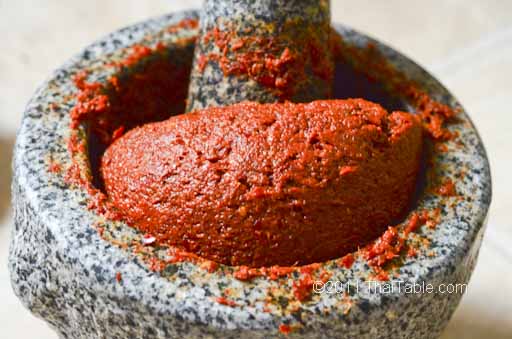
The name “Red Curry Paste” has actually been put, by different food suppliers, on two very different pastes, Basic Red Curry Paste (prig gang kua) and Red Curry Paste (prig gang ped). Basic Red Curry Paste is made of dried chili peppers, salt, galangal, lemongrass, kaffir lime zest, garlic, shallots and shrimp paste while Red Curry Paste, takes the Basic Red Curry Paste and adds cilantro roots, toasted peppercorns, cumin and coriander.
The Basic Red Curry Paste is used in making Basic Red Curries or Gang Kua. Gang kua is a type of curry that often has added grilled fish or dried shrimp. Gang kua can be sweet and sour from sweet ingredients like sugar and pineapple and sour ingredients like kaffir lime juice and tamarind. The Basic Red Curry paste can be used in a wide variety of dishes like panang, haw mok and tod mun (fish patties) as well.
Basic Red Curry Paste or Prig Gang Kua is the curry paste from which nearly all the other curry pastes must have evolved; red curry paste, panang curry paste, namya curry paste, choo chee curry paste, green curry paste and prig king curry paste are all riffs on or add additional ingredients to Prig Gang Kua.
Red Curry Paste is specifically for making red curry dishes, like chicken curry. Curries made with Basic red curries taste clean and simple while curries made with Red Curry Paste taste spicy, with aroma of pepper, cumin and coriander, deep and complex.
1 tablespoon cilantro roots (Cilantro roots are often not available; substitute stems for roots.)
1 tablespoon coriander
1/2 tablespoon cumin
3 Dried whole chilis
1 1/2 tablespoons galangal (or ginger?)
1/4 cup garlic
3-4 tablespoons sliced lemongrass
1/2 teaspoon peppercorns
1 tablespoon salt
1/2 cup shallots
1 teaspoon shrimp paste
1 tablespoon Kaffir Lime Zest (lime juice?)
Toast coriander, peppercorns and cumin in a pan until light brown. You’ll hear the crackling sound when they're ready. It should take a few minutes. Let the spices cool so they will grind easily.
Slice shallots, lemongrass, galangal and cilantro roots into small pieces. I use one lemongrass stalk. Slice thinly or grate the kaffir lime zest. They will grind into fine paste with smaller fibers. For the dried peppers, if you love hot curries, I recommend using Thai chili peppers. For milder curries, use the dried Anaheim peppers which are larger and can be found at most Hispanic markets.
Grinding Curry Paste in Mortar and Pestle Techniques
Pound the ingredients into the side, almost at the deepest spot, at a 65 degree angle. Do not pound straight down into the center of the mortar; things will bounce back at you. Pound and drag out the pestle to separate the fibers.
Ingredients with least amount of water content and/or hard ingredients go in first. Leave the shallots for last.
Grind the spices (cumin, coriander and peppercorns) into powder. Scoop out and set the ground spices aside. Add dried whole chili peppers and salt. Grind until the chili peppers turn into powder. Add lemongrass and galangal into the mortar. Grind them into rough fibers. Add garlic, kaffir lime zest and cilantro roots. When you can no longer recognize the individual ingredients, add shrimp paste. Mix well. It took me a good 20 minutes of straight pounding; good for your arm. You are excused from going to the gym today!
The role of salt in curry pastes is to help with grinding and to act as a preservative. You may add more salt than what’s called for; just remember when you cook with it to taste your curry prior to seasoning.
When using, fry the paste in a little oil to release the fragrance before adding your choice of meat, tofu, wheat gluten, or vegetables.
Storing
You can store the curry paste in the freezer for at least one year. I put my curry paste in a freezer bag and flatten the paste to get rid of the air. Once when the flattened paste is frozen, it can be easily broken off into smaller pieces.
10 Servings
