Bánh Hỏi (Rice Vermicelli Bundles)
from http://www.vietworldkitchen.com/
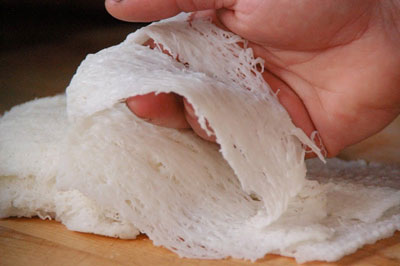
Bánh hỏi originated from the Bình Định Province of Vietnam's South Central Coast. People in Bình Định eat bánh hỏi for almost any meal during the day, instead of rice or noodle soups. The common English name for bánh hỏi is "rice noodle sheet," but bánh hỏi literally means "bánh (in) question." Old Vietnamese people explain that when many saw the new and strange kind of bánh, everyone kept questioning what is was, hence the name "bánh (in) question".
Like bún (rice vermicelli noodles) dishes, bánh hỏi is served cold. Traditionally bánh hỏi in Bình Định is rolled into bundles and always served with chopped garlic chives. The garlic chives are quickly stir fried with oil, its aroma and taste goes well with bánh hỏi, which makes the dish enjoyable by itself and without any other kinds of herbs.
Bánh hỏi are not eaten alone, but rather served at room temperature alongside rich foods such as crisp Chinese roast pork, duck and grilled foods such as shrimp on sugarcane (Chạo Tôm) and meats such as lemongrass pork and beef. Right before serving, the noodles are always topped with rich scallion oil garnish, which adds richness and verdant color. At the table, guests encase the noodles and protein in lettuce with fresh herbs. A quick dunk in nuoc cham dipping sauce is the usual final touch before the bundle is eaten
In central Vietnam, such as Huế, bánh hỏi is eaten with dried prawns and nước chấm dipping sauce. In southern Vietnam, bánh hỏi is eaten with a variety of meats, especially roast pork or duck. There are also bánh hỏi chả giò (crispy spring rolls), bánh hỏi with shrimp paste on sugar cane stick, and bánh hỏi with grilled pork, chicken, or beef. At the Gò Duối market in Xuân Lộc commune, Sông Cầu district, Phu Yen Province, one also finds bánh hỏi lòng heo Gò Duối, which is bánh hỏi with boiled pig offal.
Since making bánh hỏi is a skillful process, the dish is highly regarded and served at ceremonial parties, such as wedding and ancestor memorial days.
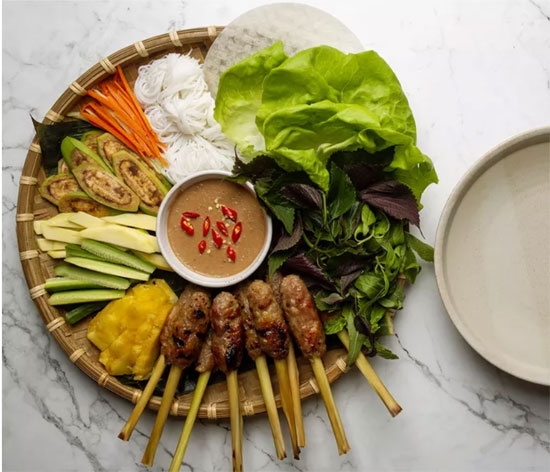
Bánh Hỏi Platter
Versions of Bánh Hỏi served in a local Vietnamese restaurant in Philadelphia - Nướng means grilled:
- Bánh Hỏi Bò Nướng Lá - Ground beef wrapped in grape leaves with fine vermicelli. These rolls are usually made with wild betel leaves, but if you cannot find them, grape leaves would make a good substitution. Beef in Wild Betel Leaf - substitute grape leaves
- Bánh Hỏi Nem Nướng - Grilled pork meat balls with fine vermicelli
- Bánh Hỏi Chạo Tôm - Grilled ground shrimp around sugar cane with fine vermicelli. Chạo Tôm is a traditional Vietnamese dish that comes from the Huế region of central Vietnam. It consists of barbecued shrimp paste/mousse cooked on a sugar cane stick. It is often presented as a dish during large banquets prepared for weddings, holidays, or similar special events.
- Bánh Hỏi Tôm Nướng - Grilled shrimp with fine vermicelli
- Bánh Hỏi Thịt Nướng - Thịt Nướng is thin pieces of charbroiled pork, served with fine vermicelli.
- Pictured is Bánh Hỏi w/ Grilled Beef (Bánh Hỏi Thịt Bò Nướng)
- Bánh Hỏi Ba Vi (Three Delight) - Chạo Tôm, Nem Nướng, Bò Nướng Lá (see list above)
Rice papers
FMM: Along with the Bánh Hỏi noodles and the protein of choice, which was served on a separate plate, a plate of fresh herbs and lettuce and a plate of dry rice paper rounds accompanied the dish at a Vietnamese restaurant near us. The server also provided us with a bowl of hot water to dip the rice paper in to soften it. You then roll whatever you want in the rice paper, the Bánh Hỏi noodles, or the lettuce leaves and eat by dipping it in a sauce such as Nước Chấm. We ordered their Triple Delight consisting of Ground beef in grape leaves (Bánh Hỏi Bò Nướng Lá), ground shrimp on sugarcane (Bánh Hỏi Chạo Tôm), and grilled meat balls (Bánh Hỏi Nem Nướng) so we could try more than one.
