Fermented Shrimp Paste (Mam Ruoc)
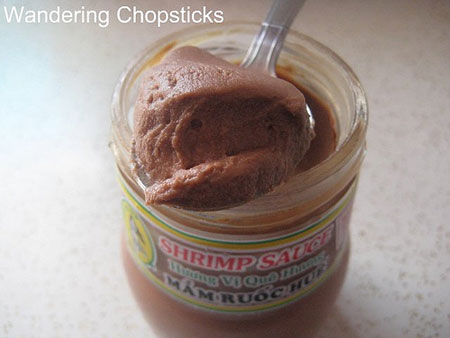
Just as Phu Quoc is known for its Nuoc Mam - fish sauce, Vung Tau is famous for its Mam Ruoc - fermented shrimp paste. "Ruoc" are small shrimps that are caught only during the rainy season. To prepare "mam ruoc", the "ruoc" are first cleaned and let dried under the sun for 3 months. They are then mixed with salt, grinded into powder and put in a jar and exposed to the sun for another 45 days. Sugar is then added to the mixture which is left fermented for 30 days. Finally the ruoc are dried again under the sun for 10 days and "mam ruoc" is now ready to be served, usually as sauce for various types of meat dishes.
There is also Mam Tep, which is made of fermented teeny tiny shrimp (really more like krill than shrimp) and Mam Tom.
Tom, ruoc, tep are different types of shrimps. You can distinguish them by their sizes. Ruoc are the smallest. Tep are bigger, and tom are the biggest. They also have different taste and flavors. Ruoc has very recognizable smell and taste. Tep and tom smell and taste similar. It depends in the regions of Vietnam in which they make each type of mam. In the north, where tom and tep are abundant, mam tom and tep are more popular. Mam ruoc is orginated from the central because there are a lot of ruoc over there. Mam ruoc is the most popular ferment shrimp paste in Vietnam though.
Shrimp paste can be found in most meals in Indonesia, Laos, Malaysia, Myanmar, Singapore, Thailand, Vietnam and the Philippines. It is often an ingredient in dip for fish or vegetables.
Vietnamese mam ruoc tends to be light pinkish-gray and is a thick paste rather than a block. All that drying and pickling and drying and pickling again results in a very thick, very concentrated, very salty, shrimp flavor. Shrimp sauce isn’t eaten right out of the jar. A bit of it is blended into foods or dipping sauces, where it imparts an aroma and savoriness that deepens the overall qualities of a dish. Think of it as a stealth ingredient for injecting umami into foods. Central and northern Viet cooks have a penchant for the sauce, and add it for the signature flavors of classics such as bun bo Hue (spicy Hue beef noodle soup) and bun rieu cua (crab and tomato soup). In these recipes, there really is no other substitute.
