Vietnamese Ingredients
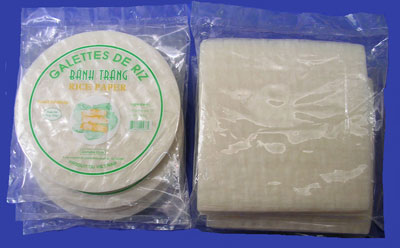
Banh Trang - Rice Paper
Rice paper is traditionally made from just rice, water, and salt. They are one of the unique aspects of Vietnamese cooking and dining, and food wrapped up in sheaths of translucent rice paper, such as Summer Rolls or the delicious fried imperial rolls called Chả giò (minced pork roll), is utterly charming. Aside from looking pretty and holding a bunch of goodies together, they contribute chewy texture and a slight tang to whatever they encase.
Basically, rice paper is a thin steamed rice crepe that has been dried. Traditionally, rice paper gets dried on bamboo mats or stretchers of sorts, which explains why they have a woven, rattanlike pattern. Right before using, it is rehydrated and softened in warm or hot water. When making hand rolls at the table, set out one or two communal dipping bowls for guests. Vietnamese rice paper is a cooked ingredient and once rehydrated, it can be eaten as is or fried. It is not for baking so don't think it can be used like phyllo pastry!
Red Rose and Three Ladies brands are good choices.
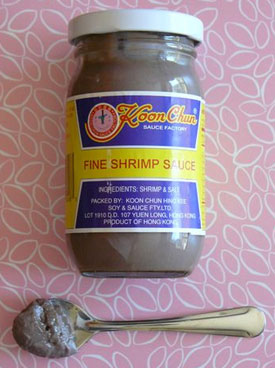
Fine Shrimp Sauce (Mam Tom)
Compelling, pungent, and stinky are some of the terms used to describe this sauce used in southern China and Southeast Asia. Though made in a similar manner as fish sauce, shrimp sauce (mắm ruốc/mắm tôm) is thick like toothpaste and purplish in color. For Western palates, it’s probably the hardest Asian fermented seafood product to accept. (But what about a ripe, room temperature camembert or Roquefort? They’re quite heady too.) Shrimp sauce isn’t eaten right out of the jar. A bit of it is blended into foods or dipping sauces, where it imparts an aroma and savoriness that deepens the overall qualities of a dish. Think of it as a stealth ingredient for injecting umami into foods. Central and northern Viet cooks have a penchant for the sauce, and add it for the signature flavors of classics such as bun bo Hue (spicy Hue beef noodle soup) and bun rieu cua (crab and tomato soup).
Sold in jars at Chinese and Southeast Asian markets, labeled “fine shrimp sauce.” Koon Chun and Lee Kum Kee produce great shrimp sauce. There is shrimp sauce coming from Vietnam but the consistency of those products can waver. Buy a small jar as a little goes a long way!
Malay and Indonesian blanchan (aka belacan and trassi) are similar in pungency if not a little more intense.
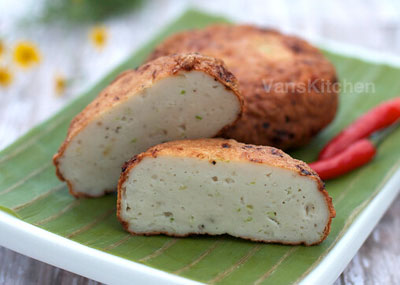
Vietnamese Fish Cakes
Vietnamese fish cake (cha ca) is popular in Vietnam, both as a street food and a homemade food. It's usually served with rice or noodles. Fish cakes made from Spanish mackerel or featherbacks seem to be the most popular. Unfortunately, these fish are not available fresh at local grocery stores. Tilapia can be ued instead and is still very good. Stay away from catfish or swai. These types of fish yield really soft and mushy cakes.
The traditional method is to use a mortar and pestle, and pound by hand to bring out the fish paste's chewy texture. But a meat grinder and a Kitchenaid stand mixer with a paddle attachment works very well.
The fish is ground and mixed with fish sauce, vegetable oil, salt, sugar, ground black pepper, and green onion. The fish is then chilled and shaped into loaves, then coated in a mix of tapioca flour and baking powder before deep-frying. The trick to getting the slightly chewy and springy texture is to not let the fish get warm or to room temperature. The fish needs to be cold at all times while mixing and prior to cooking.
The finished cake can then be sliced and added to soups and other dishes. The texture of the cake is somewhat stretchy.
